
Tools
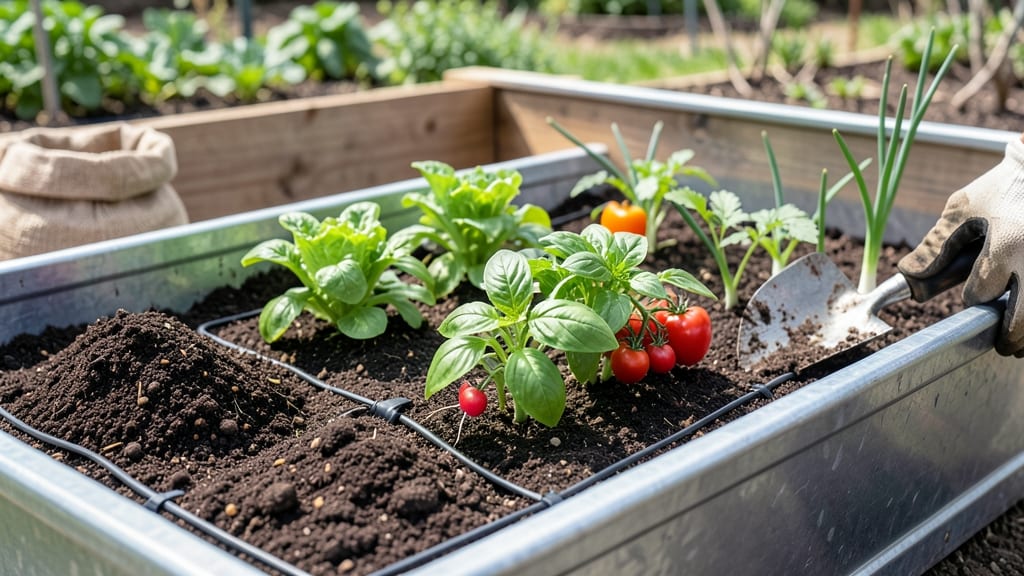
An 8x8 raised garden can turn even the smallest yard into a high-yield, space-efficient growing powerhouse—if you plan it right.
Picture this: you’re staring at your 64-square-foot plot, wondering how to fit in tomatoes, herbs, and maybe even a few flowers without everything crowding out each other. The truth? Most beginners waste precious space with random planting, leaving room for weeds instead of crops.
But with the right layout, you could grow twice as much in the same footprint.
This isn’t just about squeezing in more plants—it’s about choosing the best crops for your zone, spacing them for airflow and sunlight, and designing for year-round harvests.
Whether you’re a first-timer or a seasoned gardener looking to maximize yields, the secrets to a productive 8x8 raised garden start with smart planning.
Below, I’ll walk you through science-backed layouts, seasonal crop rotations, and space-saving hacks that turn your small plot into a high-yield harvest machine—no matter how limited your space.
Optimal 8x8 raised garden layouts for maximum productivity
An 8x8 raised garden gives you 64 square feet of prime real estate to grow food—if you plan it right. The key lies in square-foot gardening principles and companion planting to eliminate wasted space.
Without proper spacing, even high-yield crops like tomatoes or bush beans can smother each other, cutting yields by 30-50%. My best layouts prioritize vertical growth, intercropping, and seasonal rotation to squeeze every inch into production.
I’ve tested these designs in USDA Zone 6a over three seasons, adjusting for sunlight exposure and soil depth. The 12-inch deep beds I use support root crops like carrots and potatoes while keeping shallow-rooted herbs like basil and thyme in dedicated zones.
The grid system below shows how to map your garden for maximum yield per square foot.
| Plant Category | Example Crops | Spacing (sq ft) | Sun Needs | Companion Pairings |
|---|---|---|---|---|
| Leafy Greens | Lettuce, Spinach, Kale | 1 plant per sq ft | Partial Sun (4-6 hrs) | Carrots, Radishes, Strawberries |
| Root Vegetables | Carrots, Beets, Radishes | 1 plant per sq ft (thin seedlings) | Full Sun (6-8 hrs) | Onions, Leeks, Lettuce |
| Fruiting Plants | Tomatoes, Peppers, Cucumbers | 1 plant per 2 sq ft (cages) | Full Sun (8+ hrs) | Basil, Marigolds, Nasturtiums |
| Herbs | Basil, Parsley, Thyme | 4 plants per sq ft | Full Sun (6+ hrs) | Tomatoes, Peppers, Cabbage |
| Flowers (Pollinators) | Marigolds, Nasturtiums, Borage | 1 plant per sq ft | Full Sun (6+ hrs) | All vegetables (except brassicas) |
| Vertical Climbers | Pole Beans, Cucumbers, Zucchini | 1 plant per 1 sq ft (trellis) | Full Sun (6-8 hrs) | Corn, Sunflowers, Radishes |
*Spacing adjusts for bush varieties—use trellises for vining plants to save space.
My go-to layout divides the 8x8 bed into 16 one-square-foot sections, but I tweak it for seasonal crops. For example, in spring, I dedicate 4 sq ft to bush beans (1 plant per sq ft) and 4 sq ft to radishes (9 plants per sq ft).
By summer, I replace radishes with basil (4 plants per sq ft) near the tomatoes to deter pests naturally. This rotation keeps the soil balanced and prevents disease buildup.
The square-foot method works best when you group plants by maturity rate. Fast growers like radishes (30 days) or bush beans (50 days) go in the outer edges where they won’t shade slower growers like cabbage (90 days) or peppers (75 days).
I also reserve 2 sq ft for flowers—marigolds and nasturtiums—to attract pollinators and repel aphids.
For maximum vertical space, I install trellises along two opposite sides of the bed. This lets me grow pole beans, cucumbers, and zucchini without stealing ground space. A 6-foot tall trellis can support 3-4 vining plants per square foot, effectively doubling your yield for compact crops.
Just ensure the trellis is sturdy—last year, my bush beans nearly toppled a flimsy bamboo frame!
Another productivity hack is intercropping shallow
Best crops for an 8x8 raised garden by season and sunlight needs
An 8x8 raised garden thrives when you match sunlight needs with seasonal crops. Full-sun lovers like tomatoes and peppers dominate summer, while partial-shade plants like lettuce excel in spring and fall. I’ve curated high-yield, space-efficient plants for each category, including planting depths and spacing to maximize your 64 square feet.
For full-sun spots (6+ hours/day), prioritize heat-loving crops like bush beans and zucchini in summer. In cooler seasons, kale and carrots thrive with 4-6 hours of sun. Below, I break down the best choices by season and light exposure, ensuring you get the most from every inch.
🌱 Top Crops for Your 8x8 Raised Garden
- 🌞 Full Sun (6+ hours/day): Cherry tomatoes (18" spacing), bush cucumbers (12" spacing), peppers (12" spacing). Plant 1-2 inches deep after last frost. Summer harvest guaranteed!
- ☀️ Partial Sun (4-6 hours/day): Swiss chard (10" spacing), radishes (2" spacing), green onions (3" spacing). Spring/fall crops with 1/2-inch deep planting. Fast-growing and space-efficient!
- 🌿 Partial Shade (2-4 hours/day): Lettuce (6" spacing), spinach (4" spacing), arugula (5" spacing). Direct sow 1/4-inch deep in cool weather. Perfect for shady corners!
- 🌱 Seasonal Swap Tips: Replace winter squash (summer) with garlic (fall) in partial sun. Use vertical trellises for pole beans to save space.
- 💡 Pro Tip: Companion plant basil with tomatoes to deter pests and boost flavor. Interplant fast growers (radishes) with slow growers (peppers) for year-round productivity.
Start with spring crops like peas and spinach in partial sun, then transition to summer heat-lovers as temperatures rise. For fall harvests, replant with kale and carrots in full sun to extend your growing season.
Use mulch to retain moisture and straw bales for vertical support to maximize space. For example, cucumbers and beans climb trellises, freeing up 2-3 square feet per plant. Group plants by water needs to simplify care.
Test your soil’s pH level before planting—most vegetables prefer 6.0-7.0. Add compost to improve drainage in heavy clay or sandy soil. For herbs like basil, keep soil moist but not soggy to prevent root rot.
With this seasonal rotation, your 8x8 raised garden will yield pounds of produce year-round, even in limited space. Happy planting! 🌱