Why I started Garden Rows
I was twenty-six, knee-deep in compost in my first real garden, when I realized something was missing.
Every book and blog I’d read told me *how* to grow things—spread this much mulch, water at dawn, pinch back the stems—but none of them answered the question that kept me up at night: *What happens when it all goes wrong?* My basil was wilting despite the perfect soil, my tomatoes were cracking open before they ripened, and my neighbor’s zucchini plants were thriving while mine looked like they’d given up.
No one had written about the real work of gardening—the guesswork, the failures, the quiet victories of a single leaf finally unfurling after weeks of waiting.
So I started writing about the parts no one else covered. This is for the people who’ve pressed their palms into the dirt and wondered if they’re doing it right. For those who’ve killed a houseplant and want to understand why.
For anyone who’s ever stood in a garden center, overwhelmed by the choices, and left empty-handed. Here, you’ll find no perfect rows or Photoshopped blooms. Just the truth: what grows, what doesn’t, and how to try again.
Meet the founder

My grandfather’s voice is still the first thing I hear when I’m stuck. He’d hand me a trowel and say, *‘Dig like you’re trying to find buried treasure,’* then watch as I’d slice through a root instead.
The first time I planted a seed without his guidance, I flooded the tray so hard the soil turned to sludge.
He just laughed and said, *‘Now you know why we check the drainage.’* That was the day I learned gardening isn’t about following rules—it’s about noticing what’s happening under your fingers.
The only tool I’ve ever kept from my first apartment is a bent hand fork, its tines permanently bent from prying up stubborn weeds. It’s still in my shed, propped against the wall next to a jar of saved seeds from a tomato plant that split open on the vine.
I don’t use it much anymore, but I keep it there as a reminder: the best gardens grow from mistakes, not perfection.
Renata Hollis is the name on the byline, but the real work is done by the plants themselves.
I’ve lost count of how many basil plants I’ve drowned, how many tomato cages I’ve forgotten to stake, and how many times I’ve sworn off marigolds—only to replant them the next spring because they’re the only thing that keeps the pests away. My method? Start small. Watch closely.
And when something dies, ask *why* before you blame yourself.
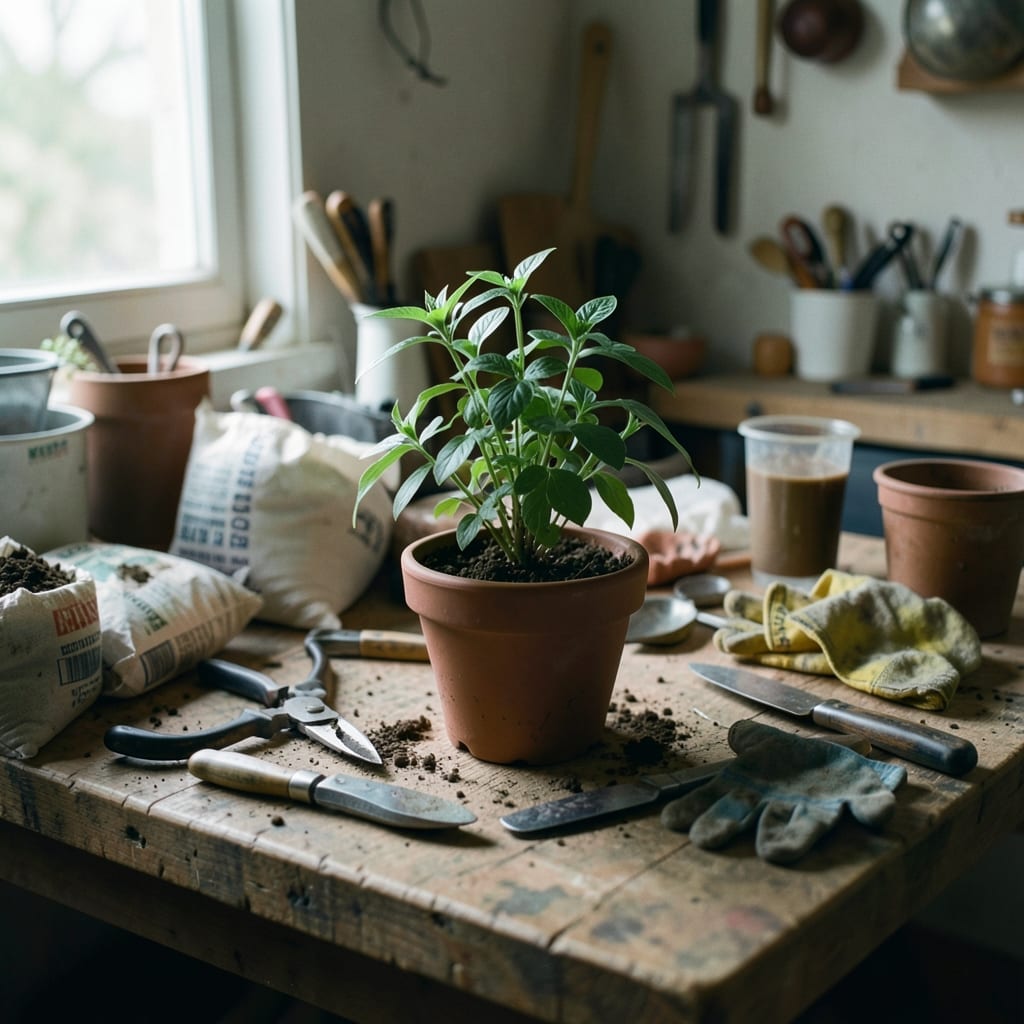
What you won’t find here is a spotless greenhouse or a garden that looks like a catalog. My workspace is a cluttered porch with potting soil spilling onto the floor, a half-empty watering can, and a notebook full of scribbled observations.
The light is always changing—morning sun on the herbs, dappled shade where the peppers struggle. And yes, I *do* talk to my plants. It’s the only way to remember which one needs water and which one’s just being dramatic.
Meet the mascot

The first sketch of what would become the mascot started on a napkin at my kitchen table, during a phone call with my grandfather.
I was trying to explain why my zucchini plants were wilting, and he kept saying, *‘Show me the roots,’* so I grabbed a pencil and drew a tangled mess of stems.
The first scribble was all wrong—the roots looked like spaghetti, the leaves like someone had crumpled them in their fist. But the way the plant leaned into the light, even when it was struggling, stuck with me.
The proper drawn version came later, on yellow graph paper. I simplified the roots into a single, stubborn line—because that’s what gardening feels like sometimes: one step forward, one step sideways, but never quite back. The leaves became three deliberate shapes, like fingers reaching for the sun.
My grandfather still doesn’t know it’s him, but I like to think he’d approve of the stubbornness.
By the time it needed to shrink down to a browser tab, half of it had to go.
The roots became a single dot, the leaves reduced to three sharp points, and the whole thing tilted just enough to look like it was about to topple over—because that’s the truth of most gardens. I named it *Stubborn Sprout*, after the way it refuses to be neat.
What I promise you
This isn’t a place for perfect gardens or airbrushed photos. What you’ll get is honesty: the dirt under the nails, the trial and error, and the quiet joy of seeing something you planted finally bloom.
What you can hold me to
- If I say a plant thrives in shade, I’ve grown it in shade—and watched it survive (or die) in real conditions, not just a greenhouse.
- Every ‘tip’ is something I’ve actually done wrong at least once, not just something I read in a book.
- The ‘what went wrong’ section isn’t just a list of excuses—it’s the real story of why that plant failed, and how to fix it next time.
- If I recommend a tool, I’ve used it to dig, prune, or wrestle with something heavier than a bag of potting soil.
How I create a recipe
A recipe here doesn’t start on paper—it starts in the soil. Whether it’s a seed packet promise or a neighbor’s ‘secret’ cutting, I plant it, water it, and wait. The first step isn’t measuring; it’s watching. How fast does the soil dry?
What time of day does the sun hit the pot? And most importantly: *What’s the plant actually doing?* (Spoiler: It’s almost never what the instructions say.)
The first stage: hands in the dirt
This is where the guesswork begins. I dig my fingers into the soil, testing its grip—too loose, and the roots won’t hold; too tight, and the water will pool. If the leaves feel dry but the soil is damp, I know I’ve overwatered.
If the stems are soft and wobbly, it’s time to stake them before the wind does. I never use a trowel for the first few inches; I go slow, watching for the moment the soil resists. That’s when I know I’ve hit the roots of what’s already there.
The clock doesn’t matter here. It’s not about minutes or seconds—it’s about the way the light shifts on the leaves, the way the air smells after a rain.
I’ve replanted basil at 3 AM because the soil was too cold in the morning, and I’ve let tomato seeds sit for a week too long because I forgot to check the tray. The only rule? Pay attention. The soil will tell you what it needs if you listen.
The second stage: fixing what’s broken
This is where the real work happens. If the leaves are yellowing, I check the pH—too alkaline, and the iron won’t absorb. If the flowers drop before they open, it’s usually too much nitrogen. And if the stems snap like dry twigs?
That’s a sign the plant’s been underwatered for weeks, and the only fix is to trim the damaged parts and hope the roots can recover. I’ve spent entire afternoons kneeling in the dirt, pruning back dead growth, only to realize the problem was a slug hiding under a leaf.
There’s no magic here—just time, patience, and a willingness to admit when you’ve been wrong. I’ve killed more plants trying to ‘save’ them than I have by leaving them alone. The fix isn’t always pretty, but it’s always honest.
And sometimes, the thing that looks broken is exactly what needs to happen for something new to grow.
How a page gets onto this site
The first draft is always scribbled in a notebook while the soil is still warm from my hands.
I jot down the numbers—how deep I planted, how often I watered—but the real notes are the ones I don’t plan: *Why did the peppers crack?* *What changed when I moved the pot?* I take photos of the failures as much as the successes, because those are the ones that teach me something.
By the time I sit down to write, I’ve already forgotten half of what happened. That’s why I keep the notebook within reach.
The second read is where the cutting happens. I strike out the ‘maybe’s and the ‘I think’s—this isn’t a diary, it’s a lesson. If I can’t explain *why* something grew (or died), I go back to the garden and ask again.
And sometimes, months later, I’ll rewrite a whole post because I finally understood what I’d done wrong the first time. A garden page isn’t finished until the plant it’s about has told me its whole story.
Write to me
I love hearing about the plants that outsmarted you, the weeds that took over, or the one time something actually grew like it was supposed to. Send me a photo of your garden’s worst failure—or your proudest survivor.
And if you’ve got a ‘secret’ tip that’s actually just common sense you figured out the hard way, I’d love to hear it. You’ll find the contact page linked at the bottom of every post, because this site only works if we’re all learning from each other’s dirt.
Here’s to the next row we’ll plant together—even if half of them die.
The guides are grouped by category: Advice, Container Gardens, Fertilization, How To, Picking and Planting.