
Tools
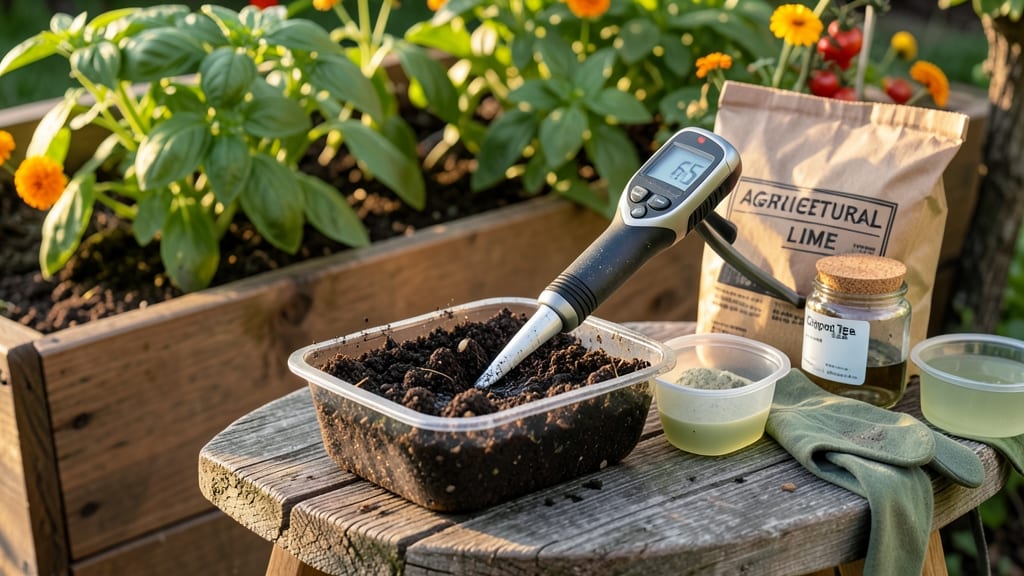
A garden pH meter helps you test soil acidity or alkalinity so you can create ideal growing conditions for your plants, starting with proper calibration using pH 4.0 and 7.0 solutions and testing moist soil samples for reliable results.
A garden pH meter is your first line of defense against guesswork in gardening. Soil pH directly impacts nutrient absorption—too acidic or alkaline, and plants struggle to access essential minerals like nitrogen or phosphorus. 🌱 For example, blueberries thrive in pH 4.5-5.2 soil, while asparagus prefers 6.5-7.5.
Without accurate testing, you might over-fertilize or starve your plants of what they truly need. The calibration step isn't just technical—it's what separates a 5.0 reading from a 6.0 reading, which could mean the difference between a failed crop and a thriving garden.
Most meters include two buffer solutions for calibration, but many gardeners skip this step, leading to inconsistent results. I always recommend testing moist soil (not dry powder) because water activates the meter's sensors properly.
Pro tip: Store your meter in a dry place and recalibrate every 3-6 months to maintain precision. Even small drifts in readings can mislead you about your soil's true condition.
💡 In This Article
- How Soil pH Affects Plant Growth and Nutrient Uptake
- Step-by-Step Guide to Calibrating and Using a Garden pH Meter
How soil pH affects plant growth and nutrient uptake
Soil pH determines how available essential nutrients become to plants. The pH scale runs from 0 (extremely acidic) to 14 (extremely alkaline), with 7 being neutral. Most garden plants prefer a slightly acidic to neutral range of 6.0-7.0, but specific crops have unique needs.
For instance, blueberries require pH 4.5-5.2 because their roots can't absorb nutrients like iron and manganese in alkaline soils, while asparagus thrives in 6.5-7.5 soil where calcium and magnesium are more accessible. 🌿
The chemistry behind this is fascinating: soil pH affects the electrical charge of nutrient molecules. In acidic soil (pH < 6.0), nutrients like phosphorus and iron become more soluble, but aluminum and manganese can become toxic in excess.
Conversely, alkaline soils (> pH 7.5) lock up essential elements like phosphorus and zinc, making them unavailable to plants. This is why a pH 5.5 soil might show plenty of nitrogen on a test, but your azaleas still look starved—they can't access it efficiently.
The meter's job is to reveal these hidden imbalances before they cause problems.
Different plants have evolved to thrive in specific pH ranges because their root systems have adapted to extract nutrients under those conditions.
For example, potatoes prefer slightly acidic soil (5.0-6.0) where their roots can efficiently absorb potassium, while broccoli does best in neutral to slightly alkaline soil (6.0-7.5) for optimal calcium uptake.
Even within the same plant family, varieties can differ—some tomato cultivars tolerate slightly acidic soil better than others. This is why knowing your exact pH is more valuable than guessing based on general recommendations.
What most gardeners don't realize is how quickly soil pH can shift with organic matter. Compost, for instance, typically raises pH slightly over time due to its alkaline mineral content, while pine needles lower it.
A single application of wood ash (pH 12-13) can raise garden soil pH by 1-2 points in just a few weeks, while sulfur applications lower it gradually.
This is why precise testing with a calibrated meter is essential—you're not just checking a number, you're diagnosing your soil's health at a molecular level. 🔬
Consider the case of nitrogen: at pH 7.0, about 50% is available to plants, but drop to pH 5.0 and availability jumps to nearly 100%. Yet at pH 8.0, it plummets to just 10%.
This explains why some gardeners see dramatic improvements after adjusting pH—what appeared to be a nitrogen deficiency was actually a soil chemistry problem. The meter reveals these hidden relationships that affect every aspect of plant growth, from root development to flower production.
Even the physical structure of soil changes with pH. Acidic soils tend to have more organic matter that breaks down slowly, creating a spongy texture ideal for moisture retention. Alkaline soils often develop harder, more compact layers that restrict root penetration.
This structural difference affects everything from water drainage to aeration—both critical for healthy root systems. When you use a pH meter properly, you're not just getting a number; you're gaining insights into your soil's physical and chemical ecosystem. 🌍