
Container Gardens
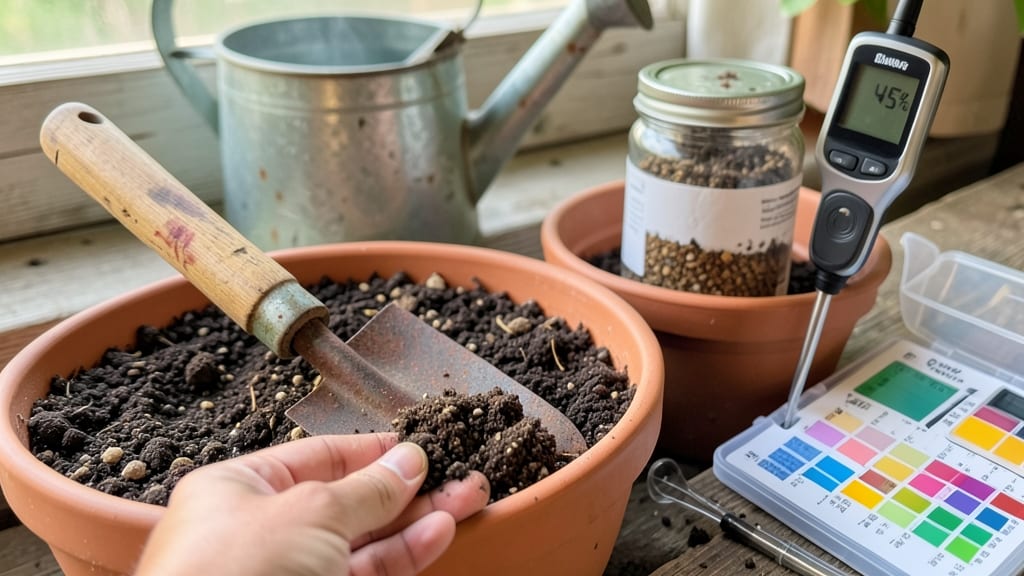
For garden soil in pots, use a lightweight, well-draining mix that prevents compaction while supporting root growth—typically a blend of potting soil, perlite, and compost in equal parts for optimal aeration and moisture balance.
Regular garden soil is too dense for containers, causing poor drainage and root suffocation. 🌱 The right potting mix combines organic matter (like compost) for nutrients with inorganic amendments (like perlite) to improve airflow.
I’ve found that this blend keeps moisture consistent while preventing the heavy clay found in outdoor soil from crushing delicate roots over time.
Different plants need different ratios—succulents thrive with more perlite, while herbs benefit from extra compost. Always check your container’s drainage holes first; if they’re small, add a layer of coarse sand at the bottom to prevent clogging.
💡 In This Article
- Why Standard Garden Soil Fails in Containers
- DIY Lightweight Potting Soil Recipes for Different Plants
Why standard garden soil fails in containers
Standard garden soil is packed with dense clay particles that bind tightly together, creating a heavy, compacted structure. In containers, this density becomes a problem because water can't drain properly, leading to root suffocation.
Clay particles hold moisture like a sponge, but they also trap air pockets—something roots need to breathe. When soil compacts, it crushes these air spaces, forcing roots to struggle for oxygen, which is why plants in garden soil often wilt despite being watered.
The issue worsens in confined spaces because roots have nowhere to expand. Garden soil lacks the organic matter and porous amendments found in potting mixes, so nutrients deplete faster in pots.
For example, a 5-gallon container filled with garden soil may dry out unevenly, leaving the center bone-dry while the edges stay soggy. This inconsistency stresses plants, especially those with shallow root systems like herbs or lettuce, which rely on consistent moisture and aeration.
Here’s the science: Roots need both oxygen and water to function. Garden soil’s high clay content (often 20-40% by volume) reduces porosity to 10-15%, while a good potting mix achieves 30-50% porosity through added perlite or vermiculite.
This difference explains why plants in garden soil often develop stunted growth or fungal issues—roots simply can’t access the resources they need in that dense environment.
Another critical factor is nutrient availability. Garden soil relies on slow-release minerals from decomposed rocks, but in containers, these nutrients get leached out quickly due to frequent watering. Potting mixes, however, include compost or worm castings that break down rapidly, replenishing nutrients more efficiently.
For instance, a mix with 20% compost can provide enough nitrogen for leafy greens in just 4-6 weeks, compared to months in garden soil.
Finally, consider the weight. A 5-gallon pot filled with garden soil can weigh 30-40 pounds when saturated, while a potting mix might weigh 15-20 pounds. This lighter weight reduces the risk of tipping over pots, especially during wind or watering.
The reduced density also means roots don’t have to work as hard to penetrate the soil, allowing them to focus on absorbing water and nutrients instead.
Think of it like this: Garden soil is like a tightly packed suitcase—everything’s crammed in, but nothing moves freely. Potting mix is more like a well-organized backpack with pockets for air, water, and nutrients, all accessible to the roots. 🌱