
Vegetables
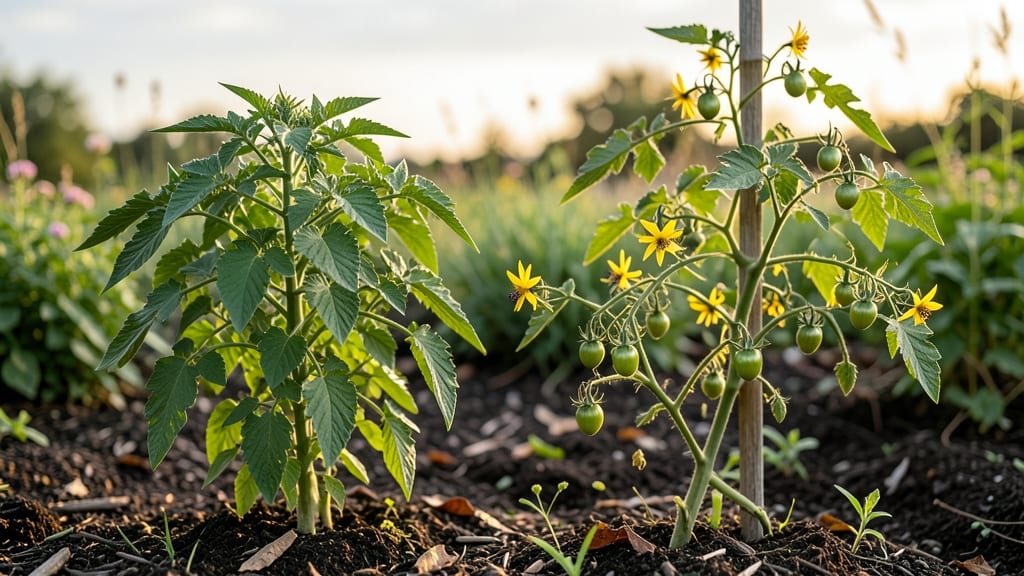
The Gardeners Delight tomato is an indeterminate variety, meaning it grows continuously with vining habits and requires sturdy support like cages or trellises. Determinate types stop at a set height and produce fruit in clusters at once, while indeterminate varieties yield tomatoes over a longer season.
The Gardeners Delight tomato's indeterminate growth habit means it doesn't stop growing once it flowers—it keeps producing new vines, leaves, and fruit throughout the season. 🌱 Unlike determinate varieties that finish their main harvest in 2-3 weeks, this tomato keeps delivering ripe fruit until frost, making it perfect for gardeners who want a steady supply.
The continuous growth also means you'll need to prune regularly to encourage airflow and prevent disease, while determinate types require minimal maintenance after their initial flush of flowers.
This extended growing cycle is why Gardeners Delight is such a favorite among home gardeners—it rewards patience with a prolonged harvest window. If you're working with limited space, vertical training becomes essential, as these vines can reach 6-10 feet without proper support.
The trade-off? You'll need to invest in sturdy trellises or cages upfront, but the payoff is worth it for those delicious, vine-ripened tomatoes all season long.
💡 In This Article
- How Indeterminate Gardeners Delight Tomatoes Grow Differently Than Determinate Varieties
- Best Space Planning for Indeterminate Gardeners Delight Tomatoes in Your Yard
How indeterminate Gardeners Delight tomatoes grow differently than determinate varieties
At the heart of the difference lies the tomato plant's genetic programming. Gardeners Delight, as an indeterminate variety, lacks the genetic signal that tells determinate types to stop growing after reaching a certain height—typically around 3-5 feet.
Instead, its main stem continues elongating indefinitely, producing new leaves and shoots that can extend 8-12 feet or more without intervention. This continuous growth creates a sprawling vine system capable of producing 10-20 pounds of fruit per plant over 60-90 days of harvest.
The flowering and fruiting mechanism also differs dramatically. Indeterminate varieties like Gardeners Delight produce flowers in the leaf axils (where leaves meet the stem) throughout the growing season, with each flower developing into a single fruit.
Determinate types, however, form flower clusters at the terminal ends of their branches all at once, resulting in a concentrated harvest window.
This continuous flowering in indeterminate varieties is regulated by a complex interplay of daylight hours and temperature—plants typically require 14-16 hours of daylight to trigger flowering, with optimal temperatures between 70-85°F for consistent blooming.
Climate plays a crucial role in how these growth patterns manifest. In cooler regions with shorter growing seasons, indeterminate varieties may struggle to reach their full potential because the extended vine growth requires 90-120 frost-free days.
The vines themselves have a fascinating structural adaptation: they use tendrils to climb and support their weight, which is why proper trellising isn't just recommended—it's essential for preventing breakage.
The plant's ability to redirect energy between vegetative growth (vine expansion) and reproductive growth (fruit production) creates that signature prolonged harvest window that gardeners love.
Here's where the science gets particularly interesting: indeterminate tomatoes exhibit what botanists call "apical dominance suppression." This means the plant's natural growth hormones (auxins) are distributed more evenly along the vine rather than concentrated at the tip.
When you prune the main stem, you're essentially telling the plant to redirect its energy to lateral branches, which then produce more flowers and fruit. This is why proper pruning of Gardeners Delight can increase yields by 30-50%—you're working with the plant's natural growth patterns rather than against them.
Consider the visual differences when comparing the two types side by side. A determinate plant looks like a bushy shrub with all its energy focused on producing fruit simultaneously, while an indeterminate Gardeners Delight vine resembles a sprawling vine with fruit appearing at different stages of ripeness along its length.
This visual diversity translates to harvest diversity—you'll get a mix of green, breaking, and ripe tomatoes at any given time, allowing for continuous picking and eating fresh from the vine all season long.
The practical implication of these growth differences extends beyond just harvest timing. Indeterminate varieties require more frequent attention—regular pruning to remove suckers (side shoots), consistent watering to prevent blossom end rot, and vigilant pest monitoring due to their extended growing period.
But for gardeners who enjoy the process of nurturing a plant through multiple harvest cycles, this continuous growth pattern offers unparalleled satisfaction and a steady supply of homegrown tomatoes that determinate varieties simply can't match.
What most people don't realize is how these growth habits affect the tomato's flavor profile. The prolonged ripening process allows indeterminate varieties like Gardeners Delight to develop deeper, more complex flavors as they mature gradually in the vine's environment.
This is why many gardeners consider vine-ripened indeterminate tomatoes to be superior in taste compared to determinate varieties that ripen all at once.