
Planting
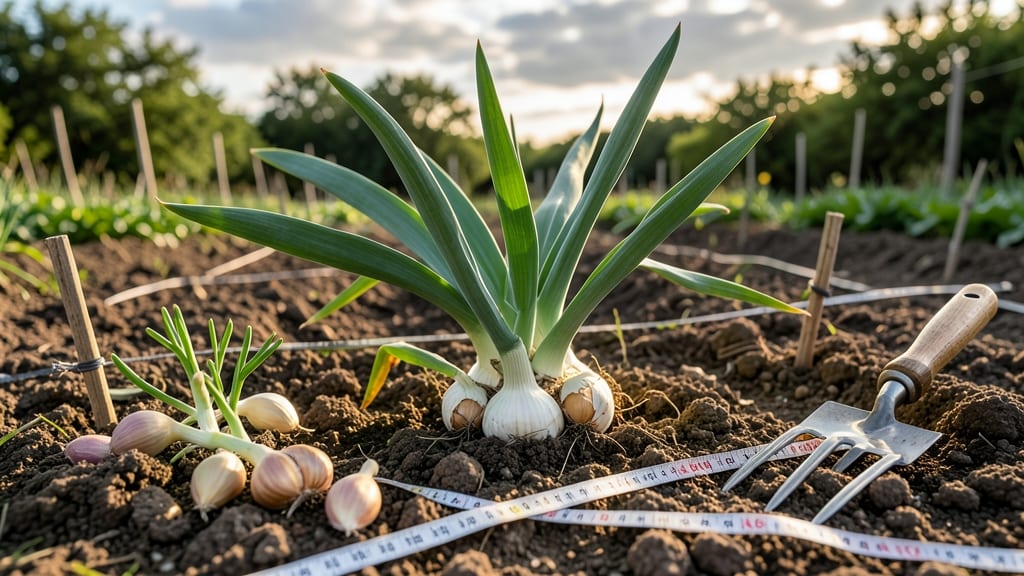
Proper garlic spacing in your garden is the difference between tiny, weak bulbs and plump, flavorful harvests that’ll make your kitchen the envy of the neighborhood.
You’ve probably planted garlic before—maybe even with the best intentions—only to end up with stunted cloves or wasted space. The truth? Spacing isn’t just about fitting more garlic in—it’s about giving each bulb room to breathe, grow strong roots, and resist disease.
Get it wrong, and you’ll spend summer cursing your garden layout instead of celebrating a bountiful harvest.
Here’s the science-backed breakdown: how far apart to space cloves, why row spacing matters for airflow, and the one mistake that shrinks bulbs by half. Whether you’re growing hardneck or softneck varieties, these distances will transform your garlic game.
Ready to maximize your yield? We’ll cover everything from soil prep to planting depth, plus how to adjust spacing for small gardens or crowded plots. No more guesswork—just bigger, better garlic every season.
Optimal garlic spacing by variety type (hardneck vs softneck)
Garlic spacing isn’t one-size-fits-all—it depends on whether you’re growing hardneck or softneck varieties. Hardnecks (like Rocky Mountain or German Red) produce scapes and need slightly more room, while softnecks (like Silverskin or Artichoke) focus on bulb size and can tolerate closer spacing.
Even small differences in in-row spacing or row spacing can mean the difference between small, weak bulbs and large, flavorful harvests.
Why does spacing matter? Proper spacing ensures each bulb gets enough nutrients, water, and airflow to develop fully. Crowding leads to disease pressure (like botrytis or rust) and stunted growth, while over-spacing wastes garden real estate.
Below, I’ll break down the exact planting distances for both types, plus how to adjust for organic gardens, heavy clay soil, or sandy loam.
For hardneck garlic, the 6–8 inch in-row spacing allows scapes to develop without competing for sunlight or nutrients. If you’re growing for scapes (the curly green stems), you can even space them 8–10 inches apart to prioritize scape production.
Meanwhile, softneck garlic thrives with 4–6 inch spacing because its energy goes entirely into bulb development, not flowering.
Row spacing is equally critical. Hardnecks need 12–18 inches between rows to accommodate their taller stature and scape growth, while softnecks can get by with 10–12 inches.
In small gardens or container setups, reduce row spacing to 8–10 inches but never less—this prevents airflow issues and fungal diseases like white rot.
Soil type plays a surprising role in spacing adjustments. In heavy clay soil, where drainage is poor, tighten in-row spacing to 3–4 inches for softnecks to avoid waterlogged roots.
Conversely, in sandy loam, where nutrients leach quickly, increase spacing to 7–9 inches to give each bulb enough root zone. Always plant cloves pointy-end up and 2 inches deep—deeper planting can lead to rot, while shallower planting risks poor anchorage.
Organic gardeners often use slightly tighter spacing (4–6 inches for hardnecks, 3–4 inches for softnecks) because organic fertilizers (like compost tea or fish emulsion) provide nutrients more slowly.
This encourages the plant to focus on bulb development rather than searching for scattered nutrients. Just be vigilant about weed control—tight spacing means weeds compete more aggressively.
Pro tip: Use a string and stakes method to mark rows before planting. Measure 12 inches between stakes for hardnecks or 10 inches for softnecks, then use the string as a guide to maintain consistent in-row spacing.
This ensures uniformity, which is key for even bulb maturation. If you’re planting in raised beds, reduce row spacing by 20–30% since beds provide better drainage and nutrient retention.
One final adjustment: If you’re planting garlic for storage (like softnecks), prioritize bulb size over scape production. Space cloves closer (4 inches) and harvest scapes early to redirect energy to the bulb. For hardnecks grown for scapes, space them wider (8 inches) and let them flower—this actually im
Common garlic spacing mistakes that shrink your harvest
Even experienced gardeners sometimes make garlic spacing mistakes that rob your harvest of its full potential. I’ve seen plots where bulbs barely grew larger than a dime because the spacing was off. The good news?
These errors are easy to fix once you know what to watch for. Let’s tackle the five most common mistakes—and how to avoid them—so you can grow large, flavorful garlic bulbs every season.
First, let’s address the biggest culprit: overcrowding. When garlic cloves are planted too close together, they compete for nutrients, water, and sunlight. This leads to stunted growth and bulbs that are small and weak.
I’ve seen gardeners squeeze in 20 cloves in a single square foot, only to harvest bulbs no bigger than a marble. That’s not just disappointing—it’s a waste of your garden space and effort.
Another frequent mistake is uneven spacing. Maybe you started strong but got sloppy mid-row, or perhaps you eyeballed the distance without measuring. Uneven spacing creates weak spots in your garlic patch where bulbs struggle to reach their full potential.
Think of it like a crowded subway car—everyone’s uncomfortable, and no one thrives. Your garlic needs room to breathe, and inconsistent spacing throws off that balance.
⚠️ Warning: These Mistakes Kill Your Garlic Yield
1. Planting too close (under 4 inches apart): Bulbs compete for nutrients, resulting in tiny, weak harvests.
2. Planting too far apart (over 6 inches apart): Wastes garden space and reduces overall yield per square foot.
3. Uneven spacing: Creates inconsistent growth—some bulbs thrive while others struggle.
4. Planting too shallow (under 2 inches deep): Cloves dry out or rot; roots can’t anchor properly.
5. Planting too deep (over 3 inches deep): Slows germination and stunts root development.
Fix it: Use a ruler or spacing tool for consistent 4-6 inches apart and 2 inches deep. Sketch a quick grid before planting!
Let’s talk about planting depth, because this is another area where many gardeners go wrong. If you bury garlic cloves too shallow, they’ll dry out or even pop out of the soil as they grow.
On the flip side, planting them too deep can suffocate the cloves, slowing down or even preventing germination. The sweet spot is 2 inches deep, with the pointy end facing upward. This ensures the roots have room to spread while the shoot can reach the surface without struggle.
One mistake that often flies under the radar is ignoring row spacing. While the distance between individual cloves matters, the space between rows is just as critical. Rows that are too close together create poor airflow, which can lead to fungal diseases like white rot or basal rot.
Aim for 12-18 inches between rows to give your garlic the airflow it needs to stay healthy. This also makes it easier to weed and harvest without disturbing neighboring plants.
Finally, don’t overlook the importance of adjusting for your garlic variety. Hardneck garlic, which produces scapes, often benefits from slightly more space—around 6 inches apart—because it grows taller and needs room for those scapes to develop.
Softneck garlic, which is often braided for storage, can handle a bit more crowding with 4-5 inches apart. Mixing varieties without adjusting spacing can lead to uneven growth and smaller bulbs across the board.
Here’s my pro tip: Before you plant, sketch a simple grid on paper or use a garden twine and stakes to mark your rows and spacing. This ensures consistency and helps you visualize how much garlic you can fit in your plot.
Trust me, a little prep work now saves you from frustration—and tiny garlic—later. With the right spacing, you’ll be harvesting plump, flavorful bulbs that’ll make your neighbors jealous.