
Light Requirements
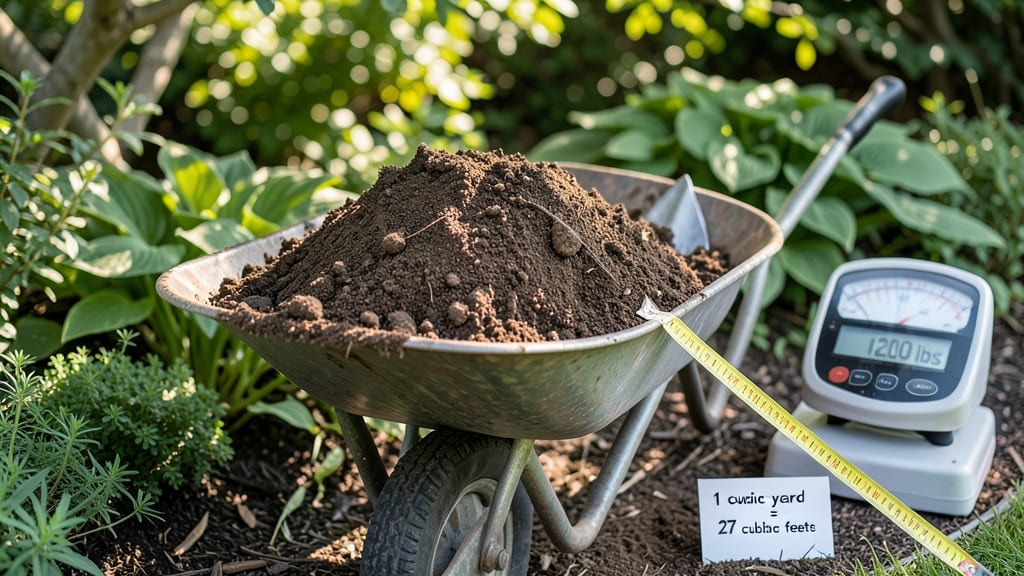
Determining how much a yard of garden soil weighs reveals it typically ranges from 1,800 to 2,200 pounds, with variations based on moisture levels and soil composition—sandy mixes stay closer to 1,800 lbs, while clay-heavy or saturated soil can push past 2,500 lbs. Always check supplier specs for exact measurements before planning projects.
A yard of garden soil's weight isn't just about volume—it's a science of moisture and particle density. 💧 Sandy soil stays lighter because its loose structure traps less water, while clay holds moisture like a sponge, adding hundreds of pounds.
Even a 10% moisture increase can bump your total by 200+ pounds! For DIY projects, I recommend asking suppliers for "dry weight" estimates—they'll give you a more predictable baseline for truck capacity or wheelbarrow loads.
Why this matters? Overestimating weight can lead to costly delivery fees or dangerous lifting situations. For example, a 4x8-foot raised bed filled to 12 inches deep needs about 1.5 cubic yards—that's roughly 3,000 pounds if using standard loam.
Pro tip: Mix in 20% compost to reduce weight while improving fertility, cutting your total by 10-15%. Always verify with your supplier's moisture-adjusted specs—they're your best friend for accurate planning.
💡 In This Article
- Factors Affecting Garden Soil Weight per Cubic Yard
- Practical Tips for Estimating and Handling Soil Weight
Factors affecting garden soil weight per cubic yard
The weight of garden soil isn't just about space—it's a complex interplay of physics and chemistry. At its core, soil density depends on particle size and how tightly they're packed.
Sandy soil has larger particles with more air pockets, giving it a bulk density of about 100 lbs per cubic foot—that's roughly 1,800 lbs per yard.
Clay soil, with its microscopic particles and tight packing, can reach 120 lbs per cubic foot or more, pushing weights over 2,400 lbs when saturated. Loam, the ideal mix, typically falls between 105-115 lbs per cubic foot.
Moisture content is the wild card here. Water weighs about 62.4 lbs per cubic foot, so even a 10% moisture increase in your soil adds 180 lbs per yard!
Clay soils can hold 40-50% water by volume after rain, while sandy soils max out at 10-15%. 💧 This explains why spring deliveries often feel heavier—wet soil can weigh 20-30% more than dry samples.
Organic matter plays a role too: compost blends reduce weight by 10-20% compared to pure mineral soil, since organic materials have lower density.
Compaction changes the game dramatically. When soil is tilled or transported, particles settle more tightly, increasing density by 15-25%. That's why freshly delivered soil often weighs less than the same volume after a few days of settling.
Even foot traffic can compact top layers by 10% or more, making your garden bed heavier than expected. For accurate planning, ask suppliers for "loose weight" measurements—they account for this natural settling before compaction.
Temperature also sneaks into the equation. Cold soil holds more water in frozen states, adding hidden weight, while hot, dry conditions can reduce moisture content by 30% or more. This seasonal variation explains why winter deliveries might feel 500 lbs heavier than summer orders of the same volume.
The key takeaway? Always specify your project's timing and moisture needs when ordering—suppliers can adjust blends to match your weight requirements.
Here's a quick comparison to visualize the differences:
- Sandy soil: 1,700-1,900 lbs/yard (dry), 1,900-2,100 lbs/yard (moist)
- Loam soil: 1,900-2,200 lbs/yard (dry), 2,200-2,500 lbs/yard (moist)
- Clay soil: 2,100-2,400 lbs/yard (dry), 2,500-3,000 lbs/yard (saturated)
- Compost blend: 1,200-1,500 lbs/yard (lighter due to organic content)
Understanding these variables helps you avoid surprises when moving or mixing soil. For example, a 3-cubic-yard project using clay soil could require 7,500 lbs of lifting capacity—double what you'd need for sandy soil! Always verify with your supplier's moisture-adjusted specs before planning your project logistics. 🚛