
Light Requirements
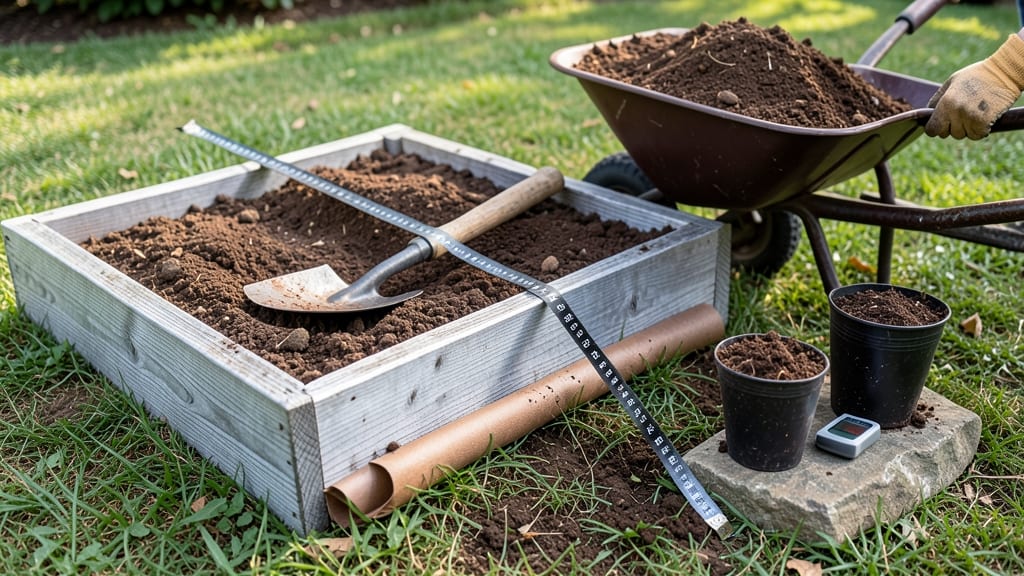
Filling a raised garden bed with the right amount of soil means balancing depth, plant needs, and cost to avoid wasted money or stunted growth.
Picture this: you’ve spent hours building your 🌱 raised garden bed, only to realize halfway through planting that you either have too much soil piling up or not enough to support your crops.
The good news? A few simple calculations can save you time, frustration, and extra trips to the garden center.
Most vegetables thrive with 6–12 inches of soil, but deeper beds (up to 18 inches) let you grow root crops like carrots or potatoes without breaking the bank on soil.
The trick is knowing how much to buy based on your bed’s size and the plants you’re growing—whether it’s leafy greens or heavy feeders like tomatoes.
In this guide, I’ll walk you through how to measure your bed, calculate soil volume, and mix the perfect blend (topsoil, compost, and amendments) for maximum yields. Plus, I’ll share pro tips to avoid common mistakes that leave soil compacted or plants struggling to root.
Optimal raised garden bed soil depth by plant type: root needs and growth requirements
When filling your raised garden bed, soil depth isn’t a one-size-fits-all measurement. Shallow-rooted herbs like basil thrive in just 6 inches of soil, while deep-rooted crops like asparagus demand 18+ inches to reach their full potential.
Understanding these differences ensures your plants grow strong, produce abundantly, and avoid root-bound stress. Let’s break down the ideal soil depths for your garden’s most popular plants.
Most gardeners default to a 12-inch soil depth in raised beds, which works for many vegetables like tomatoes and peppers. However, this standard falls short for deep-rooted perennials or overshoots the needs of leafy greens.
The key is matching soil depth to the plant’s mature root system and growth habit. For example, carrots need at least 12 inches to grow straight, while radishes (a shallow-rooted crop) only require 4-6 inches.
Here’s the critical insight: Dwarf varieties of plants (like bush beans or compact tomatoes) can thrive in less soil—often 8-10 inches—while their full-size counterparts need the full 12-18 inches. This adjustment saves money on soil and reduces compaction risks.
For instance, a 4’x8’ raised bed filled to 12 inches holds 32 cubic feet of soil, but if you’re growing only shallow-rooted plants, you could reduce depth to 8 inches and cut costs by 33%.
| Plant Type | Root Depth | Soil Depth Needed | Notes |
|---|---|---|---|
| Shallow-Rooted Vegetables (Lettuce, Spinach, Radishes) | 4-6" | 6-8" | Fast-growing; rotate crops to avoid depletion. |
| Medium-Rooted Vegetables (Peppers, Tomatoes, Herbs) | 12-18" | 10-12" | Dwarf varieties need less; full-size needs full depth. |
| Deep-Rooted Vegetables (Carrots, Asparagus, Potatoes) | 18-24" | 18-24" | Use loose, stone-free soil to prevent forking. |
| Flowers (Marigolds, Zinnias, Sunflowers) | 6-12" | 8-10" | Annuals need less; perennials benefit from deeper beds. |
| Fruits (Strawberries, Blueberries, Dwarf Fruit Trees) | 12-24" | 12-18" | Acid-loving plants need adjusted pH; mulch heavily. |
For herbs like basil, cilantro, and parsley, a 6-8 inch soil depth is perfect because their roots stay shallow. These plants focus energy on leaf production rather than deep root growth, making them ideal for smaller raised beds or container gardening.
If you’re growing them alongside deeper-rooted plants, consider dedicating a separate section of your bed to avoid competition for nutrients and water.
Deep-rooted crops like asparagus, artichokes, and parsnips are where raised beds truly shine. These plants need 18-24 inches of soil to establish their extensive root systems. If your bed isn’t tall enough, you can layer soil over time—adding 4-6 inches annually until you reach the desired depth.
For example, asparagus crowns planted in 12 inches of soil will struggle, but the same crowns in 24 inches will produce spears for 10+ years.
One common mistake is assuming that more soil always equals better growth. Over-filling a raised bed can lead to soil compaction, poor drainage, and wasted resources.
Instead, focus on soil quality—a mix of 60% topsoil, 30% compost, and 10% perlite or sand provides the ideal balance of nutrients, aeration, and moisture retention.
For instance, a 4’x8’ bed filled to 12 inches requires about 16 cubic feet of soil, but if you use a lighter mix, you might need slightly more volume to maintain looseness.
Adjusting soil depth for dwarf vs. full-size varieties
How to calculate soil volume for your raised bed: square footage, depth, and yield goals
Calculating the exact amount of soil needed for your raised garden bed starts with measuring its dimensions and understanding how cubic feet translate into bags of soil. A 4’x8’ bed filled to 12 inches requires 32 cubic feet of soil, but most bags only hold 1-2 cubic feet.
This means you’ll need 16-32 bags—depending on whether you use topsoil, compost blends, or potting mix. The key is converting your bed’s square footage and depth into a usable volume, then adjusting for the type of soil you’re using.
First, measure your bed’s length, width, and depth. For example, a 3’x6’ bed filled to 10 inches has a volume of 15 cubic feet. Multiply length × width × depth (in feet) to get the total cubic feet.
If your bed is circular, use the formula πr² × depth, where r is the radius. For instance, a 4-foot diameter circular bed with 12-inch depth needs 18.8 cubic feet of soil. Always round up to account for settling and uneven edges.
Next, account for bulk density. Loose, airy mixes like compost or potting soil settle more than dense topsoil. A 1 cubic foot bag of compost may only yield 0.8 cubic feet once settled.
To avoid shortages, buy 10-20% more soil than your calculation suggests. For example, if your bed needs 20 cubic feet, purchase 22-24 cubic feet of soil to ensure full coverage without gaps.
| Bed Size | Depth | Cubic Feet Needed | Soil Bags (1.5 cu ft) | Soil Bags (2 cu ft) |
|---|---|---|---|---|
| 4’x8’ | 6" | 16 cu ft | 11 bags | 8 bags |
| 4’x8’ | 12" | 32 cu ft | 22 bags | 16 bags |
| 3’x6’ | 10" | 15 cu ft | 10 bags | 8 bags |
| Circular (4’ diameter) | 12" | 18.8 cu ft | 13 bags | 10 bags |
For yield goals, adjust soil depth based on what you’re growing. A 4’x8’ bed filled to 12 inches can produce 16 heads of lettuce, 8 tomato plants, or 20 radishes. If you’re growing deep-rooted crops like carrots or potatoes, aim for 18-24 inches of soil.
Use the table above as a starting point, then fine-tune based on your planting layout. For example, spacing tomato plants 2 feet apart in a 4’x8’ bed leaves room for 4-6 plants, while lettuce can be planted in a grid pattern for higher yields.
To minimize waste, layer your soil with compost and topsoil. Start with a 2-inch layer of compost at the bottom for drainage, then add 8-12 inches of topsoil mixed with perlite. This reduces the total volume needed while improving soil structure.
For example, a 3’x6’ bed might only need 12 cubic feet of topsoil if you use 3 cubic feet of compost as a base layer. Always test your soil’s pH and nutrient levels before planting to avoid surprises later in the season.
Finally, account for settling and amendments. Organic matter like compost breaks down over time, reducing volume by 10-20%. If you’re adding bulk amendments like peat moss or coconut coir, increase your soil volume by 15-20% to compensate.
For instance, a 4’x8’ bed filled to 12 inches might start with 35