
Light Requirements
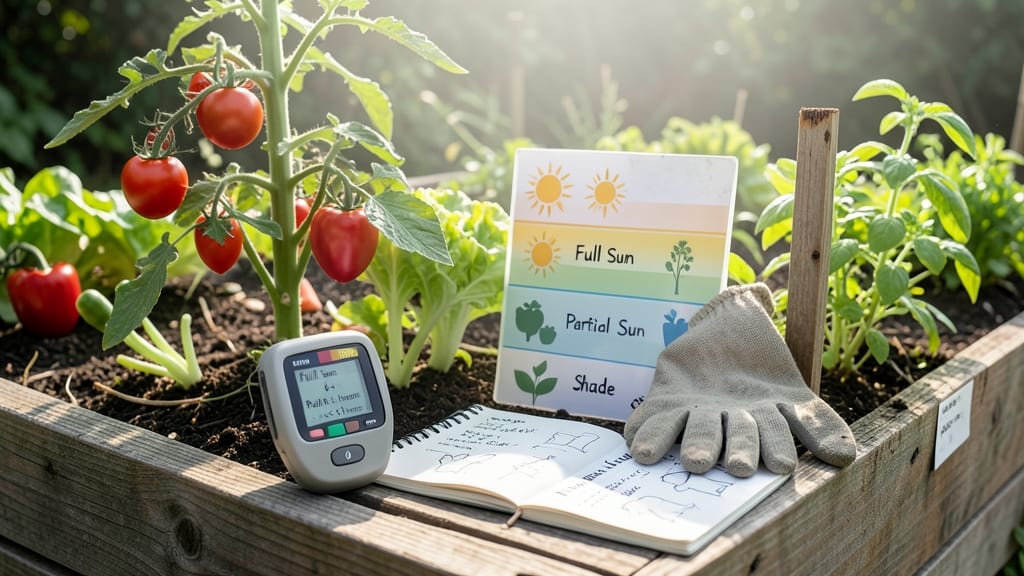
A vegetable garden needs 6 to 8 hours of direct sunlight daily to produce strong, healthy crops 🌱—but too much sun can burn tender leaves, and too little stunts growth.
Wondering why some of your plants thrive while others wilt? The answer lies in understanding how much sunlight each crop truly needs.
Most vegetables, like tomatoes and peppers, crave full sun, while leafy greens tolerate partial shade. But here’s the catch: intensity matters just as much as duration. A hot, southern exposure delivers more energy than a gentle morning sun, and your garden’s microclimate can shift needs by the season.
In this guide, I’ll break down the exact sunlight hours for your favorite crops, how to measure sunlight in your space, and what to do when your garden gets more shade than expected.
You’ll learn to spot signs of sun stress, adjust planting layouts, and even supplement light for urban or shaded gardens.
By the end, you’ll know exactly how to balance sunlight for a bountiful harvest—no guesswork, no wasted effort. Let’s get your vegetable garden growing its best!

Sunlight requirements for vegetables: full sun vs. partial shade breakdown
Sunlight isn't just a preference for vegetables—it's the fuel that drives photosynthesis, where plants convert light into energy. But not all crops need the same amount. Full sun lovers like tomatoes crave 6-8 hours of direct rays, while partial shade plants such as lettuce thrive with just 3-4 hours.
The key is understanding how light intensity affects each plant's growth patterns and yield potential.
Many gardeners make the mistake of assuming sunlight hours are equal across seasons. In reality, summer sun is more intense than spring or fall light, meaning plants may need less time in peak summer to avoid stress.
For example, a pepper plant might get sunburned if exposed to 10+ hours of midday summer sun, even though it needs 6-8 hours in cooler months.
Here’s the breakdown you need to optimize your vegetable garden’s sunlight exposure:
| Vegetable Category | Sunlight Needs | Examples | Growth Impact |
|---|---|---|---|
| Full Sun Lovers | 6-8+ hours direct | Tomatoes, Peppers, Cucumbers, Corn, Eggplants | Poor fruit set, stunted growth, weak stems |
| Partial Shade Tolerant | 3-6 hours direct | Leafy Greens (Spinach, Kale), Beets, Radishes, Green Onions | Bitter taste, bolting, leggy growth |
| Low-Light Adaptable | 2-4 hours direct | Bush Beans, Swiss Chard, Lettuce (some varieties), Parsley | Slow growth, smaller yields, pale leaves |
| Seasonal Adjustments | Reduce by 1-2 hours in summer | All vegetables | Sunburn, wilting, reduced photosynthesis |
Let’s dive deeper into why these distinctions matter. Full sun crops like tomatoes and cucumbers rely on intense light to produce energy-rich fruits. Without enough sun, they’ll focus on leafy growth instead of flowering, leading to smaller yields.
Meanwhile, leafy greens such as spinach or kale actually bolt (go to seed prematurely) when exposed to too much heat and light, ruining their tender texture.
Another common misconception is that morning sun is the same as afternoon sun. Morning light is gentler and helps prevent water stress by reducing evaporation. Afternoon sun, especially in summer, can scorch leaves, so crops like peppers often need afternoon shade in hot climates.
I’ve seen bell peppers develop sunburnt patches when planted in full afternoon sun, even though they technically need 6-8 hours of light.
For partial shade vegetables, the goal is to balance light exposure. Lettuce, for example, will turn bitter if it gets too much sun, but it also won’t thrive in deep shade. A 3-4 hour window of morning sun followed by afternoon shade is ideal.
This is where garden layout becomes critical—positioning taller plants like corn to the north of shorter crops can naturally provide shade during peak hours.
Don’t overlook microclimates in your garden. A spot near a fence or building might receive only half the sunlight of an open area.
I once planted bush beans in what I thought was partial shade, only to realize they were getting full sun by 2 PM. The result? Overly tall, weak plants that struggled to produce pods.
A quick check with a sunlight meter or even a DIY test (marking a stick at sunrise/sunset) can save you from costly mistakes.
If you’re working with limited sunlight, consider reflective surfaces like white mulch or light-colored walls to bounce extra light onto plants. Even container gardens on balconies can benefit from rotating pots throughout the day to ensure even exposure.
And remember: seasonal changes mean your garden’s sunlight map shifts. What’s full sun in spring might become partial shade by summer due to taller plants or nearby trees.
Pro tip: Start by grouping plants with similar sunlight needs together. Place tomatoes and peppers in the sunniest spot, then add leafy greens to the edges where they’ll get dappled light.
This not only maximizes your harvest but also makes maintenance easier by reducing the need to move plants later in the season.
🌱
How to measure and optimize sunlight in your garden layout
Sunlight isn't just about hours—it's about intensity, timing, and consistency. Before planting, I map my garden's sunlight patterns to avoid common mistakes like overcrowding sun-lovers or placing shade-tolerant crops in bright spots.
Start by observing your space for at least 2 weeks, noting how shadows shift throughout the day. This helps me plan for microclimates—areas where sunlight behaves differently due to walls, fences, or even neighboring trees.
For precise measurements, I use a sunlight meter (or a DIY method with a white board) to track photosynthetically active radiation (PAR). Most vegetable gardens need 6-8 hours of direct sun daily, but some crops like lettuce thrive with just 3-4 hours.
I divide my garden into zones: full sun (6+ hours), partial shade (3-6 hours), and full shade (under 3 hours). This zoning prevents sunburn on delicate leaves while ensuring sun-hungry plants like tomatoes get enough light.
Seasonal shifts can drastically change your garden’s sunlight dynamics. In summer, the sun is higher and more intense, which can scorch leaves if plants aren’t acclimated. I use lightweight shade cloth (30-50% coverage) for heat-sensitive crops like basil or cucumbers.
Conversely, winter sunlight is weaker and arrives at a lower angle, so I rotate containers or plant winter greens in sunnier spots that might have been shaded in summer.
Don’t overlook vertical space—trellises and cages aren’t just for aesthetics. They help maximize sunlight exposure for vining plants like beans or peas by lifting them above ground-level shade. I also use reflective surfaces, like white gravel or aluminum foil, to bounce extra light onto shady corners.
This trick works wonders for container gardens or urban plots where space is limited.
Finally, monitor and adapt. If your tomatoes start looking leggy or your lettuce bolts prematurely, it’s a sign your sunlight balance is off. I keep a garden journal to track plant performance and adjust my layout yearly.
With a little planning, you can turn even the trickiest spots into productive, sun-optimized growing areas.