
Fertilization
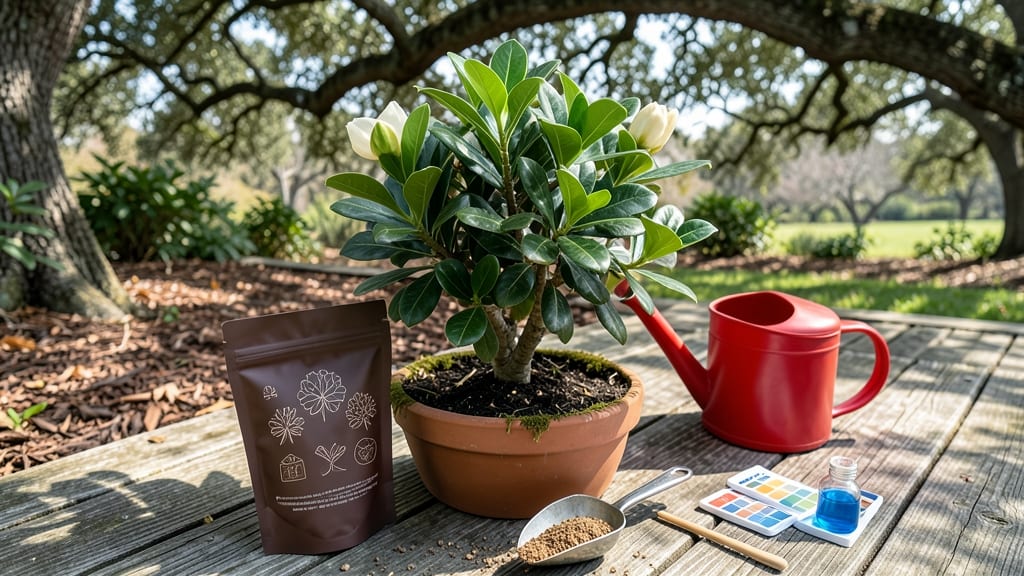
Fertilizing gardenias 🌸 too often can turn their lush foliage into crispy brown leaves, while skipping it leaves you staring at a bush with zero blooms.
You’re not alone if this sounds familiar—even experienced gardeners mess up the timing. The key is feeding them just enough, at the right moments, to fuel those iconic white blooms without overwhelming their delicate roots.
Below, I’ll break down the month-by-month schedule that keeps gardenias thriving in USDA Zone 6a, plus the best fertilizers to use (and the three that’ll ruin your plant).
No more guesswork—just a simple routine that guarantees fragrant blooms without the burn.

Optimal fertilizing frequency for gardenias by season (with soil type adjustments)
Gardenias thrive on a precise fertilizing schedule that mirrors their natural growth cycles. Unlike hardy shrubs, these acid-loving beauties demand careful timing—too much fertilizer scorches roots, while too little stunts blooms.
The key? Match your feeding routine to the season and soil type, adjusting for sandy soils that drain quickly or clay soils that hold nutrients too long.
Most gardeners make one critical mistake: fertilizing year-round. Gardenias go dormant in winter, and feeding during this time wastes nutrients while stressing roots. Instead, focus on spring and summer when new growth and blooms demand extra energy.
Even the soil type changes the game—sandy soil needs more frequent, lighter feedings, while clay soil can handle less frequent but heavier applications.
Here’s the science-backed breakdown you’ve been waiting for, including how to spot and fix over- or under-fertilization before it’s too late.
| Season | Fertilizing Frequency | Sandy Soil Adjustment | Clay Soil Adjustment | Signs of Over-Fertilizing |
|---|---|---|---|---|
| Spring (March-May) | Every 4 weeks | Increase to every 3 weeks | Reduce to every 5 weeks | Brown leaf edges, root burn |
| Summer (June-August) | Every 6 weeks (light feed) | Every 4 weeks (half dose) | Every 8 weeks (full dose) | Yellowing leaves, stunted growth |
| Fall (September-November) | None (dormancy prep) | None | None | N/A |
| Winter (December-February) | None (dormant) | None | None | N/A |
Let’s start with spring, the most critical season for gardenias. After winter dormancy, your plant needs a nutrient boost to fuel new growth. Apply a balanced fertilizer (10-10-10) every 4 weeks, starting in early March.
For sandy soil, increase frequency to every 3 weeks because nutrients wash out faster. If your gardenia shows purple-tinged leaves, it’s a classic sign of phosphorus deficiency—time to feed!
Summer is all about maintaining blooms, not heavy feeding. Switch to a light feed every 6 weeks with a fertilizer higher in phosphorus (like 8-3-9) to encourage flowers. In clay soil, nutrients linger, so extend the gap to 8 weeks.
Watch for yellowing leaves with green veins—this means excess nitrogen. Flush the soil with water to dilute salts and reduce feeding by half for the next cycle.
Fall and winter are no-feed zones. Gardenias enter dormancy, and feeding now can burn roots or encourage weak growth that won’t survive frost. Instead, focus on mulching with acidic compost (like pine needles) to protect roots and maintain soil acidity.
If you notice dropping buds in late summer, it’s often due to low humidity, not fertilizer—group plants together or use a pebble tray to increase moisture in the air.
Over-fertilizing is easier to spot than you think. Crispy brown leaf edges or white crusty deposits on soil mean you’ve overdone it. To fix it, flush the soil with 2-3 times the pot’s volume of water (for potted plants) or water deeply for in-ground gardenias.
For under-fertilized plants, look for small, sparse leaves or no blooms. Increase feeding frequency by 2 weeks and use a slow-release fertilizer to avoid shocks.
Pro tip: Always water before fertilizing to prevent root burn. Moist soil helps distribute nutrients evenly, while dry soil creates concentrated salt pockets that damage roots. For container gardenias, reduce fertilizer by 25%—roots in pots have less room to absorb nutrients, leading to quicker buildup of salts.
Remember, gardenias reward consistency over intensity. Stick to this schedule, adjust for your soil type, and you’ll enjoy fragrant blooms from spring to fall—without the stress of chemical burns or nutrient deficiencies. Happy gardening!
Best fertilizer types for gardenias (and what to avoid like poison ivy)
Gardenias thrive on acid-loving fertilizers with a balanced NPK ratio of 10-10-10 or 8-3-9. The wrong type can cause leaf scorch or stunted growth, so choosing wisely is everything. Organic options like fish emulsion or cottonseed meal slowly release nutrients, while synthetic granules offer quick results—but both have trade-offs.
Your gardenias need low nitrogen to prevent leafy growth over blooms. Too much nitrogen (like in lawn fertilizers) sends your plant into a foliage frenzy, leaving you with few (if any) fragrant flowers. Always check the label for acid-forming ingredients like sulfur or iron chelates, which gardenias crave.
Here’s a quick breakdown of how often to fertilize gardenias based on your chosen type:
How Often to Fertilize Gardenias
| Fertilizer Type | Frequency | Best For | Warning Signs |
|---|---|---|---|
| Organic (Fish Emulsion) | Every 4-6 weeks | Slow-release nutrients | Brown leaf tips |
| Synthetic (10-10-10) | Every 6 weeks | Quick blooms | Yellow leaves |
| Acid-Loving (Cottonseed Meal) | Every 8 weeks | Long-term soil health | Slow growth |
⚠️ Never use high-nitrogen fertilizers like lawn food—they’ll kill your blooms.
Avoid these three fertilizers like poison ivy—they’ll ruin your gardenias faster than a late frost:
1. Citrus Bloom Booster: Too much phosphorus can cause root burn and stunted growth. Look for low-phosphorus options instead.
2. Slow-Release Pellets: Gardenias need frequent, light feedings—not a one-time nutrient dump. These can lead to fertilizer burn over time.
3. Compost Tea (Unbalanced): Homemade compost tea often lacks the acidic pH gardenias need. If you use it, test the pH first—it should be 5.0-6.0.
For the best results, I recommend alternating between organic and synthetic fertilizers. Start with a balanced 10-10-10 in early spring, then switch to cottonseed meal in summer to boost blooms. Always water deeply after applying fertilizer to prevent root damage.
Watch for leaf yellowing or brown edges—these are your plant’s way of saying, “Too much, too soon!” Adjust your schedule and reduce the amount by half until the symptoms fade.