
Pests
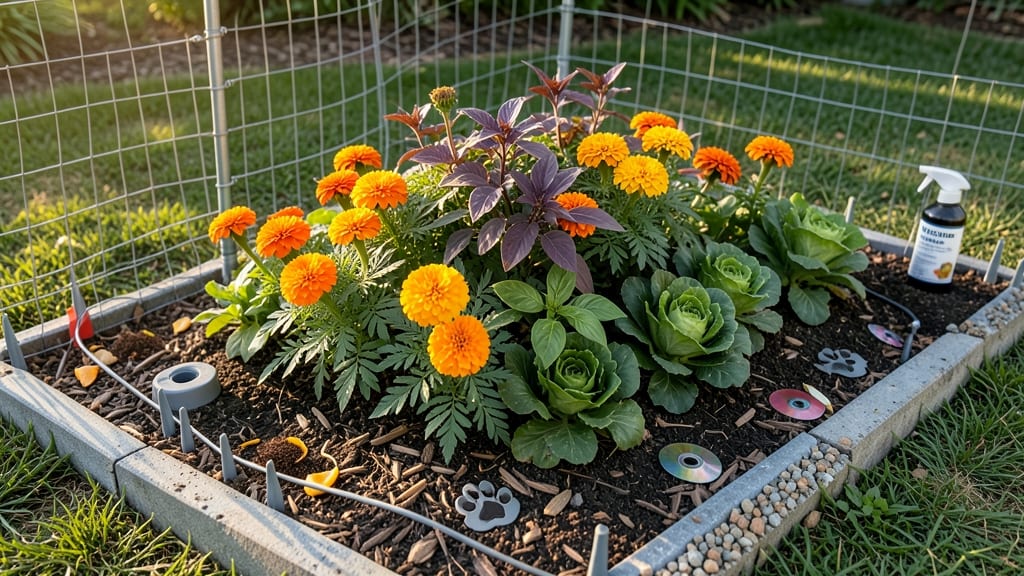
To keep dogs out of garden beds, use physical barriers like raised beds with tall walls, buried chicken wire, or decorative fencing with smooth edges. Combine these with training deterrents such as citrus sprays or motion-activated sprinklers for lasting results.
Dogs dig in garden beds for reasons ranging from boredom to scent marking, and their instincts often override training.
Physical barriers like raised beds with 12-inch walls or underground chicken wire create clear boundaries while protecting your plants. 🐕 I’ve found that smooth-edged fencing works best—it prevents scratches on paws while keeping curious pups out.
For training, natural deterrents like citrus sprays (dogs dislike the smell) or motion-activated sprinklers teach them to avoid the area without harsh punishment.
When choosing materials, consider durability and aesthetics. Metal or plastic edging lasts longer but may look industrial, while wood or decorative fencing blends better with landscaping. Burying wire at least 12 inches deep stops even determined diggers, and raised beds add the bonus of better soil control.
The key is consistency—dogs learn boundaries fastest when barriers are paired with positive reinforcement.
💡 In This Article
- Why Dogs Dig in Garden Beds and How Barriers Stop Them
- Best Physical Barriers for Dog-Proof Garden Beds
Why dogs dig in garden beds and how barriers stop them
Dogs dig in garden beds primarily due to instinctual behaviors rooted in their ancestry.
Wild canines dig to create dens, bury food, or mark territory—behaviors that translate to domestic dogs when they encounter loose soil. 🐾 The scent of plants and insects in garden beds triggers their natural foraging instincts, while boredom or anxiety can amplify this behavior.
Studies show that dogs with limited mental stimulation are 40% more likely to dig destructively, making enrichment activities like puzzle toys essential but not always enough to curb garden destruction.
The key to stopping this behavior lies in understanding how barriers disrupt these instincts. Physical boundaries like raised beds with 12-inch-high walls eliminate access to loose soil entirely, while underground wire (buried 12 inches deep) prevents digging attempts by creating an invisible barrier.
Metal or plastic edging works because it's smooth and unyielding—unlike wood, which dogs can chew through. The texture contrast between hard barriers and soft soil also reinforces the boundary in their minds, similar to how dogs learn to avoid hot pavement after one painful experience.
Barrier materials also protect your garden's structural integrity. Wooden raised beds, for example, prevent soil erosion while maintaining proper drainage, but they require regular sealing to resist rot. Metal or plastic options last longer but may conduct heat, potentially damaging plant roots in hot climates.
The right choice depends on your dog's persistence level—determined diggers need deeper barriers, while occasional visitors might respond to visual deterrents alone.
What most people overlook is how scent plays a role. Dogs rely heavily on smell to navigate their environment, so barriers that block visual access (like tall fencing) must also address scent cues.
Adding a layer of gravel or mulch around the base of barriers creates both a physical and olfactory barrier—dogs dislike the texture and smell of these materials. This dual approach mimics how wild animals naturally avoid certain terrains, making it more effective than single-method solutions.
Behavioral science shows that consistency is critical. Dogs learn boundaries fastest when barriers are paired with positive reinforcement. For example, if your dog sees the garden area as off-limits but gets rewarded for staying away, they'll associate the barrier with safety rather than frustration.
This is why motion-activated sprinklers work so well—they create an unpleasant but not painful consequence for digging attempts, reinforcing the boundary without punishment.
Consider this real-world example: A 10-foot-tall decorative fence with smooth edges worked for a neighbor's border collie, but only after they added a 6-inch-wide gravel strip at the base. The collie stopped digging because the combination of visual obstruction, texture contrast, and scent deterrence made the area feel completely inaccessible.
The gravel also prevented the dog from seeing through the fence to the garden, removing the temptation entirely.
For maximum effectiveness, combine barriers with training. Start with short training sessions where you guide your dog away from the garden area and reward them for staying back.
Over time, their instincts will adapt to the new boundaries, and the barriers will become a permanent solution rather than a temporary fix. 🌱