
Watering
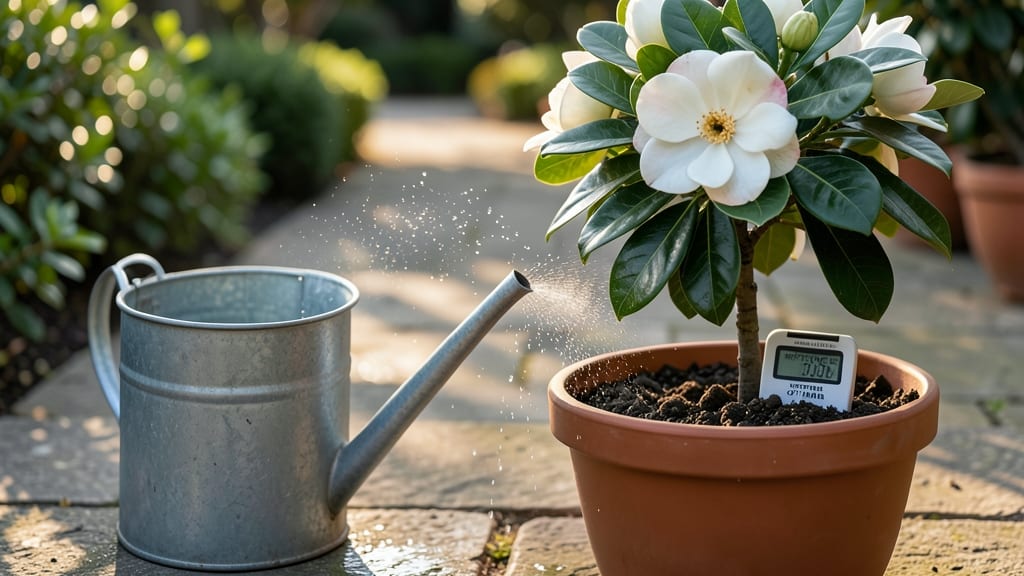
To water gardenias properly, aim for deep, consistent moisture—never letting the soil dry out completely but avoiding soggy roots that suffocate tropical blooms 🌸.
Struggling to keep your gardenias blooming? The secret isn’t just sunlight or fertilizer—it’s mastering the perfect watering routine. Overwater or underwater, and you’ll risk yellow leaves, wilting blooms, or even plant death.
These fragrant shrubs thrive when their soil stays evenly moist, like a wrung-out sponge—never bone-dry, never waterlogged. In Zone 6’s humid summers, that means watering every 2-3 days, while winter slows things down to once a week.
Below, I’ll walk you through the exact technique—when to water, how deep, and how to tell if you’re doing it right (or wrong). Your gardenias will thank you with bold, fragrant blooms all season long.


Optimal watering schedule for gardenias based on season and climate
Gardenias thrive in tropical conditions, meaning they crave consistent moisture but despise soggy roots. As a gardener in Zone 6 or warmer, I’ve learned that adjusting your watering routine by season and climate is the key to keeping these fragrant shrubs happy.
Too little water, and your gardenias will droop and drop leaves. Too much, and you’ll invite root rot and fungal diseases. Let’s break it down so you can water like a pro.
First, understand that gardenias have shallow, fibrous roots that need to stay evenly moist but never waterlogged. In humid climates, like the Southeast U.S., evaporation is slower, so you’ll water less frequently.
In dry climates, like the Southwest, you’ll need to water more often to compensate for rapid moisture loss. Always check the top 2–3 inches of soil before watering—this is your golden rule for gardenias.
Now, let’s dive into the seasonal watering schedule tailored to your climate. The table below compares humid vs. dry climates for each season, so you can adjust your routine like a seasoned gardener. Remember, morning watering is best to reduce fungal risks and evaporation loss.
| Season | Humid Climate (e.g., Southeast U.S.) | Dry Climate (e.g., Southwest U.S.) | Soil Moisture Test | Signs of Overwatering |
|---|---|---|---|---|
| Spring | Every 3–4 days | Every 2–3 days | Top 2" dry | Yellowing leaves, mold |
| Summer | Every 2–3 days (deep soak) | Daily (early morning) | Top 3" dry | Wilting, brown leaf edges |
| Fall | Every 4–5 days | Every 3–4 days | Top 2" dry | Leaf drop, stunted growth |
| Winter | Every 7–10 days (if no frost) | Every 5–7 days (if above freezing) | Top 1" dry | Dormant leaves stay crisp |
In spring, gardenias wake up from dormancy and need a gentle increase in water to support new growth. Aim for 3–4 days between waterings in humid areas, but reduce to 2–3 days in dry climates.
This is when you’ll see the most new leaves and buds, so don’t skimp on hydration. If you notice yellowing leaves, it’s often a sign of overwatering—cut back slightly and improve drainage.
Summer is the most critical time for gardenia watering. In humid climates, water every 2–3 days with a deep soak to encourage root growth. In dry climates, you may need to water daily in extreme heat, especially if your gardenias are in full sun.
Always water at the base of the plant and avoid wetting the leaves to prevent fungal issues like powdery mildew. If your gardenias start to wilting or dropping buds, they’re thirsty—react quickly!
As fall approaches, reduce watering gradually. Gardenias prepare for dormancy, so they need less moisture. In humid areas, water every 4–5 days, while dry climates can stretch to 3–4 days.
Watch for signs of leaf drop or brown edges, which signal overwatering. This is also the time to mulch around the base to retain moisture and regulate soil temperature.
Winter watering is all about minimal maintenance. Gardenias in Zone 6 or colder may go dormant, so reduce watering to every 7–10 days if there’s no frost. If you’re in a mild winter climate, like coastal areas, water every 5–7 days to keep roots lightly moist.
Never let the soil dry out completely, but avoid soggy conditions. Dormant leaves may look crisp, but don’t panic—this is normal!
Pro tip: Use a soil moisture meter to avoid guesswork. Stick it into the soil to 2–3 inches deep—if it reads dry, it’s time to water. For potted gardenias, check the soil daily in summer, as containers dry out much faster than in-ground plants.
And always ensure your pots have drainage holes to prevent root rot.
By following this seasonal watering guide, your gardenias will reward you with vibrant blooms and lush foliage. Remember, the goal is consistent moisture, not soggy soil**.
Adjust as needed based on your local weather, and soon you’ll have gardenias that bloom like they’re on vacation in the tropics! 🌸
Step-by-step guide to proper watering technique for gardenias
Gardenias thrive on consistent moisture, but their tropical roots hate soggy soil. The key is deep, infrequent watering that keeps the top 2-3 inches of soil evenly damp—not drenched.
I’ve learned the hard way that skipping this routine leads to leaf drop or root rot, so let’s fix that together.
Start by testing your soil’s moisture level. Stick your finger 2 inches deep—if it feels dry, it’s time to water. If it’s still damp, wait another day. This simple check prevents both overwatering and underwatering, which are the top culprits behind gardenia stress.
How to Water Gardenias Like a Pro
- 1 Water in the morning (before 10 AM) to reduce evaporation and fungal risks. Avoid evening watering—wet foliage overnight invites powdery mildew.
- 2 Use a slow trickle or soaker hose to deliver water 2-3 inches deep. Aim for the soil, not the leaves—avoid wetting foliage to prevent disease.
- 3 Apply mulch (2-3 inches of pine bark or pine needles) to retain moisture and regulate soil temperature. This mimics their tropical habitat and cuts water needs by 30%.
- 4 Check for drainage. If water pools on the surface after 30 minutes, amend the soil with perlite or sand to improve airflow.
- 5 Adjust for seasons: Water daily in summer, every 3-4 days in fall, and reduce to weekly in winter (unless potted).
Watch for yellowing leaves or drooping blooms—these are red flags. Yellow leaves often mean overwatering, while crispy edges signal underwatering. I once saw my gardenia’s leaves curl up like a frustrated fern because I ignored these signs for weeks!
For potted gardenias, check soil moisture daily in summer—containers dry out 3x faster than in-ground plants. Move pots to a shaded spot during heatwaves to slow evaporation, and always use pots with drainage holes.
Remember, gardenias reward consistency with fragrant blooms. Stick to this routine, and you’ll enjoy healthy foliage and showstopping flowers all season long. 🌸