
Tools
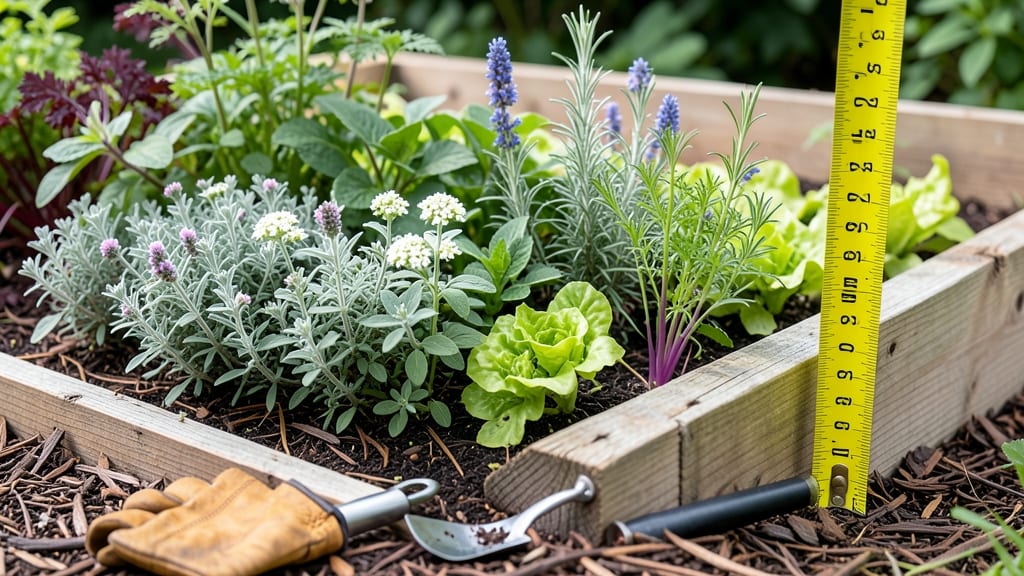
The ideal garden bed height for most vegetables and herbs is 6 to 12 inches deep, providing ample root space while staying accessible for comfortable planting and maintenance. Deeper raised beds up to 18 inches work best for root crops and heavy feeders like tomatoes.
The right bed height balances root development with your comfort—too shallow, and plants struggle; too tall, and you’ll strain your back. 🌱 For example, leafy greens like spinach thrive in 6-inch beds, while deep-rooted plants like carrots need 12+ inches of soil.
Raised beds also warm up faster in spring, giving you a longer growing season. I always add 3 inches of compost on top to boost fertility without sacrificing depth for roots.
Another key factor is drainage—shallow beds dry out faster, while deeper ones retain moisture better but may need better aeration. If you’re designing for accessibility, 12-inch beds strike the perfect balance for most gardeners, reducing bending while supporting most plant types.
For adaptive gardening, consider waist-high beds to minimize strain entirely.
💡 In This Article
- How Garden Bed Height Affects Plant Growth and Soil Health
- Designing Accessible Raised Beds for Different Plant Types
How garden bed height affects plant growth and soil health
The depth of your garden bed directly influences root development through oxygen availability and nutrient access. Plants like lettuce or radishes thrive in 6-inch beds because their roots rarely exceed 12 inches, while deeper-rooted vegetables like carrots or potatoes need 12-18 inches to establish properly.
The extra depth allows roots to explore more soil volume, accessing water and nutrients during dry spells. 🌱 What you might not realize is that deeper beds also create better soil stratification—top layers warm faster in spring while deeper zones stay cooler, mimicking natural forest floor conditions.
Soil aeration becomes critical as bed depth increases. In 12-inch beds, the bottom 4-6 inches can become compacted over time, reducing oxygen flow to roots.
This is why gardeners often use a mix of 50% topsoil, 30% compost, and 20% coarse sand or perlite—the sand creates air pockets that prevent suffocation.
Microbial activity also shifts: deeper beds support more diverse fungi and bacteria because they maintain stable moisture levels, while shallow beds dry out faster, concentrating microbes near the surface.
Moisture retention follows a predictable pattern based on depth. A 6-inch bed dries out 30-50% faster than a 12-inch version because the surface area exposed to evaporation is proportionally larger.
This is why mulching becomes essential in shallower beds—adding 2-3 inches of straw or wood chips can reduce water loss by up to 40%.
Deeper beds also buffer against temperature extremes: the soil at 12 inches depth stays within 5°F of the annual average temperature, while surface soil can swing 20°F+ between day and night.
Drainage efficiency improves with height, but only up to a point. Beds taller than 18 inches may develop waterlogging at the bottom if the soil lacks sufficient sand or organic matter.
The ideal drainage system combines 1-2 inches of gravel or broken pottery shards at the base with a 10% slope for water runoff. For container gardening, this translates to pots needing drainage holes every 12 inches of depth—otherwise, roots suffocate from lack of oxygen.
Consider this comparison: a 6-inch bed for basil will produce 20% smaller leaves than in a 12-inch bed because roots can't access sufficient nutrients. Meanwhile, asparagus crowns planted in 12-inch beds yield 30% more spears than in 6-inch beds because they develop deeper rhizomes.
The trade-off? Deeper beds require more initial soil preparation and may cost $50-$100 more per 4x8-foot bed due to material costs.
For perennials like asparagus or rhubarb, deeper beds pay long-term dividends. These plants establish 3-5 feet of roots over 3-5 years, so a 12-inch bed becomes the minimum viable depth.
Annuals like tomatoes benefit from 18-inch beds because their root systems expand rapidly during the growing season, competing with weeds for nutrients. The key is matching bed depth to your plants' growth patterns—not just their current needs, but their future potential.