
Neem Oil
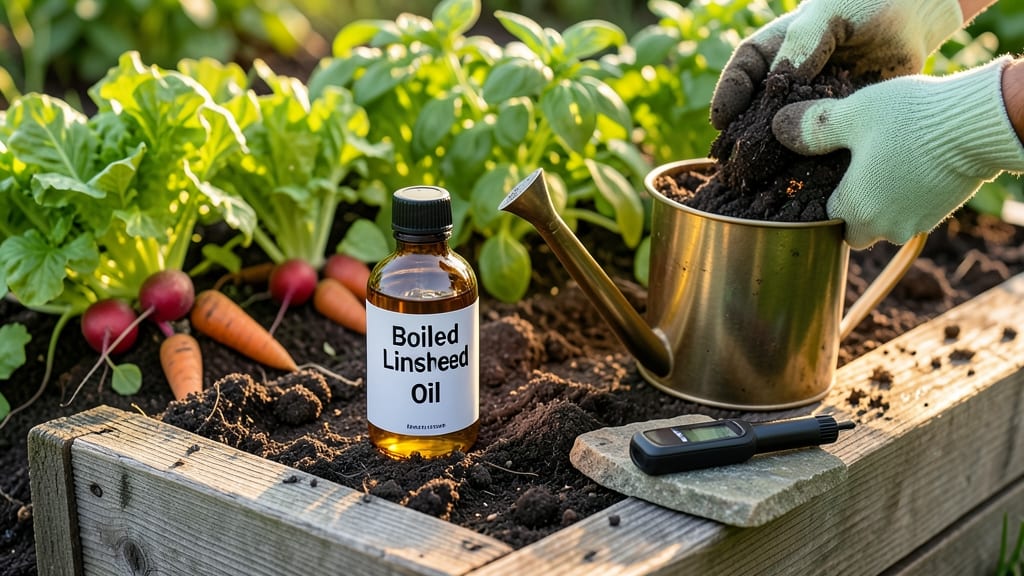
Boiled linseed oil is generally safe for garden beds when used properly as a soil conditioner, but it must be fully dried and cured before planting to prevent seed inhibition and potential toxicity to roots. Apply sparingly and avoid overuse near edible crops.
When used correctly, boiled linseed oil acts as a natural soil sealant that improves moisture retention and suppresses weeds—ideal for ornamental gardens. 🌱 However, the drying process is critical: if not fully cured (typically 2-4 weeks), it can create a waterproof barrier that smothers roots or prevents seeds from sprouting.
I always recommend testing a small patch first, especially in edible gardens, since overapplication might introduce unwanted residues.
For best results, dilute it with water (1:3 ratio) and apply lightly in early spring or late summer when temperatures are moderate. This approach mimics how professional gardeners use it to protect soil without risking plant stress. Always keep it away from direct contact with young seedlings or tender plants.
💡 In This Article
- How Boiled Linseed Oil Affects Soil and Plant Health
- Safe Application Methods for Garden Beds with Linseed Oil
How boiled linseed oil affects soil and plant health
Boiled linseed oil works as a soil conditioner by creating a thin, water-resistant film on the soil surface. This happens because the oil contains linseed oil polymers, which oxidize when exposed to air and form a semi-permeable barrier.
This barrier reduces evaporation by up to 30-40% while still allowing water and oxygen to penetrate—similar to how a raincoat keeps you dry without trapping sweat. The key is the oil's drying time (12-24 hours) when applied in a diluted form, but full curing takes 2-4 weeks for complete polymerization.
The oil's chemical structure also interacts with soil particles, binding them together to improve structure. Studies show it increases water retention by 15-25% in sandy soils, making it ideal for drought-prone areas.
However, this same property can backfire if overapplied: the film becomes too thick, blocking oxygen and suffocating roots. 🌱 In extreme cases, this creates anaerobic conditions where beneficial microbes struggle to thrive, reducing soil fertility over time.
The oil's natural pH (6.5-7.5) is neutral, but the drying process can temporarily lower soil pH if applied too heavily.
For plant health, the biggest risk comes during the drying period. Fresh linseed oil contains unsaturated fatty acids that can inhibit seed germination if seeds are planted too soon. The oil's viscosity coats seeds, preventing water absorption—a process similar to how oil-based herbicides work.
This is why gardeners must wait until the oil is fully cured before planting. Even then, avoid applying near shallow-rooted plants like lettuce or strawberries, as the surface film can restrict root expansion.
Consider the soil type when applying: clay soils benefit most from linseed oil's moisture retention, while loamy soils already hold water well. Overapplication in loam can lead to waterlogging. 💧 The oil's drying process also affects temperature sensitivity—below 50°F, it polymerizes slower, extending curing time.
This is why spring applications work best in most climates. Always test a small area first, especially in raised beds where drainage differs from ground soil.
Professional gardeners use linseed oil at a 1:3 dilution ratio (1 part oil to 3 parts water) for general soil sealing. This concentration creates the optimal balance between moisture retention and permeability. Undiluted oil forms a thicker barrier that's more likely to suffocate roots, while over-diluted oil loses its effectiveness.
The drying process also emits a faint nutty aroma that dissipates within days, making it less noticeable than chemical sealants.
For edible gardens, the concern shifts to residue absorption. While cured linseed oil breaks down over time, heavy applications may leave trace amounts in the top 1-2 inches of soil.
This isn't toxic, but it can alter soil chemistry slightly—similar to how food-grade mineral oils are used in organic farming but monitored closely. The oil's breakdown products include harmless fatty acids that plants can metabolize, but the initial application must be precise to avoid buildup.