
Neem Oil
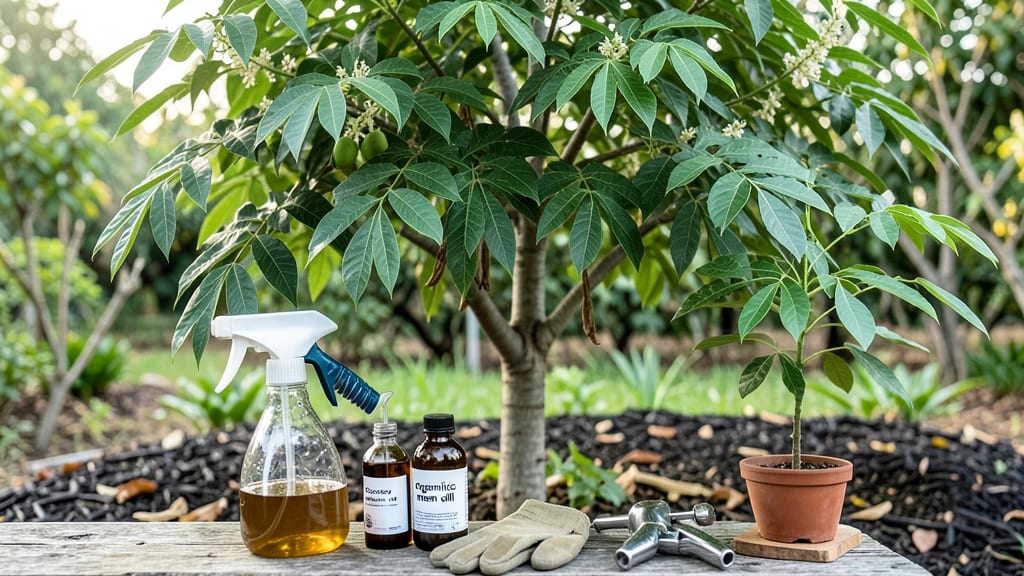
For organic gardening, neem oil is a powerful natural solution that targets aphids, mites, and fungal infections when properly diluted—usually 1-2 teaspoons per gallon of water. Adjust concentrations for delicate plants like citrus or vegetables, and always spot-test leaves first to prevent damage.
Neem oil's magic lies in its active compound, azadirachtin, which disrupts insect life cycles and prevents fungal spores from germinating. 🌱 Unlike synthetic pesticides, it breaks down quickly in sunlight, making it safer for beneficial insects when used correctly.
I've found that cold-pressed neem oil works best because it retains higher concentrations of these natural compounds. The key is applying it in the early morning or evening when temperatures are cooler—this reduces evaporation and maximizes plant absorption.
What's fascinating is how neem oil's effectiveness varies by plant type. For example, vegetables like tomatoes can handle a stronger solution (up to 2 teaspoons per gallon), while citrus trees often need half that strength to avoid leaf burn.
Always mix fresh and spray until leaves are thoroughly wet but not dripping—this ensures even coverage without wasting product. The oil's systemic properties mean it can even protect plants from pests developing resistance over time.
💡 In This Article
- How Neem Oil Works as a Natural Pest Repellent
- Safe Neem Oil Dosages for Common Garden Plants
How neem oil works as a natural pest repellent
Neem oil's power comes from its active compound, azadirachtin, which acts like a biological disruptor for pests. This compound interferes with insects' hormonal systems, preventing them from molting properly and ultimately stopping their life cycles.
For example, aphids exposed to neem oil often fail to reproduce, while mites lose their ability to feed effectively. The oil also contains salannin and nimbin, which act as natural fungicides by inhibiting spore germination on plant surfaces.
The effectiveness varies based on formulation—cold-pressed neem oil retains higher concentrations of these active compounds compared to refined versions. Studies show cold-pressed oil can contain up to 2,000 ppm azadirachtin, while refined versions may have as little as 500 ppm.
The oil's pH also matters: it works best in slightly acidic solutions (pH 6-7), which is why mixing it with water (pH ~7) is ideal. When applied correctly, neem oil creates a protective film on leaves that repels soft-bodied insects while allowing beneficial predators like ladybugs to remain unaffected.
What makes neem oil unique is its systemic absorption—when applied to leaves, some compounds are absorbed into the plant's vascular system, offering protection even to new growth. This is particularly useful against fungal diseases like powdery mildew, where the oil disrupts spore formation at the cellular level.
The oil's volatility means it breaks down quickly in sunlight (within 1-3 days), reducing harm to beneficial insects while still providing residual protection for 1-2 weeks after application.
Temperature plays a crucial role in efficacy. Neem oil works best when applied at temperatures between 60-85°F. Below 60°F, the oil may not activate properly, while above 85°F, it can evaporate too quickly, reducing coverage.
This is why early morning or late evening applications are ideal—the cooler temperatures help the oil adhere better to plant surfaces and penetrate more effectively.
For fungal control, neem oil's mechanism involves inhibiting ergosterol biosynthesis, a critical process for fungal cell membrane formation. Without ergosterol, fungal spores can't germinate, effectively starving the infection. This is why neem oil is particularly effective against early-stage fungal infections before they establish themselves on plant tissues.
The oil's natural properties make it a safer alternative to synthetic fungicides, which often require longer waiting periods before harvest.
Consider these key factors when applying neem oil:
- Concentration: Higher concentrations (up to 2% oil solution) work better for severe infestations but require more frequent applications.
- Plant sensitivity: Delicate plants like citrus or herbs need half-strength solutions to avoid phytotoxicity.
- Application method: Use a horticultural oil sprayer for even coverage, especially on undersides of leaves where pests often hide.
The science behind neem oil's dual action—both as an insect repellent and fungicide—makes it one of the most versatile tools in organic gardening. Its ability to work through multiple biological pathways while breaking down safely in the environment is what sets it apart from conventional pesticides. 🌿