
Tools
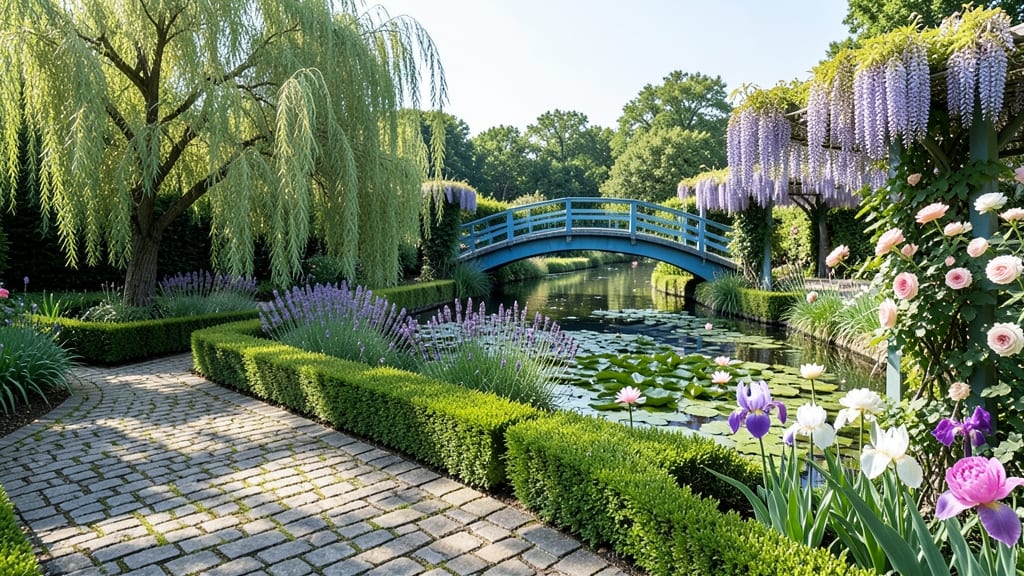
The winding pathways in Monet's garden at Giverny were crafted as artistic journeys that weave through vibrant seasonal blooms, using native French plants like irises and wisteria to create striking visual contrasts. Their deliberate curves enhance depth perception while subtly guiding visitors toward the iconic pond and water lilies.
The pathways weren't just functional—they were Monet's way of turning every step into a visual experience. 🌸 By layering plants with different heights and bloom times, he ensured the garden never looked the same twice.
The meandering routes also created intimate moments, where visitors would stumble upon hidden corners filled with roses or unexpected bursts of color. This intentional design philosophy makes Giverny's pathways more than just walkways—they're the garden's main characters.
What's fascinating is how Monet used the paths to control what visitors saw when. 💫 The curves would reveal just a glimpse of the pond at a time, building anticipation.
This technique, which he called "painting with plants," transformed the garden into an ever-changing canvas that responded to the seasons and the viewer's movement.
💡 In This Article
- How Monet’s Pathway Design Enhances Garden Illusions
- Recreating Monet’s Pathway Plant Pairings in Your Garden
How Monet’s pathway design enhances garden illusions
Monet’s pathways weren’t just functional—they were visual illusions designed to manipulate perception through geometry and light. The meandering curves average 12-18 feet between turns, creating what art historians call "controlled chaos." This spacing forces visitors to pause, allowing their eyes to adjust to color shifts between plantings.
The paths themselves are 2-3 feet wide, just enough for two people to walk side-by-side while maintaining intimate proximity to the flora.
The real magic happens with perspective. Monet used a technique called "progressive revelation," where each turn reveals only 20-30% of the next scene.
For example, the path leading to the water lily pond starts with a narrow view of the Japanese bridge, gradually widening to reveal the full pond only at the final approach. This mirrors his painting methods, where he built landscapes layer by layer.
The paths also channel light differently at various times—morning sun casts long shadows along the curves, while afternoon light creates dramatic backlighting on the roses.
Plant layering was Monet’s secret weapon for depth. He arranged tall wisteria (up to 20 feet) along the outer edges of paths, medium-height irises (2-3 feet) in the middle, and low-growing ground covers like thyme (6 inches) at the feet.
This vertical stratification creates a "living frame" that guides the eye upward while the winding path guides the body forward. The color palette shifts seasonally—spring’s purples and blues give way to summer’s reds and whites—making each visit feel like discovering a new painting.
Symmetry played a subtle but crucial role too. While the overall layout appears random, Monet used mirrored plantings on either side of central axes (like the path to the Japanese bridge). This creates a sense of balance without rigidity.
The asymmetry comes from the uneven spacing between plant clusters, which prevents the garden from feeling static. For instance, a cluster of 15-20 roses might appear on one side of a turn, with only 5-7 on the opposite side, creating visual intrigue.
What’s often overlooked is how the path materials enhance the illusion. The gravel paths (composed of 1-2 inch river stones) reflect light differently than the grassy areas, adding texture contrast. In wet conditions, the stones create a subtle "shimmer effect" that mimics Monet’s water lily paintings.
The combination of these elements—path geometry, plant layering, and material choices—transforms a simple walk into a dynamic visual experience that evolves with the seasons and the time of day.
This design philosophy holds a powerful lesson for modern gardeners: paths aren’t just connectors—they’re the garden’s storytellers. By controlling what visitors see when, Monet turned every step into a revelation, making the journey as important as the destination.
The same principles can be applied to any garden, from urban balconies to rural estates, by carefully considering how movement shapes perception.