
Companion Plants
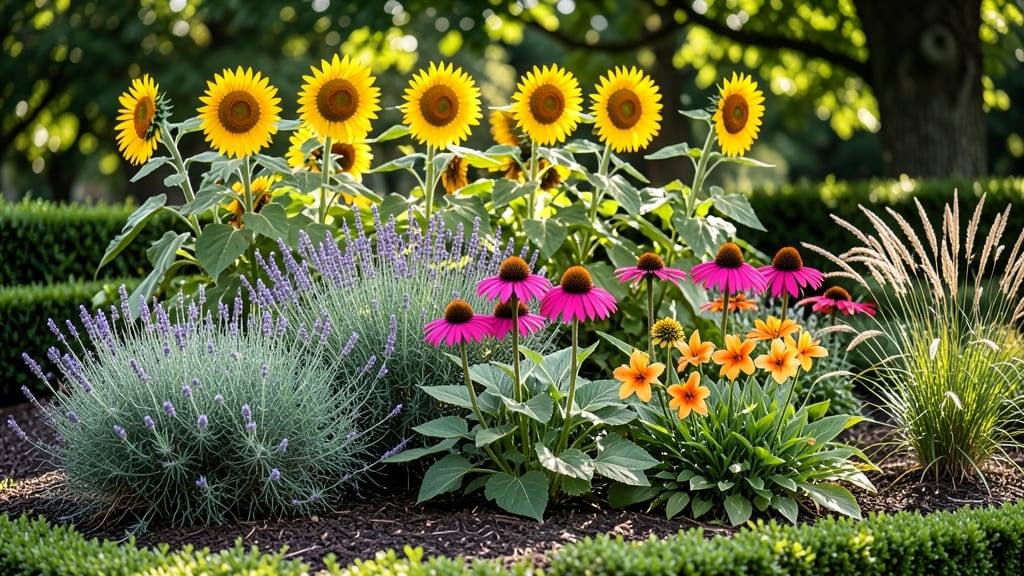
Growing popular garden plants doesn’t have to mean trading beauty for backbreaking work—there’s a whole world of easy-care blooms and lush foliage that thrive with minimal fuss.
Picture this: a garden that stays vibrant from spring’s first buds to winter’s quiet elegance, where perennials return year after year and annuals burst into color without demanding constant attention.
These low-maintenance stars—like sun-loving lavender, shade-tolerant hostas, and pollinator magnets like coneflowers—are the secret to a garden that feels like a vacation, not a chore.
Below, I’ll share the top 15 plants that deliver year-round interest with zero drama, plus how to pair them for maximum impact and trouble-free growth.
15 Low-maintenance garden plants that deliver year-round color
Creating a vibrant garden doesn’t require endless hours of maintenance or a green thumb. The right low-maintenance plants provide stunning year-round color while thriving with minimal effort. These perennials, shrubs, and annuals are chosen for their resilience, adaptability, and ability to self-sustain once established.
Whether you're a busy professional or a weekend gardener, these plants will keep your landscape blooming effortlessly.
To make selection easier, I’ve organized them by seasonal interest, so you can plan for continuous color from spring blooms to winter interest. Each plant includes details on sunlight needs, hardiness zones, and growth habits to help you create a thriving, low-fuss garden.
Let’s dive into the best options for each season!
| Season | Plant Name | Type | Sunlight | Hardiness Zones | Mature Size |
|---|---|---|---|---|---|
| Spring | Bleeding Heart (Dicentra spectabilis) | Perennial | Partial Shade | 3-9 | 2-3 ft tall |
| Spring | Daffodils (Narcissus) | Perennial Bulb | Full Sun | 3-10 | 1-2 ft tall |
| Summer | Coneflower (Echinacea purpurea) | Perennial | Full Sun | 3-9 | 2-4 ft tall |
| Summer | Black-Eyed Susan (Rudbeckia hirta) | Perennial | Full Sun | 3-9 | 1-3 ft tall |
| Fall | Japanese Maple (Acer palmatum) | Shrub | Partial Shade | 5-8 | 6-15 ft tall |
| Fall | Mums (Chrysanthemum) | Annual/Perennial | Full Sun | 3-10 | 1-3 ft tall |
| Winter | Winterberry Holly (Ilex verticillata) | Shrub | Full Sun to Partial Shade | 3-9 | 3-12 ft tall |
| Winter |
How to combine popular garden plants for maximum impactCreating a stunning garden doesn't require complicated designs or rare plants. By combining popular garden plants with complementary traits, you can achieve year-round visual interest while reducing maintenance. The key lies in pairing plants that share similar sunlight needs, water requirements, and soil preferences—this ensures they thrive together naturally. Start with the rule of three: group plants by height (tall, medium, short) to create depth and balance. For example, place tall perennials like coneflowers at the back, medium shrubs like butterfly bush in the middle, and low-growing annuals like pansies at the front. This creates a layered effect that draws the eye. 🌿 Proven Plant Combinations for High-Impact Beds
Don't overlook foliage contrast—mixing plants with different leaf shapes and colors adds visual intrigue. For instance, pair the silvery-blue foliage of lamb's ear with the deep purple of heuchera for a striking contrast. This technique works year-round, even when flowers aren't in bloom. For seasonal harmony, align bloom times so your garden never looks bare. Plant early spring bloomers like crocuses alongside late summer favorites such as black-eyed Susans. This ensures continuous color from March through October with minimal effort. Finally, incorporate natural pest control by choosing companion plants that repel common garden pests. For example, marigolds deter aphids, while basil keeps mosquitoes away—both thrive alongside tomatoes and peppers. This no-fuss approach keeps your garden healthy and vibrant. With these design principles and plant pairings, you'll create a garden that's as easy to maintain as it is beautiful. Start small, experiment with combinations, and let your garden evolve naturally over time. 🌷 |