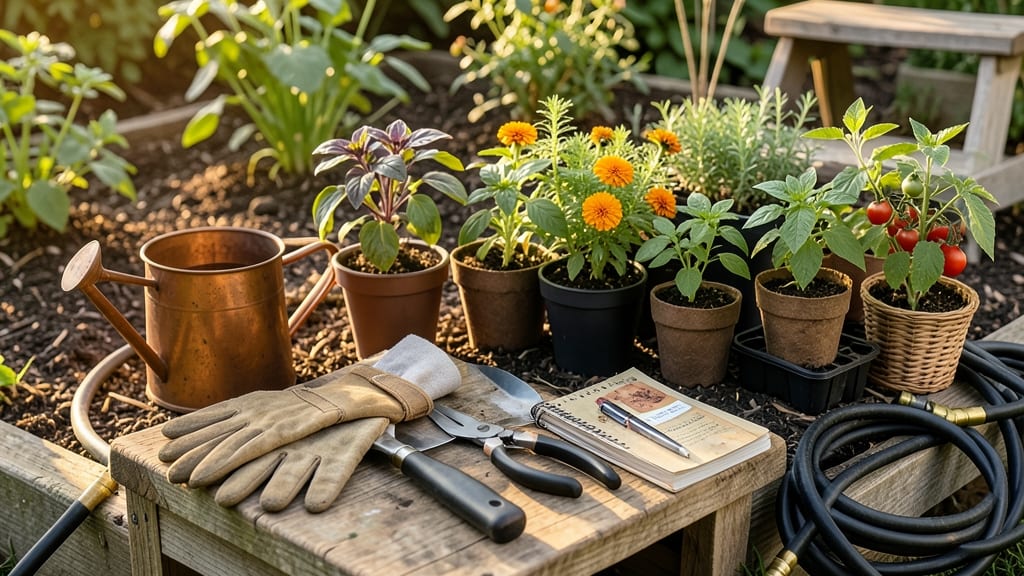
Essential gardening tools and techniques for each step
Every gardening project starts with the right tools—just like how a painter wouldn’t start without brushes, I never begin without my basic gardening essentials. Whether you’re prepping soil, sowing seeds, or pruning overgrown branches, having the right equipment makes the difference between frustration and success.
I’ve learned this the hard way: trying to dig with a butter knife (yes, I’ve done it) only teaches you why ergonomic tools matter.
The key to efficient gardening lies in matching the right tool to each step in your process. For example, a hand trowel is perfect for transplanting seedlings, while a pruning shears ensures clean cuts that heal faster.
And let’s not forget power tools like electric trimmers for larger areas—they save time while keeping your garden neat. Below, I’ve broken down the tools and techniques you’ll need for every major gardening task, from soil prep to harvest.
🌱 Step-by-Step Tools & Techniques
-
🔧 Soil Preparation
Tools: Broadfork, Garden Gloves, Soil pH Tester, Compost
Technique: Loosen soil 12" deep with a broadfork, mix in 2-3 inches of compost, and test pH levels (aim for 6.0-7.0). Avoid compacting soil with heavy foot traffic.
-
🌱 Seed Sowing
Tools: Seedling Trays, Planting Spikes, Watering Can (Fine Nozzle), Row Cover
Technique: Sow seeds ¼ inch deep (or as package directs), keep soil moist but not soggy, and use row covers for frost protection. Thin seedlings to 2-3 inches apart once they sprout.
-
💧 Watering
Tools: Drip Irrigation System, Hose with Adjustable Nozzle, Rain Gauge, Mulch
Technique: Water deeply 1-2 times per week (1-2 inches total), always in the morning to reduce evaporation. Use mulch to retain moisture and suppress weeds. Avoid overhead watering to prevent fungal diseases.
-
✂️ Pruning
Tools: Bypass Pruners, Loppers, Pruning Saw, Disinfectant (Rubbing Alcohol)
Technique: Prune in late winter/early spring for most plants. Make cuts at a 45-degree angle just above a leaf node, and always sterilize tools between cuts to prevent disease spread. Remove dead or diseased branches first.
-
🌿 Pest Control
Tools: Neem Oil Spray, Hose (for Blasting), Sticky Traps, Ladybugs (Beneficial Insects)
Technique: Inspect plants weekly for pests. Use neem oil for soft-bodied insects like aphids, or introduce predatory insects (e.g., ladybugs) for long-term control. Remove infested leaves immediately to contain outbreaks.
One of my biggest gardening lessons came when I tried to prune a ros bush with dull shears—it left jagged cuts that took months to heal. Investing in sharp, high-quality tools isn’t just about convenience; it’s about plant health.
For example, a bypass pruner gives cleaner cuts than anvil pruners, which can crush stems. And don’t skip the disinfectant between plants—it’s a game-changer for preventing diseases like powdery mildew.
For larger gardens, power tools like a cordless string trimmer or electric hedge trimmer can save hours of work. I use mine for edging flower beds and trimming overgrown shrubs, but always wear safety goggles and ear protection.
Even with power tools, I never rush—precision matters more than speed when it comes to pruning cuts or watering techniques. A little patience goes a long way in keeping your garden thriving.
Remember, gardening is a marathon, not a sprint. Start with the essential tools listed above, and gradually expand your collection as you tackle new projects.
Whether you’re a beginner or a seasoned gardener, mastering these techniques will give you the confidence to experiment with everything from container gardening to perennial beds. Happy digging! 🌿