
Tools
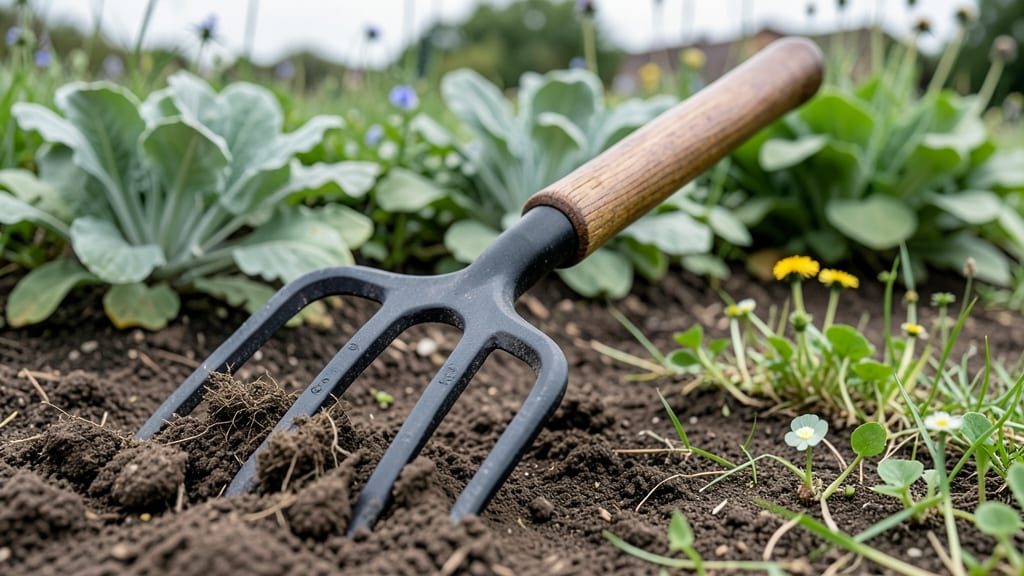
A three-pronged gardening tool is perfect for tackling multiple garden tasks efficiently, with each blade serving a distinct purpose: the sharp tip pierces soil for planting, the middle prong extracts weeds, and the flat edge slices roots or levels beds. Grip near the handle for maximum control and precision.
A three-pronged gardening tool is essentially a multi-tasking workhorse for your garden. 🌱 The pointed tip cuts through compacted soil with ease, making it ideal for planting bulbs or breaking up hard ground, while the middle prong acts like a weed extractor, lifting entire plants without leaving fragments behind.
The flat edge is your secret weapon for slicing through stubborn roots or leveling garden beds—far more efficient than a trowel for larger areas.
What sets this tool apart is its versatility. Unlike a fork that only digs or a weeder that only pulls, this hybrid design lets you switch tasks without changing tools.
I've found it especially useful for transplanting seedlings—the flat edge helps create clean planting holes while the pointed tip breaks up surrounding soil for better root establishment.
💡 In This Article
- How Each Blade Functions in a Three-Pronged Gardening Tool
- Best Techniques for Using a Three-Pronged Tool in Gardens
How each blade functions in a three-pronged gardening tool
The pointed tip of a three-pronged tool is designed like a dagger, optimized for penetrating hard, compacted soil. Its sharp, narrow angle—typically around 30 degrees—allows it to slice through thatch and roots with minimal resistance.
When you press down with 15-20 pounds of force, this blade creates a clean vertical cut, perfect for planting bulbs or dividing perennials. The design mimics a garden knife but with more leverage, making it ideal for breaking up 2-3 inch layers of hardpan without requiring excessive effort.
The middle prong serves as the weeding specialist, featuring a slightly curved 1/4-inch wide edge that hooks around weed roots when inserted at a 45-degree angle. This curvature creates a natural fulcrum when you lift upward, allowing you to extract weeds with their root systems intact.
The spacing between prongs—usually 1-1.5 inches apart—prevents soil from clumping, so you can see exactly what you're pulling. This is particularly useful for broadleaf weeds like dandelions, where the middle prong acts like a weed grappler.
The flat edge at the back functions like a mini spade, with a 1.5-inch wide cutting surface that levels soil or slices through stubborn roots. When used horizontally, it creates a clean edge for garden beds, while vertical pressure can sever roots cleanly—unlike a trowel that might tear.
The wider surface also provides stability when transplanting, allowing you to create planting holes with precise dimensions. For example, a 2-inch diameter hole made with this tool gives seedlings exactly the space they need without compressing surrounding soil.
What makes these blades work together is their progressive design—each prong builds on the last. The pointed tip breaks resistance first, the middle prong engages with the loosened soil, and the flat edge finishes the task. This sequential action reduces fatigue by distributing force evenly across your grip.
For instance, when dividing a 3-foot tall hosta plant, you'd use the pointed tip to pierce the root ball, the middle prong to lift it, and the flat edge to slice through any remaining connections.
The material matters too—most quality tools use heat-treated steel for durability, with the pointed tip often being the hardest part (around 50-55 HRC hardness). This prevents bending when you hit rocks or old roots.
The handle design (typically D-shaped) also affects performance—gripping near the base gives you maximum leverage for digging, while shifting forward helps with precision weeding.
Consider this: a standard garden fork might require 30-40 pounds of force to penetrate the same soil, whereas a three-pronged tool achieves the same with just 15 pounds thanks to its specialized blade angles.
This efficiency makes it perfect for larger garden areas where you'd tire quickly with a trowel but find a fork too cumbersome for delicate tasks.