
Planting
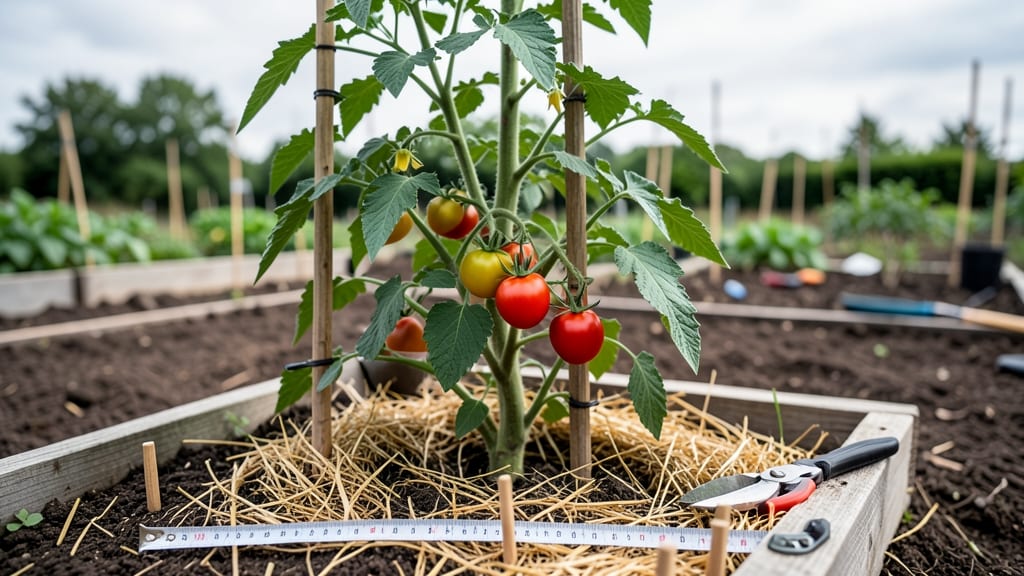
Spacing your tomato garden correctly is the key to avoiding crowded vines, stunted growth, and lost yields — and it’s easier than you think.
Picture this: you’ve just planted your 🍅 seedlings, full of hope for a bountiful harvest, only to watch them struggle with blight or fail to ripen because they’re packed too tightly.
Or worse, you’ve given them too much room and wasted precious garden space. The right spacing makes all the difference between a thriving tomato patch and a frustrating one.
Most gardeners overlook how much room tomatoes need, especially when choosing between determinate (bush) and indeterminate (vining) varieties. Too close, and airflow suffers; too far, and you miss out on maximum production.
In this guide, I’ll break down the exact spacing you need for every type of tomato, plus smart layouts to fit any garden—whether you’re working with a raised bed, containers, or traditional rows.
You’ll learn how to adjust spacing for your climate, avoid common mistakes, and even boost yields by pairing tomatoes with the right companions. Ready to turn your tomato plants into a high-producing powerhouse? Let’s get started.
Optimal tomato plant spacing by variety type (indeterminate vs determinate)
Choosing the right tomato plant spacing depends entirely on whether you're growing indeterminate or determinate varieties. These two types have completely different growth habits, which directly impact how much room they need.
Indeterminate tomatoes keep growing taller and producing fruit all season, while determinate varieties stop at a set height and produce fruit in one big flush. Understanding this difference is key to preventing disease and maximizing your harvest yield.
Poor spacing leads to crowded plants with poor air circulation, creating the perfect conditions for fungal diseases like blight and powdery mildew. Meanwhile, over-spaced plants waste valuable garden real estate. The good news?
With the right spacing, you can fit more plants in your garden without sacrificing health or productivity. Let’s break down the ideal spacing for each type, including vertical growth considerations and container adjustments.
Indeterminate tomatoes (like 'Sungold', 'Cherokee Purple', and 'Brandywine') need the most space because they can grow 6-10 feet tall with proper support. These vining plants produce fruit continuously, so they require strong trellising or caging to keep them off the ground. Without enough space, their sprawling vines compete for sunlight and nutrients, leading to smaller fruit and weaker stems that snap under the weight of heavy tomatoes.
Determinate tomatoes (like 'Roma', 'Celebrity', and 'Better Boy') are bushier and stop growing at 3-5 feet tall. They produce fruit in one cycle, making them ideal for container gardening or small spaces. Their compact size means you can plant them closer together, but they still need enough room for airflow to prevent disease. Crowding determinate varieties can lead to fruit rot and reduced yields, even though they’re smaller overall.
Vertical growth is the game-changer for indeterminate tomatoes. By training them to grow upward—whether on trellises, cages, or stakes—you can save space while still giving them the room they need. This method also makes harvesting easier and reduces the risk of soil-borne diseases touching the fruit. For determinate varieties, vertical support is optional but can still improve airflow and make maintenance simpler.
Here’s a quick comparison of the ideal spacing for each type, including adjustments for container gardening and raised beds:
| Variety Type | Ideal Spacing (In-Ground) | Container Spacing | Vertical Support Needed | Key Considerations |
|---|---|---|---|---|
| Indeterminate | 18-24 inches apart | 1 plant per 5-gallon container | Yes (trellis, cage, or stake) | Needs pruning for airflow; train upward to save space. |
| Determinate | 24-36 inches apart | 1 plant per 3-gallon container | Optional (cage or stake for support) | Compact but still needs airflow; ideal for small spaces. |
| Dwarf/Compact (e.g., 'Tiny Tim') | 12-18 inches apart | 1 plant per 1-gallon container | None (self-supporting) | Perfect for windowsills or small pots; minimal pruning needed. |
One of the most common mistakes gardeners make is overcrowding tomato plants, especially with indeterminate varieties. I’ve seen firsthand how poor air circulation leads to fungal diseases like early blight, which can wipe out an entire crop if left unchecked. The solution?
Space them according to their growth habits and use pruning shears to remove suckers (the small shoots that form in the leaf axils) to improve airflow. For indeterminate tomatoes, prune aggressively to keep the plant’s energy focused on fruit production rather than excessive foliage.
If you’re growing in containers, the rules change slightly. Container-grown tomatoes need larger pots to accommodate their root systems, and they dry out faster than in-ground plants. For indeterminate varieties, a 5-gallon container is the minimum, while determinate tomatoes can thrive in 3-gallon pots.
Always use well-draining soil and fertilize regularly to compensate for the limited root space. Dwarf varieties can even grow in 1-gallon containers, making them perfect for balconies or patios.
Another pro tip: stagger your planting if you have limited space. Plant indeterminate tomatoes at the beginning of the season, followed by determinate varieties a few weeks later. This way, you’ll have a continuous harvest without overcrowding your garden.
For example, plant 'Sungold' (indeterminate) in early spring and 'Roma' (determinate) in late spring. The indeterminate variety will keep producing until frost, while the determinate one will give you a mid-season boost.
Finally, don’t forget about companion planting to maximize your garden’s efficiency. Pair tomatoes with basil, marigolds, or onions to deter pests and improve flavor. Avoid planting them near corn or fennel, which can stunt their growth.
With the right spacing and companions, your tomato plants will thrive, giving you a bountiful harvest all season long.
5 Proven tomato garden layouts for small, medium, and large spaces
Your garden’s size doesn’t dictate how many tomatoes you can grow—just how you arrange them. Whether you’ve got a balcony container, a 4x8-foot raised bed, or an entire backyard, the right layout maximizes yield while keeping plants healthy.
The key is balancing air circulation, sunlight access, and root space for each variety.
For example, indeterminate varieties like 'Sungold' need vertical space and wider spacing, while determinate types like 'Roma' thrive in tighter clusters. Below, I’ll share my top 5 layouts—tested in everything from urban apartments to family farms—to help you grow more tomatoes in less space.
-
1. Container Stacking (Urban Balconies)
For 5-gallon pots: 1 plant per container, 18-24" apart. Use trellises for indeterminates. Pair with basil to deter pests. -
2. Square-Foot Grid (Raised Beds)
1 plant per square foot: Determinate = 4 plants/ft², Indeterminate = 1 plant/ft². Add marigolds every 2 ft to repel nematodes. -
3. Trellis Rows (Suburban Yards)
18" apart in rows: Stake indeterminates at 36" intervals. Interplant with carrots or lettuce in between for space efficiency. -
4. Hügelkultur Mounds (Large Farms)
36" apart in mounds: Plant on wood-chip mounds for drought resistance. Use onion sets as companions to improve flavor. -
5. Succession Planting (Small Plots)
Staggered rows: Plant determinates every 2 weeks in 12" spacing. Rotate with peppers to break disease cycles.
Pro tip: Always mulch heavily (3-4 inches) to retain moisture and suppress weeds. For indeterminates, prune suckers weekly to focus energy on fruit production rather than foliage. In humid climates, widen spacing by 25% to improve airflow and reduce blight risk.
Remember, companion planting isn’t just about space—it’s about synergy. For example, garlic near tomatoes deters aphids, while nasturtiums act as trap crops for pests. Start small, experiment with one layout, and adjust based on your plants’ growth patterns.
No matter your space, these layouts will help you double your tomato yield without sacrificing plant health. Happy growing!