
Tools
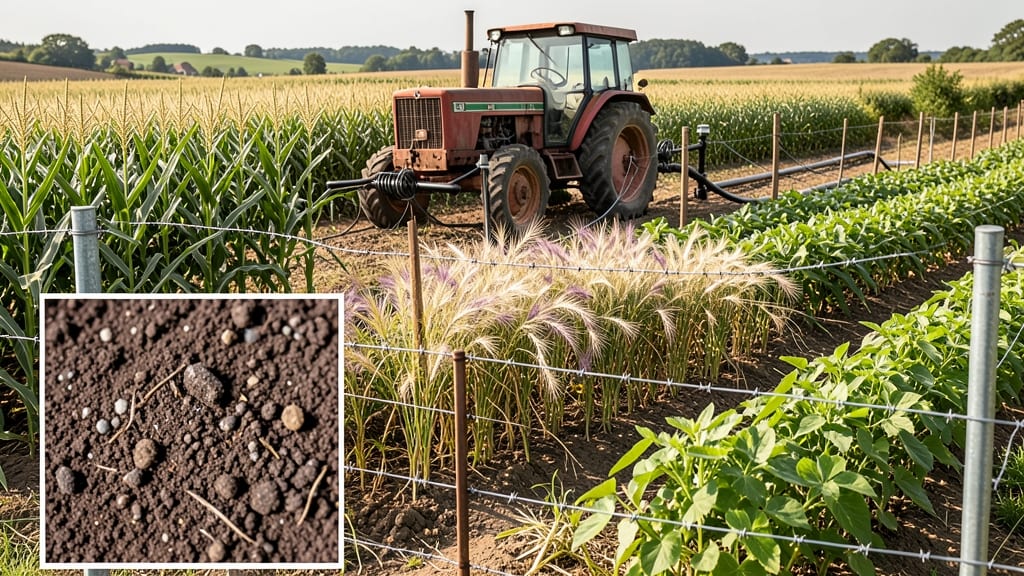
Gardening in agriculture involves growing plants—such as vegetables, fruits, herbs, or flowers—on a smaller scale than industrial farming, using sustainable methods like crop rotation and organic practices to improve soil quality, support biodiversity, and strengthen local food networks.
This approach focuses on hands-on, often labor-intensive methods that prioritize ecological balance over mass production. 🌱 Unlike large-scale farming, gardening in agriculture emphasizes diversity—planting a variety of crops to create resilient ecosystems that naturally resist pests and diseases.
Many small-scale growers also use techniques like companion planting or permaculture to maximize space and resources, making it especially valuable for urban areas or limited land.
What sets this apart is the direct connection to food systems. Small-scale gardening helps reduce reliance on industrial supply chains, supports local economies, and often produces fresher, more nutritious produce.
I've seen firsthand how community gardens or family plots can transform neighborhoods by providing fresh ingredients while teaching sustainable practices to future generations.
💡 In This Article
- Key Differences Between Gardening and Large-Scale Farming
- Essential Gardening Techniques for Agricultural Success
Key differences between gardening and large-scale farming
The most striking difference lies in scale—gardening typically operates on plots smaller than 5 acres, while industrial agriculture often spans hundreds or thousands of acres.
This smaller footprint allows gardeners to implement labor-intensive techniques like hand-weeding or precision planting that would be impractical on large farms. 🌱 For example, a home garden might dedicate 10% of its space to a single crop variety, whereas a commercial farm may plant 90% of its land with a single high-yield variety like corn or soybeans.
Soil management showcases another critical distinction. Gardeners focus on building soil fertility through composting, cover crops, and organic amendments, often achieving 3-5% organic matter in their topsoil—a benchmark that's rare in conventional farming where synthetic fertilizers dominate.
Water usage also differs dramatically: drip irrigation in a home garden delivers water precisely to plant roots, reducing waste by upstrong>80% compared to flood irrigation used on large farms. The ecological impact is equally pronounced, with gardening practices supporting 20-30% more biodiversity per acre than monoculture farming.
Labor intensity creates another key divide. While large farms rely on mechanization to reduce costs, gardening often requires 10-20 hours of manual labor per week during peak seasons. This hands-on approach allows for real-time pest management—like manually removing aphids—rather than relying on broad-spectrum pesticides.
The sensory experience differs too: gardeners notice subtle changes in soil texture or plant health that might go unnoticed in large-scale operations where visual inspections are less frequent.
Economic models also vary significantly. Gardening often operates on a direct-to-consumer model, selling produce at farmers' markets or through community-supported agriculture (CSA) programs. This creates shorter supply chains that preserve 30-50% more nutrients in produce compared to conventionally grown crops that may travel 1,500+ miles to market.
The resilience factor becomes clear during disruptions: while industrial farms face supply chain vulnerabilities, gardeners can adapt quickly by shifting crops or extending seasons with row covers.
Consider the case of heirloom tomato varieties—often grown by gardeners but rarely found in commercial fields. These varieties may produce 20% less yield per plant than hybrid varieties but offer superior flavor and nutritional profiles.
The trade-off between quantity and quality illustrates how gardening prioritizes different values than industrial agriculture. This approach also creates cultural capital by preserving traditional varieties that might otherwise disappear from our food system.
What's particularly fascinating is how these differences contribute to food security. Research shows that communities with access to gardening spaces experience 25% higher dietary diversity and 15% lower rates of food insecurity compared to areas without gardening opportunities.
The hands-on nature of gardening also creates educational opportunities, teaching participants about plant biology, ecology, and sustainable living practices that extend beyond the garden itself. 🌿