
Planting
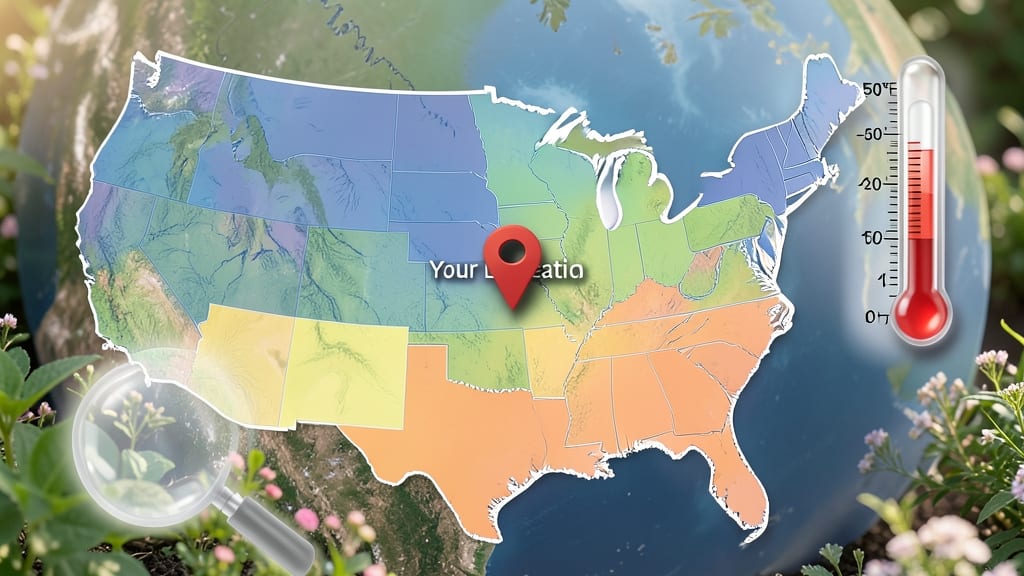
Finding your gardening zone means identifying your USDA Plant Hardiness Zone by entering your ZIP code into the official USDA Zone Finder, which shows your area's average annual minimum temperature—this determines which plants will thrive in your climate. Most U.S. regions span Zones 3 through 10, though local conditions like elevation or urban heat can create variations.
Your gardening zone isn't just a number—it's the foundation for successful planting. The USDA system divides North America into 13 zones based on average winter lows, with each zone representing a 10°F difference in cold tolerance.
For example, Zone 5 (-15°F to -10°F) is far less forgiving than Zone 8 (10°F to 20°F), which explains why certain perennials survive in one area but freeze in another.
Microclimates add another layer: a south-facing wall can create a Zone 7 microclimate in an otherwise Zone 5 yard, while high-altitude areas may need adjustments for colder conditions. 🌱
Beyond the official USDA map, tools like the Plant Maps app or local cooperative extension services offer refined data. I always recommend cross-checking your zone with a neighbor's—sometimes a street over makes a difference!
For container gardening, you can push boundaries by bringing tender plants indoors during cold snaps, but for in-ground planting, sticking to your zone ensures long-term success.
💡 In This Article
- How USDA Plant Hardiness Zones Determine Plant Survival
- Step-by-Step Guide to Locating Your Exact Gardening Zone
How USDA plant hardiness zones determine plant survival
The USDA Plant Hardiness Zone Map divides North America into 13 zones based on the average annual minimum temperature (AAMT)—the coldest temperature most areas experience in a typical winter.
Each zone represents a 10°F difference in cold tolerance, meaning Zone 5 (where winter lows average between -15°F and -10°F) is far colder than Zone 8 (10°F to 20°F).
This temperature range directly impacts which plants can survive: a Zone 3 perennial like the hardy Sedum will freeze in Zone 7, while a Zone 9 citrus tree won't survive Zone 5 winters without protection. 🌡️
Here's how the zones break down: Zone 1 (-60°F to -50°F) covers Alaska's coldest regions, while Zone 10 (30°F to 40°F) includes Florida and Hawaii. The 10°F increments between zones reflect how plants adapt to specific temperature ranges.
For example, a Zone 6 rose bush (withstanding -10°F to 0°F) will struggle in Zone 4 (-30°F to -20°F) unless given winter mulch.
The map also accounts for microclimates—urban areas can be 2-5°F warmer than rural zones due to heat absorption from buildings and pavement, while slopes and valleys may experience colder air pooling.
Microclimates create exceptions that can shift your effective gardening zone. A south-facing wall might raise your microclimate by 1-2 zones, allowing you to grow Zone 7 plants in a Zone 5 yard. Conversely, low-lying areas with poor drainage can be colder.
Elevation plays a role too: temperatures drop about 3.5°F per 1,000 feet in elevation, meaning a mountain garden at 5,000 feet might function like a Zone 3 area even if the valley below is Zone 6.
These variations explain why your neighbor's garden thrives with certain plants while yours doesn't—it's not just about the zone number. 🌿
Understanding these temperature thresholds helps you match plants to their resilience. For instance, Zone 4-5 plants like Pachysandra or Hosta can handle -20°F to -10°F, while Zone 8-9 favorites like Oleander or Bougainvillea need protection below 15°F.
The USDA map also includes half-zones (e.g., 5b, 6a) to refine precision further, accounting for 5°F differences within each full zone. This granularity is why gardeners in Zone 6a (-15°F to -10°F) might struggle with Zone 6b (-5°F to -10°F) plants during harsh winters.
What most people don't realize is how plant hardiness zones correlate with growing degree days (GDD), a measure of heat accumulation used to predict when plants will flower or fruit. For example, Zone 7's warmer summers (with higher GDD) allow tomatoes to ripen faster than in Zone 5.
This is why seed packets often list both hardiness zone and days to maturity—your zone affects not just survival but also growth speed. 🌱
For container gardening, you can sometimes push boundaries by moving plants indoors during cold snaps, but for in-ground planting, sticking to your zone ensures long-term survival.
The USDA map is updated every 10 years to reflect climate change—since 1990, many areas have shifted 1-2 zones warmer, which is why older gardening guides might recommend plants that are now too tender for your area. Always cross-check with recent data!