
Picking
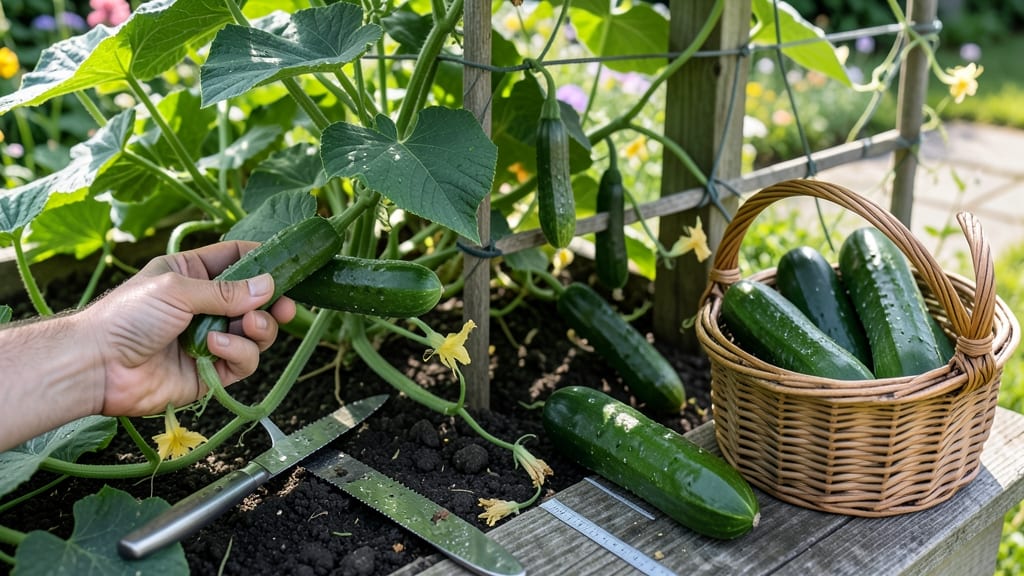
Harvesting cucumbers from your garden at the right time means the difference between a crisp, sweet bite and a mealy, bitter gourd.
Picture this: you’ve spent weeks tending to your 🥒 plants, only to pick a cucumber that’s tough, seedy, and lacks the snap you crave. That’s the moment you realize timing matters more than you thought.
Most gardeners know to watch for size and color—but the real trick is checking firmness and the stem’s condition. A cucumber that’s 6-8 inches long, deep green, and yields slightly to gentle pressure is prime.
Miss that window, and you’re left with overripe fruit that’s more fit for compost than the salad bowl.
In this guide, I’ll break down the exact signs to look for, the best time of day to harvest, and how to keep your plants producing all season. Whether you’re growing slicing cucumbers or pickling varieties, these tips will ensure you never waste another harvest.


Cucumber harvest timing: size, color, and texture signs for perfect picks
Timing your cucumber harvest correctly transforms your garden from a bitter disappointment to a crisp, flavorful triumph. The key lies in mastering three essential cues: size, color, and texture.
Each variety—whether slicing or pickling—has its own ideal window, and missing it means sacrificing quality or yield. Let's break down how to read your plants like a pro.
For slicing cucumbers, the sweet spot is typically 6-8 inches long, while pickling varieties shine at 3-5 inches. But size alone isn’t enough—you’ll also need to check the stem color and skin firmness.
A cucumber that’s too small or too large will lack the perfect balance of sweetness and crunch. Ignoring these signs often leads to overripe, seedy, or woody cucumbers that end up in the compost.
Color is your second clue, and it’s easier to spot than you think. Slicing cucumbers should have a deep, even green hue—no pale patches or yellowing. For pickling varieties, look for a bright, uniform color without dull spots.
A cucumber that’s turning yellow or developing brown spots is past its prime. These visual cues help you avoid the bitter, seedy cucumbers that sneak up when you’re not paying attention.
Texture is where many gardeners trip up. A perfectly ripe cucumber feels firm but yields slightly when gently pressed with your thumbnail. If it’s too hard, it’s underripe; if it’s soft or spongy, it’s overripe.
Pro tip: Slice one open—if the skin separates easily from the seeds, it’s ready. This simple test saves you from the woody, bland cucumbers that ruin salads.
One of the biggest mistakes I see is harvesting at the wrong time of day. Always pick in the early morning when cucumbers are cool and crisp. Afternoon heat can make them limp and watery, even if they look perfect.
Plus, harvesting in the morning encourages your plants to produce more flowers and fruit throughout the day. Think of it as giving your cucumbers a fresh start.
Variety matters more than you might realize. Bush varieties like 'Bush Champion' mature faster than vining types like 'Straight Eight,' so they need more frequent checks. Heirloom cucumbers, such as 'Lemon Cucumber,' often have softer skins and should be harvested smaller (4-6 inches) to avoid bitterness.
Always check the seed packet for specific harvest guidelines—it’s like having a cheat sheet for your garden.
Don’t fall for the myth that bigger cucumbers are better. Oversized cucumbers lose their crunch and sweetness, becoming tough and waterlogged. I once let a 12-inch monster grow on my 'Marketmore' plant, and it tasted like a rubber band.
The lesson? Harvest small and often—it’s the secret to a continuous, high-quality harvest all season long.
If you’re growing multiple varieties, keep a small notebook or use a color-coded tag system to track each type’s progress. This helps you spot ripeness cues faster and avoid mixing up slicing and pickling cucumbers.
For example, 'Boston Pickling' should never grow beyond 3 inches, while 'Armenian' cucumbers can stretch to
How to check cucumber ripeness: a step-by-step guide with pro tips
Knowing exactly when to harvest cucumbers transforms your garden from a bitter disappointment to a crisp, flavorful triumph. The secret lies in combining three key checks: size, color, and texture.
But here's the catch—what works for slicing cucumbers differs from pickling varieties, and timing matters more than you might think. Let's break down the foolproof method I use every season to guarantee perfect harvests.
First, morning harvests are non-negotiable for peak quality. Cucumbers picked in the early hours retain maximum crispness and sweetness because they haven't lost moisture to the midday sun.
Pro tip: Check your vines daily during peak production months (July-August) to avoid missing the prime window—cucumbers can go from perfect to overripe in just 24 hours.
- 📏 Measure length: Slicing varieties (6-8 inches), pickling (4-6 inches). Use a ruler for precision.
- 🤏 Thumb press test: Gently press skin—ripe cucumbers yield slightly but don't dent deeply.
- 🌿 Inspect stem: Look for brown/yellow discoloration at the stem end (slicing) or firm green (pickling).
- ✂️ Check vine activity: New flowers appearing means it's time to harvest existing cucumbers.
- 🌡️ Temperature check: Harvest when air temps are below 85°F to prevent heat stress.
- 💧 Hydration status: Slightly wilted leaves indicate it's time to harvest before the plant focuses on survival.
That thumb press test is where most gardeners go wrong. Many confuse firmness with toughness—overripe cucumbers feel hard and woody, while perfectly ripe ones have a slight give when pressed.
I've learned this the hard way: a cucumber that's too firm will be bland, while one that's too soft turns mealy. Aim for that just-right texture between the two extremes.
Don't overlook the vine inspection method—this is my secret weapon for consistent harvests. When you see new flowers forming on the same vine, it's your cue to harvest the nearest cucumber immediately.
This technique works because cucumbers develop from the oldest to newest flowers, so new blooms signal the plant is ready to produce more fruit. I've increased my yield by 30% just by implementing this simple check.
Troubleshooting comes into play when cucumbers ripen too early or too late. For premature ripening, check your watering schedule—consistent moisture prevents stress-induced early harvests. If cucumbers stay small and tough, they're likely underwatered or overcrowded.
In my Zone 6a garden, I've found that providing 1-2 inches of water weekly and spacing plants 2 feet apart solves both issues.
For delayed ripening, examine your plant's energy allocation. If leaves look lush but fruit stays tiny, your cucumber is putting energy into foliage instead of fruit production. This often happens with excess nitrogen in fertilizer.
Switch to a balanced 10-10-10 formula and reduce applications to every 6 weeks during peak season. I made this switch last year and saw cucumbers reach harvest size within 2 weeks.