
Picking
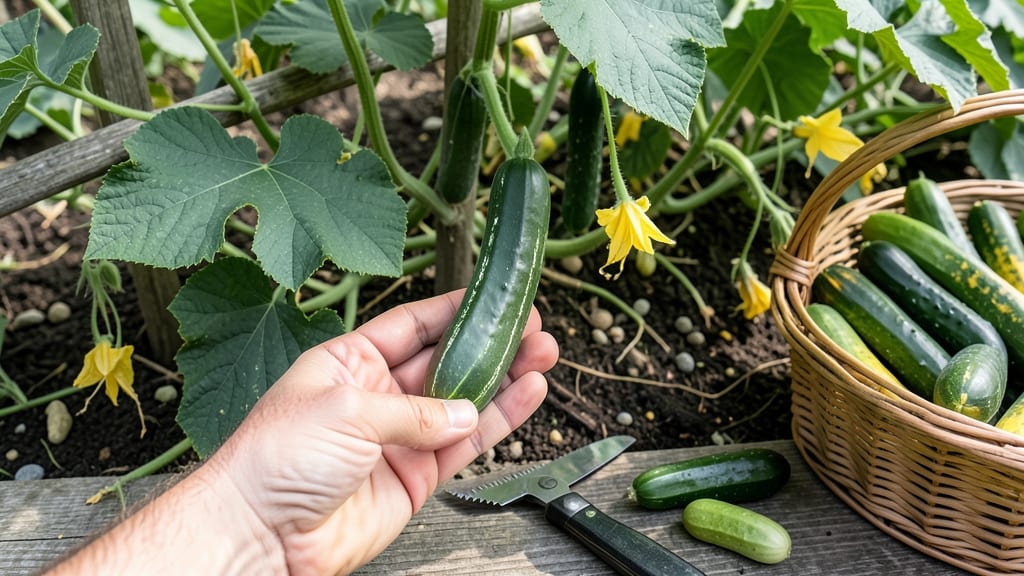
Picking cucumbers from your garden at the right time means the difference between a crisp, sweet bite and a bitter, seedy disappointment — and most gardeners get it wrong.
You might think size is the only clue, but color, texture, and even the stem’s behavior hold the secrets to peak flavor. Miss these cues, and you’ll end up with cucumbers that are either too small or overripe, wasting your hard work.
In this guide, I’ll break down the exact size, color, and texture triggers for harvesting, plus how heat, rain, and variety type can shift the ideal timing. You’ll also learn how to check ripeness without cutting open every fruit — a game-changer for busy gardeners.
By the end, you’ll know when to reach for your basket and why some cucumbers turn bitter if left too long. Let’s get started.


Cucumber size, color, and texture: the 3 critical harvest triggers
Getting the harvest timing right for cucumbers means the difference between a crisp, sweet slice and a bitter, seedy disappointment. Most gardeners miss the window because they focus on just one cue—usually size—while ignoring the color shifts and texture changes that signal true ripeness.
Let’s break down the three critical triggers to pick cucumbers at their peak, tailored to your favorite varieties.
First, the size rule is your baseline: most slicing cucumbers hit perfection at 6–8 inches long, while pickling varieties like 'Boston Pickling' should be harvested at 3–4 inches to prevent toughness.
Heirloom types often grow larger, so check their specific guidelines—some like 'Straight Eight' can reach 12 inches while still being ideal. Remember, cucumbers keep growing after they’re ripe, so don’t wait too long!
| Variety Type | Ideal Size | Color Trigger | Texture Test |
|---|---|---|---|
| Slicing (e.g., 'Straight Eight') | 6–8 inches | Deep green (no yellow) | Firm but yields to thumb |
| Pickling (e.g., 'Boston Pickling') | 3–4 inches | Bright green | Thick skin, no soft spots |
| Heirloom (e.g., 'Lemon Cucumber') | 8–12 inches | Yellow or light green | Slightly soft, no wrinkles |
| Parthenocarpic (e.g., 'Corinto') | 4–6 inches | Dark green with stripes | Crisp, no hollow core |
Next, pay attention to color cues, which vary by variety.
Most slicing cucumbers should be a rich, deep green—never yellowing at the blossom end, as that’s a sign of overripeness. Heirloom varieties like 'Lemon Cucumber' turn pale yellow or light green when ripe, while pickling cucumbers stay bright green but develop a slight waxy sheen.
Pro tip: Check the stem end—if it’s yellow or brown, the cucumber’s past its prime and may taste bitter.
The texture test is where many gardeners go wrong. A perfectly ripe cucumber should feel firm but yield slightly when you press your thumbnail against the skin—like a ripe avocado. If it’s rock-hard, it’s underripe; if it’s soft or wrinkled, it’s overripe.
Also, check for bloom formation: the flower that once attached should have dropped off (for slicing types) or still be attached (for pickling types). This tells you the cucumber’s been on the vine long enough to develop flavor but not too long to become seedy.
Environmental factors can throw off your timing, so adjust for heat waves or cool snaps. Cucumbers grow faster in hot weather (75–90°F), so they may reach harvest size in just 50 days instead of the usual 60–75 days.
In cooler climates (60–70°F), they’ll take longer to mature. Morning harvests are best because cucumbers absorb water during the night, making them harder to cut cleanly. Use pruning shears to avoid damaging the vine, and always leave ½ inch of stem attached to prevent disease.
One common mistake is harvesting based on vine growth alone. Just because new flowers are blooming doesn’t mean the cucumbers are ready—focus on the fruit’s maturity, not the plant’s productivity.
Another pitfall is ignoring variety-specific traits: 'Armenian cucumbers' (like 'Tyrian') are harvested when they’re 6–8 inches long and curved, while 'English cucumbers' should be 8–12 inches and straight. Always read the seed packet or variety description for tailored advice.
For pickling cucumbers, time is even more critical. They’re best picked when they’re small (3–4 inches) and bright green, with a thick skin that resists your thumbnail.
If you wait too long, they’ll develop a woody texture and lose their crispness. Heirloom varieties often have shorter harvest windows, so check them daily during peak season.
A good rule of thumb: if you’re not harvesting at least 2–3 cucumbers per plant per week, you’re likely picking too late.
Finally, don’t overlook the seed development warning sign. Once cucumbers start forming large, mature seeds (visible through the skin), they’re past their prime. The flesh becomes watery and seedy, and the flavor shifts from sweet to bitter.
To avoid this, make harvesting a habit: visit your cucumber plants every 2–3 days during their peak production phase. This not only ensures you
How to check cucumber ripeness without cutting open every fruit
Picking cucumbers at the perfect moment means avoiding the bitter disappointment of undersized fruits or the seedy overripe mess that no one wants. The good news? You don’t need to slice open every cucumber to know when it’s ready.
Instead, rely on visual cues, texture tests, and vine behavior—all non-destructive methods that preserve your harvest while ensuring peak flavor.
Start by examining the stem end—this tiny detail reveals whether your cucumber is premature, perfectly ripe, or past its prime. A green stem end signals unripeness, while a yellowing or brown stem means it’s time to harvest.
Pair this with a gentle thumb pressure test to check firmness, and you’ll never guess wrong again.
⚠️ callout warning
Leaving cucumbers on the vine too long turns them seedy, tough, and bitter—a gardener’s nightmare. Harvest every 2–3 days during peak production to prevent this. If you miss the window, even overripe cucumbers can be saved for pickling (they’ll be sweeter!), but their texture and flavor won’t be ideal for fresh eating.
🌱 Pro Tip: Check cucumbers early in the morning when they’re cool and firmest for the most accurate ripeness assessment.
Next, observe the vine’s growth patterns. If new cucumbers are forming below your current harvest, it’s a sign they’re ready soon. Meanwhile, cucumbers growing above the latest bloom may take longer to mature. This bloom check helps you prioritize which fruits to pick first without missing a beat.
For texture testing, press your thumbnail into the cucumber’s skin. A firm but slightly yielding surface (like a ripe avocado) is ideal. If it feels hard as a rock, it’s too soon; if it dents easily, it’s overripe.
This method works best on slicing varieties—pickling cucumbers should be harvested smaller and firmer for that classic crunch.
Don’t overlook the color clues. Most slicing cucumbers turn a deep, glossy green when ripe, while heirloom varieties might develop yellow or white stripes. Lemon cucumbers stay pale but should reach their full size (usually 4–6 inches) before picking.
Ignoring color can lead to missed harvest windows—so keep an eye on those vibrant hues!
Finally, listen to your cucumbers. A hollow-sounding thump when tapped (like a drum) means it’s ready, while a dull thud suggests it’s past its prime. Combine this sound test with the other methods, and you’ll have a foolproof system for perfectly timed harvests—no guesswork required.