
Planting
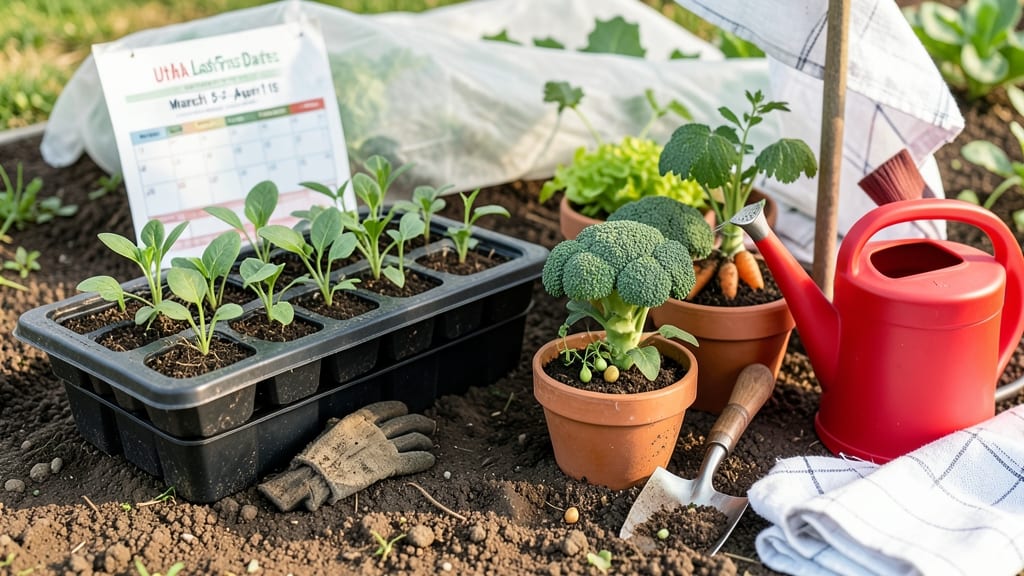
To plant a garden in Utah, timing is everything—especially when balancing spring heat spikes with frost-sensitive crops 🌱. Traditional planting guides won’t work here, where desert sun can fry seedlings before they sprout.
Utah’s microclimates—from Salt Lake City’s Zone 6b to St. George’s Zone 8a—mean your neighbor’s success could be your failure if you plant at the wrong time. Get the exact windows for cool-season crops (like spinach) versus heat-lovers (like okra), plus how to stretch your season with shade hacks.
You’ll also discover why late March isn’t safe in the high desert, how to prep soil for Utah’s dry heat, and which crops actually thrive when temps hit 90°F.
By the end, you’ll know not just when to plant, but how to protect your garden from Utah’s most common mistakes—so your General Utah Garden becomes the envy of the block.
Utah’s planting zones: when to start cool-season vs heat-tolerant crops
Utah’s diverse climate—from the high-desert chill of Salt Lake City to the intense heat of St. George—means planting times vary wildly. Cool-season crops like spinach and peas thrive in early spring, while okra and melons demand Utah’s summer heat.
Timing isn’t just about frost dates; it’s about avoiding heat shock for seedlings or bolting in lettuce. Let’s break down the exact windows for your region.
First, know your USDA zone: Salt Lake City sits in Zone 6b (last frost: March 15), while St. George’s Zone 8a sees its last frost by February 1. Provo’s Zone 6a (last frost: March 22) adds another layer.
These dates shift 1-2 weeks earlier at higher elevations (e.g., Park City) and 2-3 weeks later in desert lowlands (e.g., Moab). Adjust your planting calendar accordingly.
Here’s the non-negotiable rule: Wait until soil temps hit 60°F for heat-lovers like tomatoes and peppers, but cool-season crops need soil temps below 50°F.
Utah’s spring heat spikes can fry seedlings in just 3 days if planted too early. Use a soil thermometer—it’s your best tool for precision.
Now, let’s compare the planting windows for Utah’s three key microclimates. The table below shows when to start cool-season crops (like kale) vs. heat-tolerant staples (like Swiss chard and melons), including frost-free adjustments for high-desert areas.
For cool-season crops, the window is tight. In Salt Lake City, plant peas and spinach by April 15 to avoid bolting from summer heat. St. George gardeners can start January 15, but use shade cloth to protect seedlings from 90°F+ days.
Provo’s cooler temps let you extend the season—try a second planting of lettuce in September for a fall harvest.
Heat-tolerant crops like Swiss chard and okra are Utah’s secret weapons. These plants thrive in 90°F+ soil and can even improve flavor with summer’s intensity. In St. George, start melons and cucumbers by March 1; in Salt Lake City, wait until May 15 to avoid heat shock.
For high-desert areas (e.g., Heber Valley), push planting to June 1 to align with soil warming.
Don’t overlook succession planting. Utah’s short growing season demands strategy. Sow bush beans every 2 weeks from May to July for continuous harvests. For tomatoes and peppers, stagger plantings by 3 weeks to extend the harvest window.
This works especially well in Zone 8a (St. George), where you can grow two full seasons of heat-lovers.
Watch for false springs,
Heat-tolerant desert crops that thrive in Utah’s spring planting
Utah’s spring planting season can be tricky—soil temperatures often spike to 90°F+ before air temps cooperate. The key is selecting heat-tolerant varieties that thrive in these conditions while requiring minimal water. These 10 desert-adapted crops will reward you with bountiful harvests even when other gardens wilt.
I’ve grown these in St. George (Zone 8a) and Salt Lake City (Zone 6b), and they consistently outperform traditional varieties.
For best results, prepare your soil with 2–3 inches of compost and mulch heavily to retain moisture. Most of these crops prefer well-draining soil with a pH between 6.0–7.5. Here’s my go-to lineup for Utah’s brutal spring heat:
| Crop | Planting Time | Spacing | Depth | Water Needs | Sunlight |
|---|---|---|---|---|---|
| ‘Desert King’ Watermelon | Late April–May | 3–4 ft apart | 1 inch deep | 1–2 inches/week | Full sun |
| Okra (‘Clemson Spineless’) | After last frost (May) | 18–24 inches apart | ½ inch deep | Drought-tolerant | Full sun |
| Swiss Chard (‘Bright Lights’) | March–April (cool soil) | 10–12 inches apart | ½ inch deep | 1 inch/week | Partial shade |
| Black-Eyed Peas | April–May | 4–6 inches apart | 1 inch deep | 1–1.5 inches/week | Full sun |
| Rosemary (‘Arp’) | March–April | 2–3 ft apart | ½ inch deep | Drought-tolerant | Full sun |
| Zucchini (‘Eight Ball’) | Late April–May | 2–3 ft apart | 1 inch deep | 1.5–2 inches/week | Full sun |
| Portulaca (Moss Rose) | May–June | 6–12 inches apart | ★★★★★4.9(1 review) |