
Tools
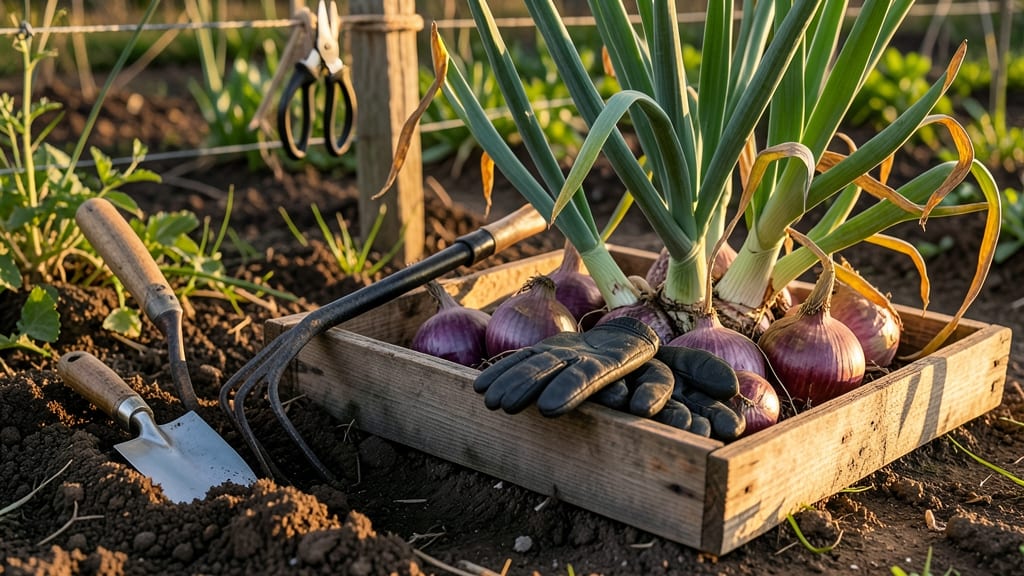
Pulling onions from your garden at the right time ensures sweet, flavorful bulbs instead of bitter, tough ones — and these three key signs will tell you exactly when to harvest.
Picture this: you’ve nurtured your 🧅 plants all season, and now the tops are yellowing and flopping over. That’s not a sign of trouble—it’s your cue that the bulbs are mature and ready for harvest.
But timing is everything, because pull too early and you’ll end up with small, pungent onions.
In USDA Zone 6a, most spring-planted onions are ready for harvest between June and July, but the real clues lie in the plant itself. Watch for tops turning brown, bulbs reaching 1 to 1.5 inches in diameter, and the neck shrinking where the bulb meets the stem.
These visual cues matter more than the calendar.
Below, I’ll break down how to test maturity without damaging your crop, regional adjustments for cooler climates, and the best post-harvest care to keep your onions fresh for months. No more guessing—just a foolproof way to harvest at peak flavor.
3 Visual signs your onions are ready for harvesting
There’s nothing quite like the satisfaction of harvesting your own onions—especially when you’ve nurtured them from tiny sets to plump, flavorful bulbs. But knowing exactly when to pull onions from your garden is key to avoiding bitter, pungent, or even hollow bulbs.
Miss the window, and you risk losing your hard-earned harvest. The good news? Your onions will send you clear visual signals when they’re ready. Here’s what to watch for.
Onions are patient plants, but they won’t wait forever. The moment their tops yellow and flop, their bulbs reach peak maturity, and their necks begin to shrink—these are the three foolproof signs you’ve been waiting for.
Each clue tells a different story about your onion’s readiness, so let’s break them down so you never second-guess harvest time again.
The most obvious sign your onions are ready is when their green tops turn straw-colored or yellow and begin to flop or collapse. This happens because the plant is redirecting energy from leaf growth to bulb development.
When you gently peel back the outer layers of a bulb, it should feel firm and papery, not loose or slippery. If the skin resists peeling slightly, your onion is mature. If it peels effortlessly, it’s not ready yet.
The neck of the onion (the stem connecting the bulb to the tops) will begin to shrink and tighten as it matures. This is nature’s way of signaling that the bulb is fully developed and ready for harvest.
Not all onion varieties follow the same timeline, though. Short-day onions (like Texas Early White) mature faster and may show these signs in early summer, while long-day onions (like Yellow Sweet Spanish) take longer, often peaking in late summer.
Pay attention to your specific variety’s growth cycle—some may even need a few extra weeks in the ground for full flavor development.
One common mistake is waiting too long after the tops yellow. If left in the soil for weeks after flopping, onions can split or develop hollow centers, ruining their quality. That’s why it’s best to harvest within 1-2 weeks of the tops turning yellow.
Pro tip: If you’re unsure, dig up one onion to test—if the bulb is firm and dry, it’s time to harvest the rest.
Regional climate also plays a role. In hot, dry climates, onions may mature faster and show signs of readiness earlier in the season. Conversely, in cooler or wetter regions, they might take longer.
Always check your local frost dates—if a hard frost is approaching, harvest even if the tops aren’t fully yellow to avoid bulb damage.
Once you’ve confirmed your onions are ready, act quickly. Use a fork or your hands to gently loosen the soil around the base before pulling. Shake off excess dirt, but leave the dried tops attached—they’ll help protect the bulbs during curing.
After harvesting, lay them out in a well-ventilated, dry area for 1-2 weeks to cure properly. This step is crucial for long-term storage and flavor.
Don’t let these visual cues slip by—your onions are practically begging to be harvested when they show these signs. The sooner you pull them, the sweeter and more flavorful they’ll be.
And trust me, there’s nothing like the taste of a homegrown onion pulled at just the right moment. Happy harvesting! 🧅
How to test onion maturity before pulling (without guessing)
When your onion tops start yellowing but you're not sure if they're ready, testing maturity is the best way to avoid bitter or pungent bulbs. I’ve learned that digging up just one test onion can save your entire harvest from being pulled too early.
This simple method helps you decide whether to harvest immediately or give them a few more weeks.
Start by selecting a healthy-looking onion from the outer rows of your bed. Choose one with yellowing tops but no signs of disease. Gently loosen the soil around the base with a hand trowel—this minimizes root damage while giving you the info you need.
Use a hand trowel to carefully lift one onion from the outer row. Avoid disturbing neighboring plants.
Hold the onion and compare it to a golf ball (1.5 inches). If it’s smaller, wait 1-2 weeks before harvesting.
Gently peel back the outer layer. If it resists and feels papery, your onions are ready. If it peels easily, wait longer.
Look for a shrinking neck where the bulb meets the stem. This indicates the onion is maturing and storing energy.
If the test onion isn’t ready, gently replant it and mark the spot with a stake to avoid disturbing it again.
If your test onion meets all three criteria—golf-ball size, papery skin, and a shrinking neck—it’s time to harvest. But if it’s still small or soft, wait another week before testing again.
This method ensures you never pull onions too early, which guarantees the best flavor and storage life.
Pro tip: Harvest on a dry, sunny day to speed up curing. Use a fork or spade to gently lift onions from the soil, shaking off excess dirt. Then, lay them in a well-ventilated area for 2-3 days to dry before storing.
By testing just one onion, you’ll eliminate the guesswork and ensure your entire harvest is ready at the perfect time. This small step saves hours of post-harvest disappointment and ensures your onions stay sweet and flavorful all season long. 🌱