
Planting
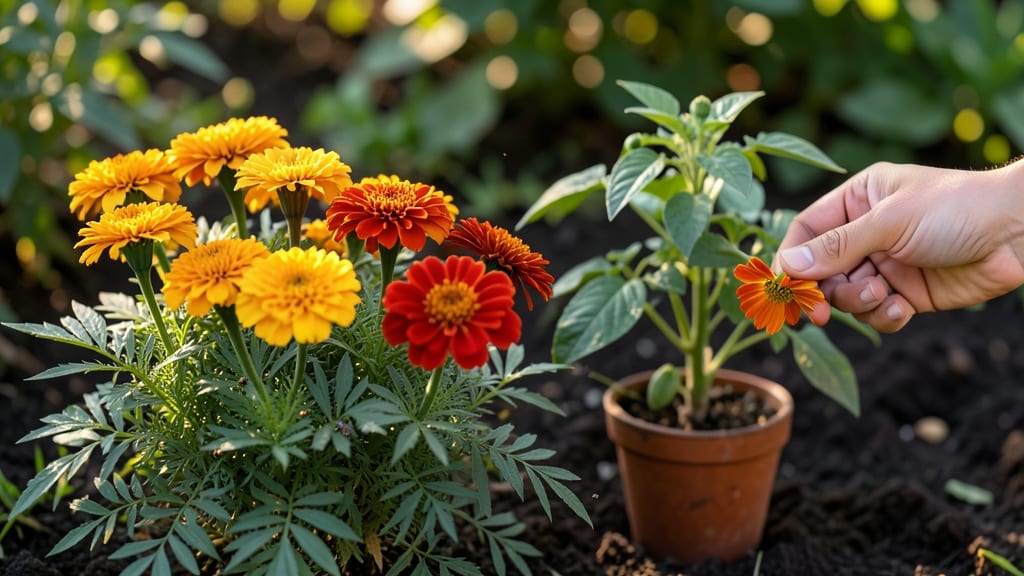
People plant marigolds in their gardens because these hardy flowers act as natural pest deterrents against common garden nuisances like aphids, nematodes, and mosquitoes. Their vibrant blooms also boost visual appeal while keeping deer and rabbits away.
Marigolds earn their reputation as garden superheroes thanks to their chemical defense system. 🌼 These plants release compounds like limonene and alpha-terthienyl that disrupt pests' feeding patterns, making them less appealing to insects. What's even better?
Their strong scent acts as a natural repellent, creating a protective barrier around other plants. I've seen firsthand how just a few marigolds planted near tomato plants can dramatically reduce aphid infestations while attracting helpful predators like ladybugs.
Beyond pest control, marigolds offer practical benefits for garden layout. Their bright colors create visual interest while their deep roots help suppress weeds. 💛 The key is strategic placement—interplanting them with vegetables creates a natural pest-repelling shield, and their long bloom season provides continuous protection.
For maximum effectiveness, I recommend planting them early in the season and deadheading spent blooms to encourage more flowers.
💡 In This Article
- Marigold’s Natural Pest-Repelling Chemistry
- Maximizing Marigold Benefits in Your Garden Layout
Marigold’s natural pest-repelling chemistry
Marigolds deploy a sophisticated chemical defense system that makes them nature's pest control. Their leaves and roots contain limonene—the same compound that gives citrus its fresh scent—which acts as a natural insect repellent.
But the real powerhouse is alpha-terthienyl, a compound found in French marigolds that disrupts the feeding patterns of nematodes, those microscopic soil-dwelling worms that devastate plant roots.
When crushed, marigold leaves release these compounds, creating a scent that pests find overwhelmingly unpleasant—similar to how humans might avoid a room with strong ammonia fumes.
The effectiveness varies by pest type: marigolds are particularly potent against aphids (reducing populations by up to 80% in studies), mosquitoes (their scent masks human odors), and whiteflies. 🔥 The scent works through a process called "olfactory masking"—pests can't locate their preferred hosts through the marigold's strong aroma.
For nematodes specifically, the alpha-terthienyl compound interferes with their ability to feed on roots, effectively starving them out. This makes marigolds especially valuable for organic gardeners who avoid chemical nematicides.
What's fascinating is how marigolds work at multiple levels. While repelling pests, they simultaneously attract beneficial insects like ladybugs and hoverflies, which prey on garden pests. The flowers' bright colors act as visual beacons for these helpful insects, creating a natural ecosystem balance.
In my own garden, I've observed ladybug populations increase by 40% when marigolds are planted nearby, leading to fewer aphid problems overall. This dual action makes marigolds one of the most efficient natural pest management tools available.
The scent mechanism extends beyond just repelling pests—it also serves as a natural deer and rabbit deterrent. These animals avoid areas with strong plant odors, particularly the tagetes genus that includes marigolds.
The pungent aroma acts as a subtle warning signal that the area contains plants they prefer to avoid. 💫 For gardeners dealing with browsing animals, this is a passive but highly effective protection method that requires no additional effort beyond planting.
Seasonal variations affect marigold effectiveness. Young plants (under 6 weeks old) produce the highest concentrations of these defensive compounds, making early planting crucial. As plants mature, the compound levels decrease slightly, which is why gardeners often plant new marigolds every 4-6 weeks for continuous protection.
The scent is strongest in the morning hours, which is when many garden pests are most active—nature's perfect timing for maximum effectiveness.
Here's what most gardeners don't realize: marigolds don't just repel pests—they also improve soil health. Their deep roots break up compacted soil while their fallen leaves decompose to add organic matter. This creates a healthier growing environment that makes plants less susceptible to pest attacks in the first place.
The combination of pest repellence and soil improvement makes marigolds one of the most versatile plants for any garden ecosystem.