
Planting
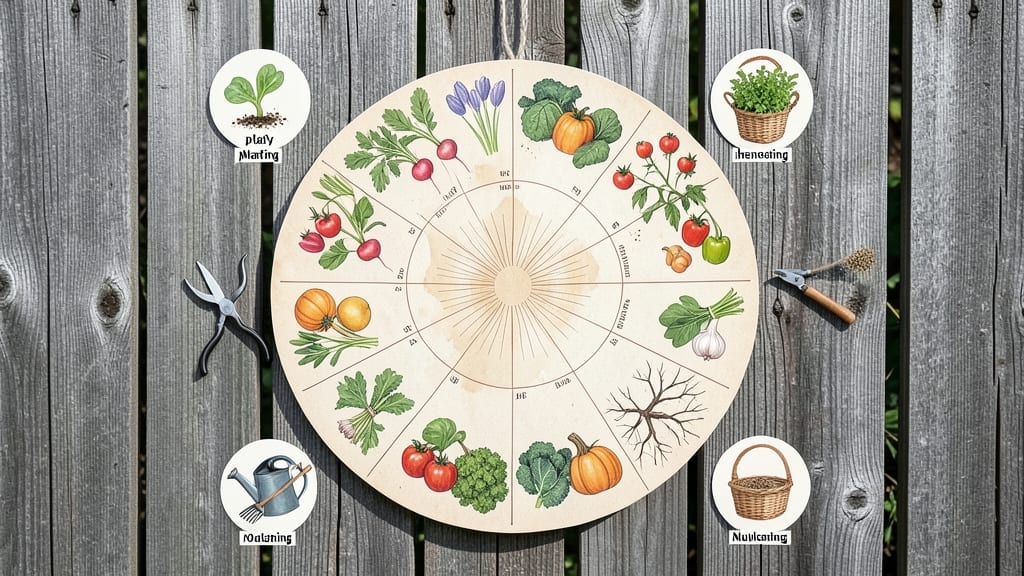
A Zone 7 gardening calendar helps you time planting by tracking average frost dates (mid-March to mid-November), separating tasks into cool-season crops (fall/spring), warm-season plants (late spring/early summer), and year-round upkeep like soil prep and pest management. Fine-tune schedules based on local microclimates and elevation.
A Zone 7 gardening calendar isn't just about frost dates—it's about matching plants to their ideal growing windows. 🌱 For example, cool-season crops like kale and spinach thrive when temperatures dip below 75°F, while tomatoes and peppers need that warm soil in late spring.
I've found that keeping a small notebook to track your local frost dates each year helps adjust for those tricky microclimates—like how a south-facing slope might warm up faster than your yard's average.
What sets Zone 7 apart is its long growing season, but that doesn't mean you can plant everything at once. The calendar helps you stagger plantings for continuous harvests—think succession planting of lettuce or beans.
And don't overlook those year-round tasks: winterizing your garden in late fall or testing soil pH in early spring can make all the difference between a struggling garden and a thriving one.
💡 In This Article
- Understanding Zone 7 Frost Dates and Plant Hardiness
- Month-by-Month Zone 7 Planting and Garden Maintenance Checklist
Understanding Zone 7 frost dates and plant hardiness
Zone 7's frost timing is governed by the USDA Plant Hardiness Zone Map, which divides North America into zones based on average annual minimum temperatures.
In Zone 7 (ranging from -10°F to 0°F), your average last frost typically falls between March 15 and April 15, while the first frost arrives around October 15 to November 15.
These dates create a 200-220 day growing season—long enough for two full harvests of warm-season crops like tomatoes and peppers, but not so long that tropical plants like okra or sweet potatoes struggle to mature before frost.
The science behind frost timing involves more than just calendar dates. Frost forms when temperatures drop to 32°F or below, but the actual timing depends on humidity, wind patterns, and local geography.
For example, urban areas often experience urban heat islands that delay frost by 1-2 weeks compared to rural zones. Meanwhile, high-elevation areas in Zone 7 (like parts of the Appalachians) may see frost 2-3 weeks earlier than valleys.
This is why gardeners in Zone 7 should track their local frost dates for at least 3 years to establish a reliable planting schedule.
Plant hardiness matters just as much as frost timing. The USDA zone map helps you select plants that can survive your winter lows, but even within Zone 7, some areas experience colder snaps.
For instance, a Zone 7a garden (colder end, -10°F to -5°F) might struggle with tender perennials like rosemary or lavender, while Zone 7b (-5°F to 0°F) can handle them with winter protection.
The key is matching plants to your specific microclimate—like planting cold-hardy varieties of kale or broccoli in exposed areas where frost lingers longer.
Microclimates create the most variation in Zone 7. A south-facing slope might warm up 2-3 weeks earlier in spring than your yard's average, allowing you to plant warm-season crops like cucumbers or beans a full month ahead of schedule.
Conversely, low-lying areas or shaded spots can stay colder, extending the frost risk into May. This is why successful Zone 7 gardeners often divide their space into "early," "mid," and "late" planting zones—staggering crops to maximize harvests while minimizing frost risk.
Hardiness isn't just about survival—it's about performance. A plant might survive Zone 7 winters but fail to bloom or produce if it's at the edge of its tolerance. For example, hydrangeas thrive in Zone 7 but may produce fewer blooms in Zone 7a compared to Zone 7b.
This is why nurseries often label plants with both hardiness zones and "best performance" zones. Paying attention to these details can mean the difference between a bountiful harvest and a disappointing season.
Here's a pro tip: Use a frost-free date calculator (available from local extension offices) to input your specific latitude and elevation. These tools adjust average frost dates based on your exact location, accounting for microclimates.
For example, in Atlanta, GA (Zone 7b), the last frost is typically March 25, while in Asheville, NC (Zone 7a), it's more like April 10. This level of precision is what turns a "good enough" garden into a highly productive one. 🌿