
Light Requirements
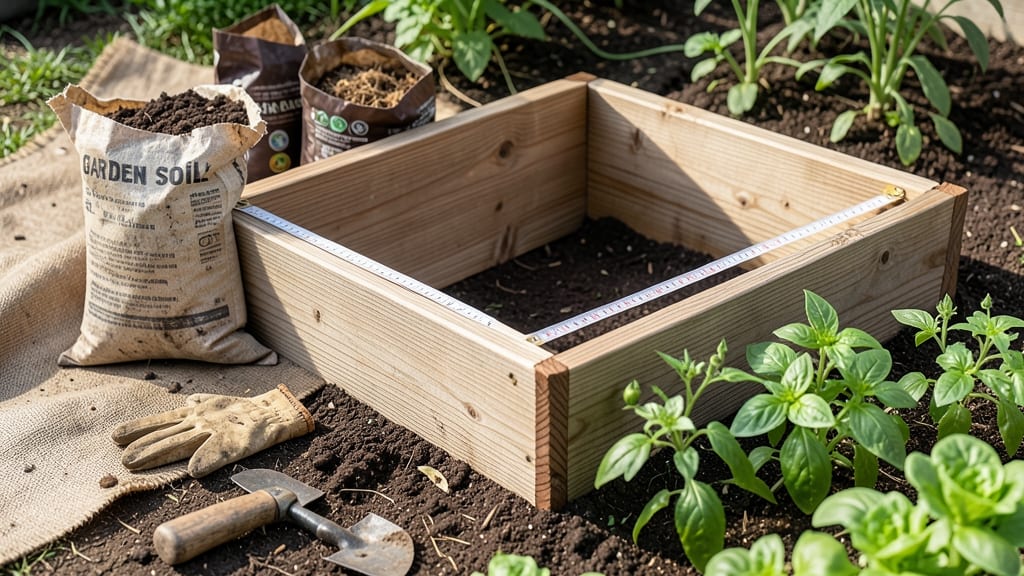
A 4 x 8 raised garden bed needs 16 cubic feet (about 1.2 cubic yards) of soil for a 12-inch height, since it requires 1.33 cubic feet per inch of depth. Always calculate your bed's volume by multiplying length, width, and height to get the exact amount needed.
Figuring out soil volume starts with your bed's height—most gardeners choose between 6 inches (lighter for veggies) to 18 inches (deeper for root crops). 🌱 For example, a 6-inch bed would need just 8 cubic feet, while a 24-inch bed jumps to 32 cubic feet.
I always round up by 10% to account for settling and compaction over time. Buying in bulk (like 2 cubic yards) often saves money, but check local delivery fees—sometimes smaller bags add up cheaper for small projects.
Pro tip: Mix your own soil blend by combining 60% topsoil, 30% compost, and 10% perlite to improve drainage and fertility. This DIY approach cuts costs by 30% compared to pre-mixed raised bed soil. Always test your soil's pH before planting—most vegetables thrive between 6.0 and 7.0.
💡 In This Article
- Calculating Soil Volume for Different Raised Bed Heights
- Cost-Saving Tips for Buying Soil in Bulk
Calculating soil volume for different raised bed heights
The soil volume formula for a raised bed is straightforward: multiply length × width × height. For a 4 x 8 bed, that’s 32 square feet of base area. Now multiply by height—each inch adds 32 cubic feet of soil.
A 6-inch bed needs 192 cubic inches (1.33 cubic feet per inch × 6 inches = 8 cubic feet), while a 12-inch bed doubles to 16 cubic feet. 🌱 This is why height matters so much: doubling from 6 to 12 inches doesn’t just add 6 inches of depth—it doubles your soil needs entirely.
Real-world adjustments are key. Soil settles 10-20% over time due to compaction and organic breakdown, so always round up. For example, a 10-inch bed technically needs 13.3 cubic feet, but I’d buy 15 cubic feet (1.1 cubic yards) to account for settling.
Another factor? Existing ground level. If your bed sits on grass or mulch, subtract that depth from your height measurement—no need to fill the entire 12 inches if the ground already provides 2-3 inches of organic matter.
Bed dimensions also shift the math. A 4 x 12 bed (48 sq ft base) needs 64 cubic inches per inch of height, meaning a 12-inch version requires 24 cubic feet (1.8 cubic yards).
This is why rectangular beds (like 4 x 12) often cost more to fill than square ones—they have a larger base area.
For comparison, a 4 x 4 bed (16 sq ft) at 12 inches needs just 12.8 cubic feet, saving you $10-$20 in soil costs for the same height.
Soil type affects volume too. Loose, fluffy mixes (like 60% topsoil + 40% compost) may require 10-15% more volume than dense topsoil alone because they don’t compact as much. Conversely, clay-heavy soils shrink when dry, creating air pockets that reduce usable space.
Always test your soil’s moisture retention—if it stays clumpy when squeezed, add 20% perlite or sand to improve aeration and reduce settling.
Pro tip: Use a soil volume calculator (like those from garden supply stores) to input your exact dimensions. These tools account for settling and even suggest cost estimates based on local soil prices.
For example, at $25 per cubic yard, a 12-inch 4 x 8 bed costs $30, while a 4 x 12 bed jumps to $45. Planning ahead saves money and prevents last-minute trips to the nursery.
One common mistake? Ignoring the bed’s frame thickness. If your 4 x 8 bed has 6-inch-high walls but only 4-inch usable depth (due to a bottom liner or drainage layer), your actual soil height is 4 inches, not 6.
Always measure the usable depth—the space where plants will grow. This can cut your soil needs by 30% in some cases.