
Pests
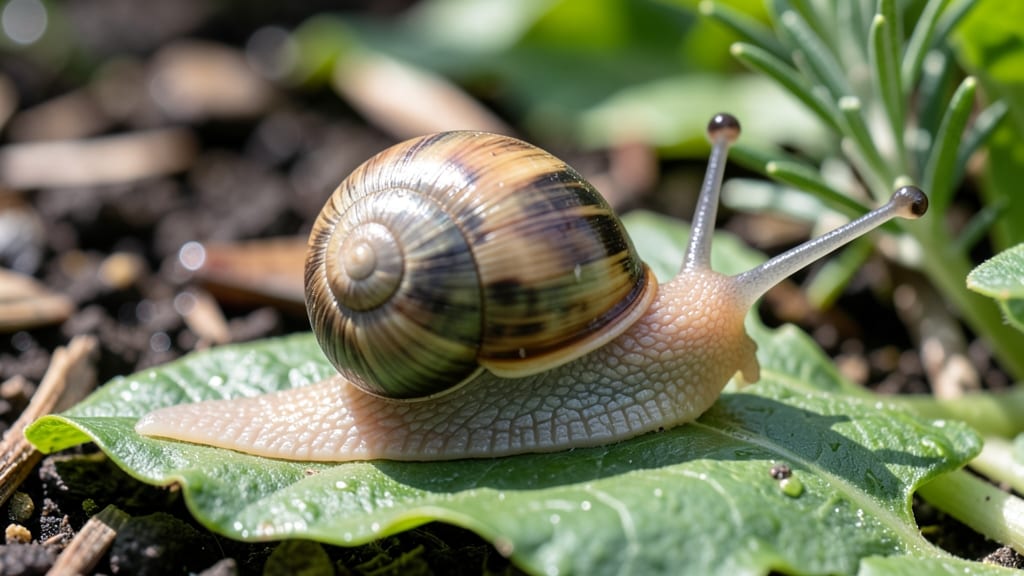
Snails are bad for your garden because they devour leaves, stems, and flowers, creating slime trails and irregular feeding holes that can stunt plant growth or kill vulnerable seedlings overnight.
These nocturnal pests target tender plants like hostas, lettuce, and marigolds, leaving behind a distinctive silvery trail of mucus as they feed. 🌱 The damage often appears as jagged holes along leaf edges, which can weaken plants and make them more susceptible to disease.
While they don't typically destroy mature plants, their relentless feeding can completely defoliate young seedlings in just a few nights, turning your garden into an all-you-can-eat buffet.
What makes snails particularly problematic is their ability to reproduce rapidly—just one egg mass can contain hundreds of eggs, leading to infestations that spiral out of control if left unchecked. Their preference for moist environments means they thrive after rain, often emerging at night to feed when you're not looking.
💡 In This Article
- How Snails Damage Garden Plants and Identify Their Feeding Patterns
- Natural Snail Control Methods to Protect Your Garden Without Chemicals
How snails damage garden plants and identify their feeding patterns
Snails use a specialized feeding tool called a radula—a ribbon-like structure lined with thousands of tiny, razor-sharp teeth that act like a file.
This anatomical marvel allows them to scrape away plant tissue with surgical precision, leaving behind smooth, irregular holes along leaf edges rather than the ragged tears caused by insects. 🌿 Their saliva contains enzymes that break down plant cell walls, making it easier to consume even fibrous leaves.
When they feed on young seedlings, they can completely remove the plant's growing point, effectively killing it within days.
The most obvious sign of snail activity is their silvery mucus trail, which can stretch up to 3 feet long as they move across surfaces. This slime isn't just for mobility—it's also a protective barrier that helps them retain moisture and evade predators.
You'll often find these trails leading to feeding sites, especially near water sources or after evening rains. Snails prefer plants with soft, tender leaves, including hostas, lettuce, marigolds, and impatiens, but they won't hesitate to munch on vegetables like tomatoes and cucumbers when other options are scarce.
Their nocturnal habits make them particularly troublesome. Snails become active at dusk and night, when temperatures drop and humidity rises, creating ideal feeding conditions. This timing means gardeners often wake up to find their plants already damaged.
The damage pattern is distinctive: leaves show half-moon or V-shaped notches along the edges, while flowers may have entire petals removed. Unlike caterpillars that leave behind frass (insect droppings), snails leave no trace except their telltale slime and the chewed plant material they consume.
What makes snails especially destructive is their reproductive cycle. A single snail can lay 50-100 eggs in one clutch, and these eggs hatch in just 2-4 weeks under warm conditions. Without intervention, one pair of snails could lead to hundreds of offspring in a single growing season.
Their preference for moist environments means they thrive after rainfall, often multiplying rapidly when conditions are favorable. This reproductive efficiency is why gardeners often discover infestations that seem to appear overnight.
Young plants are particularly vulnerable because snails can consume up to 50% of a leaf overnight without being noticed. This level of feeding stress weakens the plant's immune system, making it more susceptible to fungal infections and other pests.
Even mature plants can suffer significant damage if infestations aren't controlled, as repeated feeding sessions can lead to stunted growth and reduced flowering.
The key to minimizing damage is early detection—regularly inspecting plants for slime trails and chewed edges can help you catch and address infestations before they spiral out of control.
Interestingly, snails also play a role in nutrient cycling by breaking down organic matter and returning it to the soil. However, their feeding habits on living plants far outweigh this benefit in most garden settings.
The balance between their ecological role and their status as garden pests creates a delicate challenge for gardeners who want to maintain a healthy ecosystem while protecting their plants. 🌱