
Tools
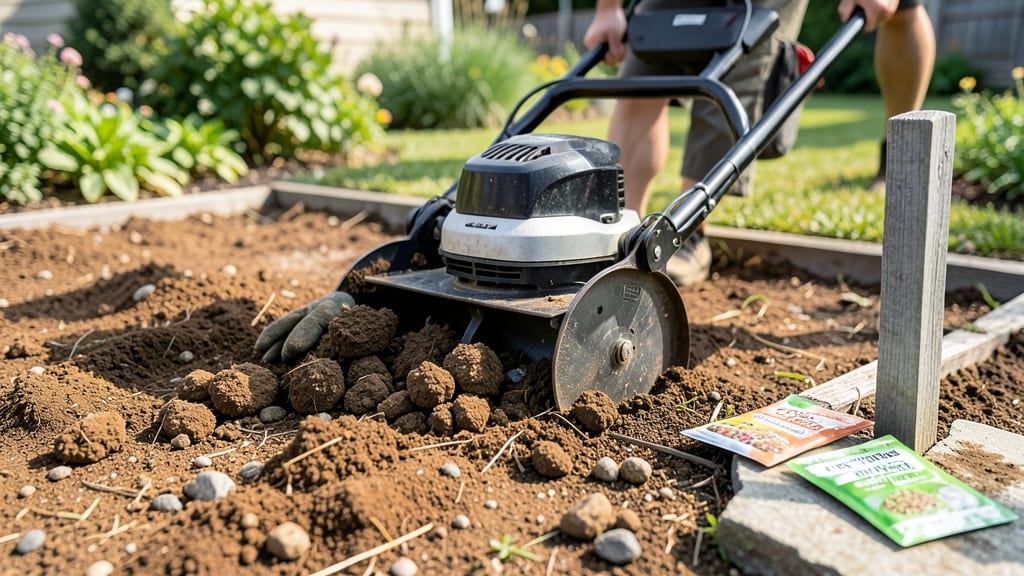
The best garden rotary tillers in 2024 prioritize power, durability, and ease of use, with features like adjustable tilling depth, lightweight design, and long-lasting engine options for optimal soil preparation without excessive strain on small gardens or large plots.
Choosing the right rotary tiller depends on your garden's size and soil type. 🌱 A high-quality model with adjustable tines lets you customize depth for seed beds or deeper root crops, while lightweight frames reduce fatigue during long sessions.
Many top-rated tillers now offer electric-start engines and low-vibration handles to make operation smoother, especially for beginners or those with back sensitivity. The best units balance performance with practicality—think of them as your garden's workhorse that won't quit mid-project.
For small urban gardens, compact models with 10-inch tilling widths work perfectly, while larger plots benefit from 16-inch+ widths and heavy-duty steel blades. I always recommend testing a tiller's weight before buying—some "lightweight" models still tip the scales at 100+ pounds, which can be tough to maneuver alone.
The right tiller transforms tough clay soil into a fluffy, plant-friendly bed in minutes.
💡 In This Article
- How Rotary Tillers Break Down Soil Efficiently
- Key Features to Compare in Top Rotary Tiller Models
How rotary tillers break down soil efficiently
Rotary tillers work by using a series of spinning tines—usually 4-6 curved metal blades mounted on a horizontal shaft—that chop through soil at speeds of 150-300 RPM.
These tines don't just slice; they create a cascading effect where each blade lifts, cuts, and then drops soil particles in a different direction, breaking up compacted layers and mixing organic matter into the subsoil.
The mechanical action also creates tiny air pockets, which improves drainage and root penetration—critical for vegetables and perennials.
The magic happens in the tine design. Most tillers offer forward/reverse tines that can be flipped to adjust cutting angles.
Forward-facing tines (45-60° angle) work best for breaking up hardpan and clay soils, while reverse-facing tines (30-45° angle) are gentler on loose, sandy soil and help prevent over-turning. 🌱 The deeper the tines penetrate (typically 8-12 inches), the more effective they are at integrating compost or fertilizer into the root zone.
What most gardeners don't realize is how tillers minimize compaction compared to hand tools. Traditional digging compresses soil between your feet, but rotary tillers distribute force evenly through the spinning motion.
This is why professional landscapers use them for large-scale prep—they can transform 2,000+ square feet per hour without creating the hardpan that plows often leave behind. The trade-off? They do stir up weeds, which is why many models include weed-clearing tines for pre-tilling passes.
Soil texture plays a huge role in efficiency. In clay-heavy soil, the tines need to be heavier (10-12 lbs each) to penetrate resistance, while sandy soil requires lighter tines (6-8 lbs) to avoid excessive fragmentation.
The best tillers automatically adjust torque based on soil density—this is why variable-speed engines (like Honda's GX series) are so popular. For rocky gardens, some models include rock-skirt guards that deflect stones away from the tines.
Consider the tilling pattern too. Most tillers use a zig-zag motion—moving forward, then turning at 45° angles to ensure complete coverage. This overlap is crucial: missing just 2 inches can leave untouched strips where weeds thrive.
The depth of each pass matters too—most experts recommend 2-3 overlapping passes at 6-inch depth for thorough aeration, especially before planting root crops like carrots or potatoes.
For organic gardeners, the tilling process also helps with soil biology. The churning action exposes dormant fungal networks in the soil to oxygen, stimulating microbial activity that breaks down organic matter faster.
However, over-tilling can disrupt beneficial soil ecosystems—this is why no-till advocates prefer mulching systems. The key is balance: 2-3 tilling sessions per season maintains structure without harming long-term soil health.