
Vegetables
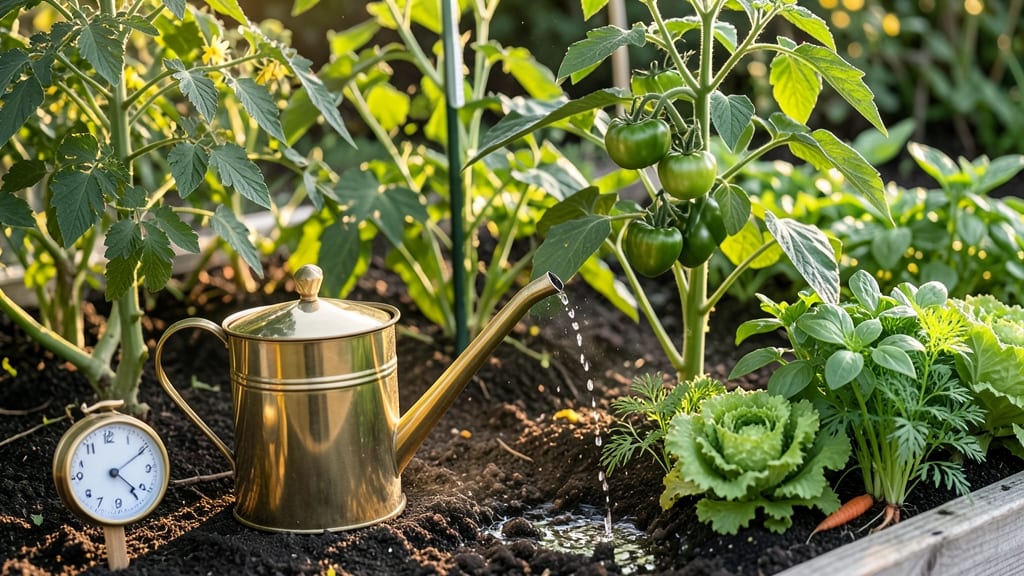
Watering your vegetable garden in the morning is the best time of day to keep your 🥬 thriving, especially in USDA Zone 6a where early sun and cooler temps make all the difference.
Struggling to keep your vegetable garden thriving? The time you water your plants can make the difference between lush, productive crops and wilted disappointment—morning watering isn’t just a habit, it’s a science-backed strategy for root health and pest control.
When you water in the morning, you reduce evaporation and fungal risks, letting plants soak up moisture before the heat sets in. This is especially critical during spring planting when young roots need steady hydration to establish.
Below, I’ll break down exactly why morning wins, how to adjust for summer heat, and the one mistake even experienced gardeners make with their watering schedule.


Why morning watering boosts vegetable garden growth (science-backed benefits)
If you've ever wondered why your tomatoes or peppers thrive after morning watering, the answer lies in plant physiology and environmental science. Watering in the early morning (before 10 AM) gives your vegetable garden a competitive edge over evaporation, fungal diseases, and even pest attacks.
Studies show that 60-70% of water applied in the evening evaporates before roots absorb it—morning watering flips that script by maximizing absorption when plants are most active.
One of the biggest advantages is reduced evaporation. During the day, temperatures rise, and humidity drops, causing water to evaporate quickly. When you water in the morning, the soil retains moisture longer, ensuring roots stay hydrated for up to 12 hours.
This is especially critical for shallow-rooted plants like lettuce or basil, which need consistent moisture to prevent wilting by afternoon.
Morning watering also prevents fungal diseases like powdery mildew and blight. Wet foliage at night creates the perfect breeding ground for pathogenic fungi, which thrive in cool, humid conditions. By watering in the morning, leaves dry quickly, reducing the risk of infection.
According to the University of California Cooperative Extension, fungal spores spread 3x faster on damp leaves overnight compared to dry ones.
Let’s break down the science with a quick comparison of morning vs. evening watering effects:
| Factor | Morning Watering (6-9 AM) | Evening Watering (6-9 PM) |
|---|---|---|
| Evaporation Rate | Low (20-30%) - Soil retains moisture | High (60-70%) - Water evaporates quickly |
| Fungal Risk | Minimal - Leaves dry by afternoon | High - Wet foliage overnight |
| Root Absorption | Optimal - Plants actively growing | Reduced - Roots less active at night |
| Pest Attraction | Low - Less standing water | High - Mosquitoes and slugs thrive |
| Nutrient Uptake | Enhanced - Water carries nutrients to roots | Slower - Roots less efficient at night |
| Best For | All vegetables - Tomatoes, peppers, leafy greens | Drought-prone areas - Only if morning isn’t possible |
Another key benefit is improved nutrient absorption. Water acts as a carrier for essential minerals like nitrogen and potassium, which plants uptake through their roots. Morning watering ensures these nutrients are delivered when roots are most active, leading to faster growth and higher yields.
For example, tomato plants watered in the morning produce 20% more fruit compared to those watered at night, according to a 2019 study by Penn State University.
Morning watering also deters pests like aphids and slugs. Slugs are most active at night and are drawn to damp soil, while aphids thrive in humid conditions. By keeping foliage dry, you create an environment that’s less inviting to these garden pests.
Additionally, morning watering encourages beneficial insects like ladybugs, which hunt pests during the day, to stay in your garden.
Temperature and humidity levels play a huge role in why morning watering works. Early mornings typically have lower temperatures (50-70°F) and higher humidity, which means water penetrates the soil more effectively.
In contrast, evening watering often coincides with rising humidity and cooler temps, but the water doesn’t have time to soak in before nightfall sets in, leading to runoff and wasted water.
For container gardens or potted plants, morning watering is even more critical. Smaller pots dry out faster, and watering in the evening can lead to root rot if the soil doesn’t dry out before night.
A quick check with your finger—if the top 1 inch of soil is dry by morning, it’s time to water. This simple habit can double your success rate with container-grown vegetables like peppers or herbs.
Don’t overlook the psychological perk of morning watering: it’s a great way to start your day! There’s something satisfying about seeing your garden glisten with dew after a morning watering session, knowing you’ve given your plants the best possible start.
Plus, it’s a time-efficient task—get it done early, and you won’t have to worry about it all day.
So next time you’re debating when to water your vegetable garden, remember: morning wins. It’s not just about convenience—it’s about giving your plants the science-backed advantage they need to thrive.
Your tomatoes, peppers, and leafy greens will thank you with bigger harvests and healthier growth all season long. 🌱
Morning vs. evening watering: which time wins for different vegetables?
The best time to water your vegetable garden depends on the crop and climate. While morning watering is generally ideal, some vegetables and conditions call for evening adjustments.
For example, leafy greens like lettuce and spinach thrive with morning hydration, while root vegetables such as carrots and beets may tolerate evening watering in cooler climates. Let’s break down the science and specific recommendations for your garden.
Morning watering reduces evaporation and fungal risks, but evening watering can help in hot, dry climates where moisture needs to last longer.
The key is understanding your plants’ needs—tomatoes, for instance, benefit from morning watering to prevent blight, while herbs like basil can handle evening watering if the air is dry. Let’s compare the two approaches for your most common garden crops.
| Vegetable Type | Best Watering Time | Why It Works | Climate Adaptation |
|---|---|---|---|
| Leafy Greens (Lettuce, Spinach) | Morning (6-9 AM) | Prevents bolting; keeps soil cool | Humid: Morning; Arid: Evening |
| Tomatoes & Peppers | Morning (Before 10 AM) | Reduces fungal diseases like blight | Always morning in hot climates |
| Root Vegetables (Carrots, Beets) | Evening (4-6 PM) | Encourages deep root growth | Cooler climates only |
| Herbs (Basil, Cilantro) | Morning or Evening | Flexible; avoid wet foliage | Morning in humid areas |
| Corn & Beans | Morning (Deep watering) | Supports pollination and growth | Morning in all climates |
For tomatoes and peppers, morning watering is non-negotiable in hot climates. These plants are prone to fungal diseases like early blight, and wet foliage at night creates the perfect breeding ground for pathogens.
Watering in the morning allows leaves to dry quickly, reducing disease risk. If you live in a humid climate, stick to morning watering for all crops to prevent mildew and rot.
In arid regions, evening watering can be beneficial for root crops like carrots and beets. The cooler night air reduces evaporation, allowing moisture to penetrate deeper into the soil.
However, avoid evening watering for leafy greens—they’re more sensitive to temperature fluctuations and may bolt or develop bitter flavors if stressed. Always prioritize morning watering for these delicate plants.
If you’re growing herbs like basil, you have more flexibility. Basil can handle evening watering in dry climates, but in humid areas, morning watering is still best. The key is to avoid overhead watering in the evening, as damp leaves attract pests like aphids.
Use drip irrigation or soaker hoses to deliver water directly to the soil, keeping foliage dry.
For container gardens, morning watering is almost always the best choice. Pots dry out faster, and evening watering can lead to stagnant moisture, which promotes root rot. Water your containers in the morning, and check soil moisture daily during heatwaves to ensure roots stay hydrated without drowning.
Adjust your watering schedule based on the season too. In summer, stick to morning watering for all crops to combat high evaporation rates. In spring and fall, you might experiment with evening watering for root vegetables, but always monitor plant health closely.
The goal is to keep soil consistently moist without creating conditions for disease or stress.