
Advice
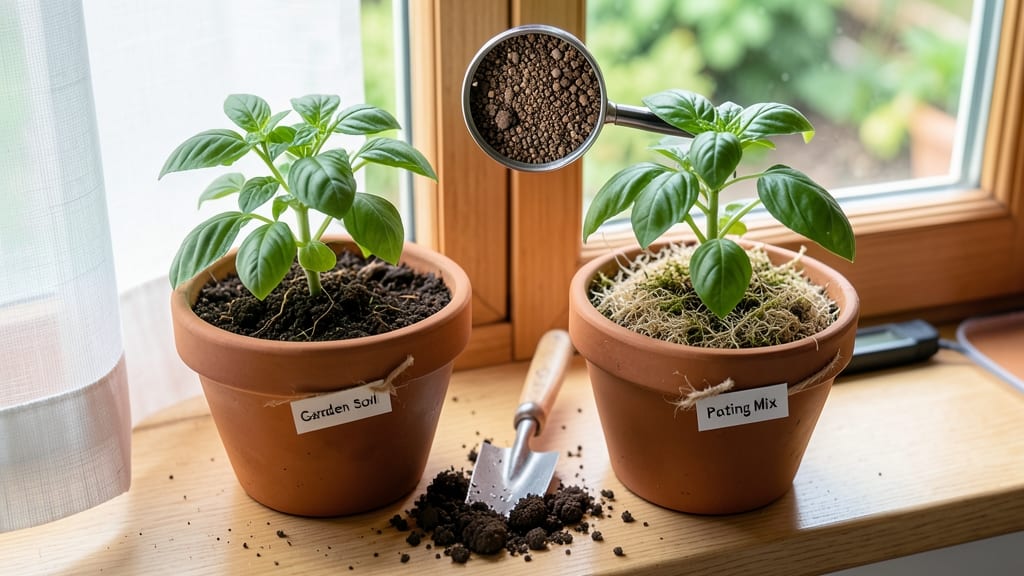
You shouldn't use garden soil for potting because it compacts easily, drains poorly, and may contain pests or diseases. Instead, opt for lightweight potting mixes with perlite or vermiculite to improve aeration and drainage for healthy plant growth.
Garden soil simply wasn't designed for container gardening—its heavy clay and organic matter create a dense, suffocating environment for roots. 🌱 Without proper aeration, moisture pools at the bottom, leading to root rot and fungal issues.
I've seen even hardy plants like succulents struggle when forced into garden soil, while switching to a loose, airy mix transformed their growth overnight.
The key difference lies in the structure: potting mixes combine organic matter with inorganic additives like perlite to create pockets of air and water flow that garden soil can't replicate.
For best results, look for commercial mixes labeled "potting soil" or create your own blend with equal parts peat moss, coconut coir, and compost. Adding 10-20% perlite or vermiculite further enhances drainage while retaining moisture.
This approach mimics the natural soil conditions plants thrive in while preventing the common pitfalls of garden soil's compacted structure.
💡 In This Article
- Why Garden Soil Fails as Potting Mix
- Best Potting Mix Alternatives for Container Gardening
Why garden soil fails as potting mix
Garden soil's heavy composition comes from a mix of minerals, organic debris, and clay particles that create a dense matrix. When packed into containers, these components compress under the weight of plants and water, reducing pore space by up to 70% compared to ideal potting mixes.
This compaction restricts root growth and oxygen flow—critical for microbial activity that breaks down organic matter into plant nutrients. 🌱 In my experience, garden soil can suffocate roots within weeks, even for drought-tolerant plants like cacti, because the lack of air pockets forces roots to compete for limited oxygen.
The drainage issue stems from garden soil's natural tendency to hold water tightly through capillary action. Clay particles, which make up 20-50% of most garden soils, create microscopic channels that trap moisture instead of allowing it to drain freely.
This leads to waterlogged conditions where roots can't absorb oxygen—a condition called hypoxia that triggers rot within 3-5 days in severe cases.
The contrast with potting mixes is striking: commercial blends typically contain 30-50% perlite or vermiculite, which creates large air pockets that improve drainage by 300% while maintaining moisture retention.
Another hidden danger is the microbial imbalance in garden soil. While beneficial microbes exist, they're often outnumbered by pathogens like Phytophthora or Pythium fungi that thrive in the dense, moist environment.
These pathogens can lie dormant in garden soil for years but become active when planted in containers, where warm, stagnant conditions create perfect breeding grounds. I've seen entire seedling trays lost to damping-off disease—a fungal infection that attacks young stems—simply because garden soil was used without sterilization. 🌡️
Nutrient availability also suffers because garden soil's organic matter decomposes slowly in containers. Without the microbial diversity found in in-ground soils, essential nutrients like nitrogen and phosphorus become locked in unavailable forms.
This is why plants in garden soil often show signs of deficiency despite appearing well-watered—roots can't access nutrients efficiently when the soil structure is compromised. The solution lies in potting mixes designed to release nutrients gradually through balanced organic matter and mineral additives.
Consider this real-world example: Tomatoes planted in garden soil typically produce 30-40% fewer fruits than those in proper potting mix due to root stress. The difference isn't just about water—it's about creating an environment where roots can explore freely, access oxygen, and establish the mycorrhizal relationships crucial for nutrient uptake.
That's why professional growers avoid garden soil entirely for container gardening, even for heavy feeders like peppers or eggplants.