
Plants
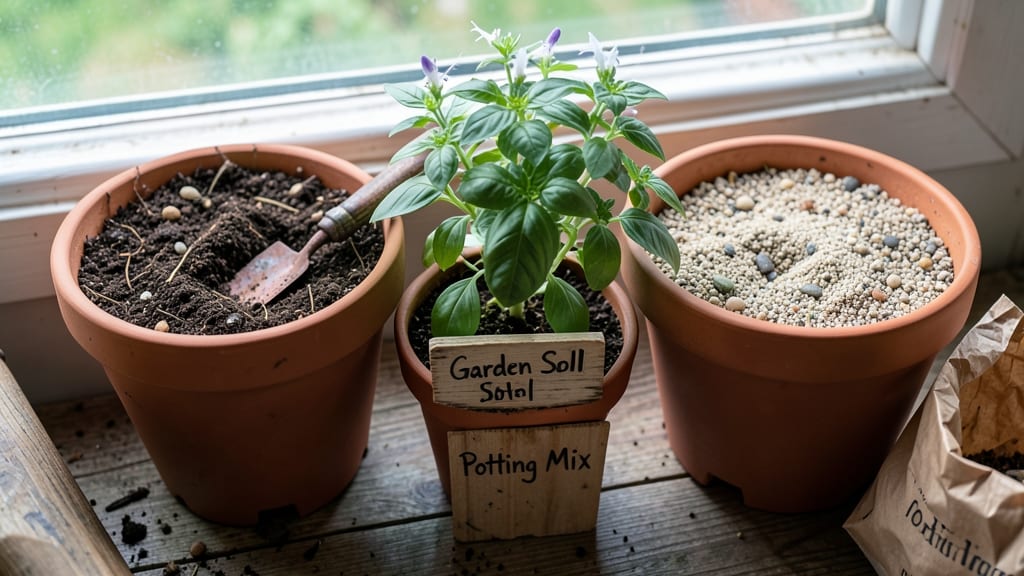
You shouldn't use garden soil for potting plants because it compacts easily, drains poorly, and may harbor pests or diseases. Instead, opt for lightweight potting mixes with perlite, peat, or coconut coir for optimal aeration and moisture control.
Garden soil is heavy and dense by nature, which means it struggles to provide the air pockets roots need to breathe. 🌱 When packed into containers, it can suffocate plant roots and trap excess moisture, creating the perfect environment for fungal growth.
I've seen many beginners make this mistake, thinking "natural" means better—until their plants start wilting despite regular watering.
Lightweight potting mixes solve these problems by combining organic matter with amendments like perlite or vermiculite. These ingredients create the right balance of moisture retention and drainage while preventing compaction.
For example, a simple homemade blend might include equal parts peat moss, coco coir, and perlite, which works wonders for everything from herbs to ferns.
💡 In This Article
- Why Garden Soil Fails as Potting Mix
- Best Potting Soil Alternatives for Healthy Plants
Why garden soil fails as potting mix
Garden soil's natural structure makes it a poor choice for potted plants because its particles pack tightly together.
When you compress garden soil into containers, it creates a dense matrix that restricts root expansion and oxygen flow. 🌱 Roots need at least 25-30% air space to thrive, but garden soil typically offers only 10-15%—this suffocation leads to stunted growth and yellowing leaves.
The clay and silt particles in garden soil also form hard clumps when dry, making it nearly impossible for water to penetrate evenly.
The drainage issue is equally critical. Garden soil holds moisture like a sponge, often taking 24-48 hours to dry between waterings, which promotes root rot in containers where excess water has nowhere to escape.
Compare this to potting mixes with perlite or vermiculite, which drain 3-5 times faster while retaining just enough moisture for roots. I once watched a basil plant in garden soil develop black, mushy roots within 10 days of overwatering—something that never happens with proper potting mix.
Another hidden problem is the nutrient imbalance. Garden soil contains organic matter that decomposes slowly, releasing nutrients unevenly. Potted plants, however, need consistent nutrition since they're confined to limited soil volume.
The microbial life in garden soil can also introduce harmful pathogens like Phytophthora fungi, which thrive in the compacted, moist conditions containers create. 🦠 Even "sterile" potting mixes have beneficial microbes that won't compete with disease-causing organisms.
Consider the texture difference: garden soil feels gritty and heavy when dry, while quality potting mixes have a light, almost fluffy consistency. This isn't just about feel—it's about the 10-15% porosity difference that determines how well roots can explore their environment.
For example, a 1-gallon container filled with garden soil might have only 0.15 cubic inches of air space, while the same container with potting mix could offer 0.4 cubic inches—that's nearly triple the oxygen available to roots.
The weight difference is another practical concern. A 5-gallon container of garden soil can weigh 40-50 pounds when saturated, while potting mix stays at 20-25 pounds. This makes moving plants difficult and increases the risk of tipping over during watering.
The structural integrity of potting mixes also prevents containers from cracking under pressure, which is a common issue with heavy garden soil in terracotta pots.