
Advice
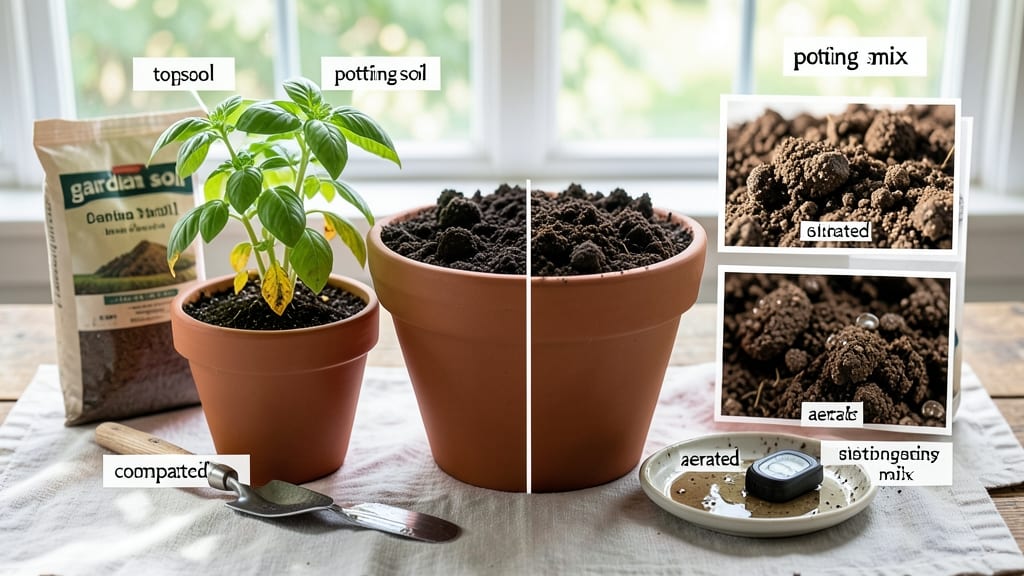
You shouldn't use garden soil as potting soil because it compacts easily, drains poorly, and may harbor pests or diseases. Instead, opt for lightweight, sterile potting mixes with perlite or vermiculite for better aeration and drainage.
Garden soil is heavy and dense, which suffocates plant roots by blocking airflow and trapping moisture—leading to rot and stunted growth. 🌱 The natural microbes and pathogens in outdoor soil can also infect your potted plants, especially delicate varieties.
For container gardening, I recommend blending coconut coir, perlite, and compost to create a fluffy, well-draining medium that mimics the ideal conditions plants thrive in.
If you're working with a budget, you can mix 50% peat moss or coconut coir with 30% compost and 20% perlite or vermiculite for a DIY solution.
Commercial potting mixes often include these ingredients already, but always check the label for organic matter content—aim for at least 30-50% organic material to support root health.
💡 In This Article
- Why Garden Soil Fails as Potting Mix
- Best Potting Soil Blends for Healthy Plants
Why garden soil fails as potting mix
Garden soil is designed to support plants in the ground, where roots can spread freely and natural drainage occurs over large areas. But in containers, the same soil becomes a suffocating environment.
The particles in garden soil—like clay and silt—pack tightly together, creating a dense matrix that blocks oxygen from reaching roots.
This compaction reduces porosity, which is crucial for aeration. 🌱 For comparison, ideal potting soil should have a porosity of about 50-60%, while garden soil often sits at just 30-40%, leaving roots gasping for air.
The moisture dynamics also shift dramatically. Garden soil holds water near the surface due to its high clay content, but in pots, this trapped water creates anaerobic (oxygen-free) zones where harmful bacteria thrive. These microbes can outcompete beneficial fungi and bacteria, leading to root rot.
I've seen this firsthand with ferns and calatheas—both sensitive to soggy conditions—that wilted within weeks when planted in garden soil. The texture difference is night-and-day: potting mix feels light and airy, almost like crumbled styrofoam, while garden soil is heavy and clumps together when wet.
Pathogens are another silent killer. Garden soil often carries fungal spores, weed seeds, and bacterial colonies from decomposed plant matter or animal waste. When you transplant these into pots, the confined space accelerates disease spread.
For example, Phytophthora (a water mold) thrives in compacted, waterlogged soil—something I've battled with peace lilies that turned yellow and mushy overnight. Sterile potting mixes eliminate this risk by being heat-treated or composed of inert materials like perlite.
Even the nutrient balance shifts. Garden soil releases nutrients slowly over seasons, but potted plants need immediate access. The organic matter in garden soil breaks down too quickly in containers, leaving plants starved.
A good potting mix includes slow-release compost or worm castings to provide steady nutrition without the risk of over-fertilization. Think of it like feeding a goldfish: you wouldn't dump a month's worth of food at once, but that's essentially what happens with garden soil's nutrient surge.
Finally, consider the weight. A 5-gallon pot filled with garden soil can weigh 40-50 pounds when saturated—enough to strain plant supports or even tip over in wind. Potting mixes are typically 30-40% lighter due to added perlite or vermiculite, making them safer for balconies and windowsills.
The structural difference is like comparing a brick wall to a lattice: one crushes, the other breathes. 💫