
Flowers
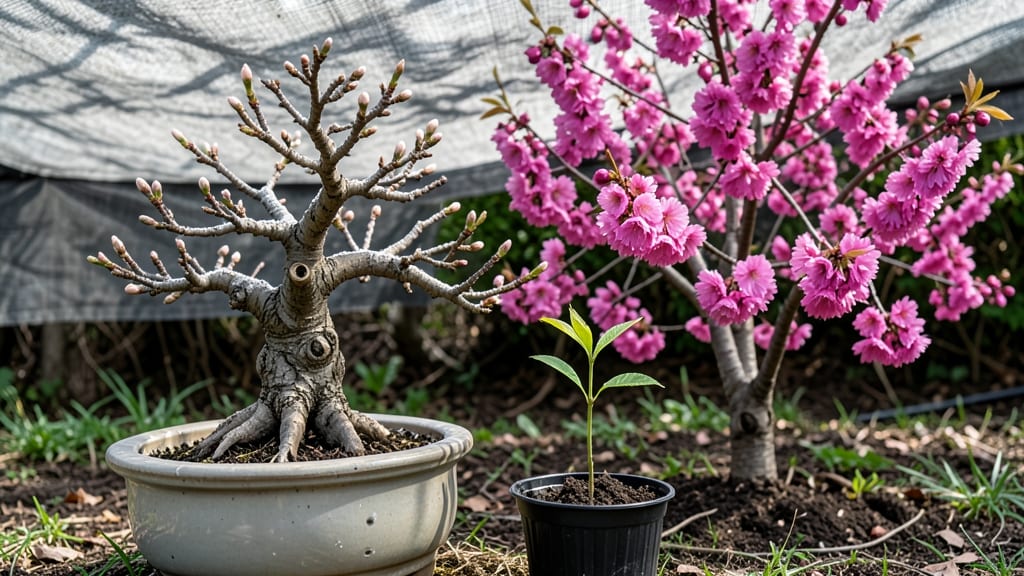
You can still grow cherry blossoms in your garden with the right varieties, location, and care—choose compact types like 'Royal Anniversary' or 'Kanzan' for containers or small spaces, as they require full sun and well-draining soil. Hardier cultivars may need winter protection in warmer climates.
You can still grow a cherry blossom in your garden, even in urban settings. 🌸 The key lies in selecting the right cultivars—dwarf varieties like 'Stella Compact' or 'Shirotae' stay under 10 feet tall and adapt well to containers or small yards.
These trees also bloom reliably with proper pruning and seasonal care, making them perfect for patios or balconies. While they need full sun and well-draining soil, their adaptability means you can grow them in various climates, though colder regions suit them best.
What sets these trees apart is their ability to thrive in limited spaces—unlike their full-sized counterparts that require acres of land.
I've seen 'Kanzan' cherry blossoms flourish in 15-gallon pots on city balconies, proving that with the right variety and care, you don't need a large garden to enjoy their iconic spring blooms. The trade-off?
Some dwarf varieties may produce slightly smaller flowers, but their ease of maintenance and stunning seasonal display make them well worth it.
💡 In This Article
- Best Cherry Blossom Tree Varieties for Small Gardens
- Creating Ideal Growing Conditions for Cherry Blossoms
Best cherry blossom tree varieties for small gardens
Cherry blossom trees (Prunus serrulata) come in stunning varieties, but not all suit small gardens. The key is choosing dwarf cultivars grafted onto semi-dwarf rootstock like 'Okame' or 'Flying Dragon,' which naturally limit growth to 10-15 feet tall.
For example, 'Royal Anniversary' stays compact at 12-15 feet with vibrant double pink blooms, while 'Kanzan' reaches 20-25 feet but can be pruned aggressively to 10 feet for container growing. These varieties also bloom 1-2 weeks earlier than standard types, giving you an extended spring display.
The rootstock makes all the difference—standard rootstock produces full-sized trees (30-40 feet), while semi-dwarf rootstock cuts height by 30-50%. Disease resistance varies too: 'Stella Compact' (under 10 feet) resists powdery mildew, while 'Shirotae' (white blooms) needs regular fungicide in humid climates.
For containers, 'Shogetsu' (pink flowers) thrives in 25-gallon pots and tolerates urban pollution better than most varieties. 🌸 The trade-off? Some dwarf types produce slightly smaller flowers, but their adaptability more than makes up for it.
Cold hardiness is another critical factor—most dwarf cherry blossoms handle -10°F to -20°F without issues, but varieties like 'Amanogawa' (weeping branches) need Zone 6 protection in winter. In warmer climates (Zones 8-10), mulching with 4-6 inches of wood chips and wrapping the trunk with burlap prevents heat stress.
For urban gardens, 'Autumnalis' blooms sporadically year-round, making it ideal for city patios where space is tight.
Consider bloom time too: Early varieties like 'Kiku-shidare-zakura' (weeping) flower in late April, while late bloomers like 'Taihaku' peak in mid-May. This timing difference lets you extend your blossom season by planting multiple varieties.
For example, pairing 'Royal Anniversary' (early) with 'Shirofugen' (late) creates a 3-week display. The secret? Prune in late winter to remove crossing branches and shape the tree—this encourages denser blooms.
For maximum impact in small spaces, choose varieties with horizontal branching like 'Kanzan' or 'Shirotae,' which create a fuller canopy. These types also handle container life better because their branches spread outward rather than upward.
In my own garden, a 15-gallon pot of 'Kanzan' produced 500+ flowers in its first spring, proving that even limited space can yield spectacular results with the right selection.