
Advice
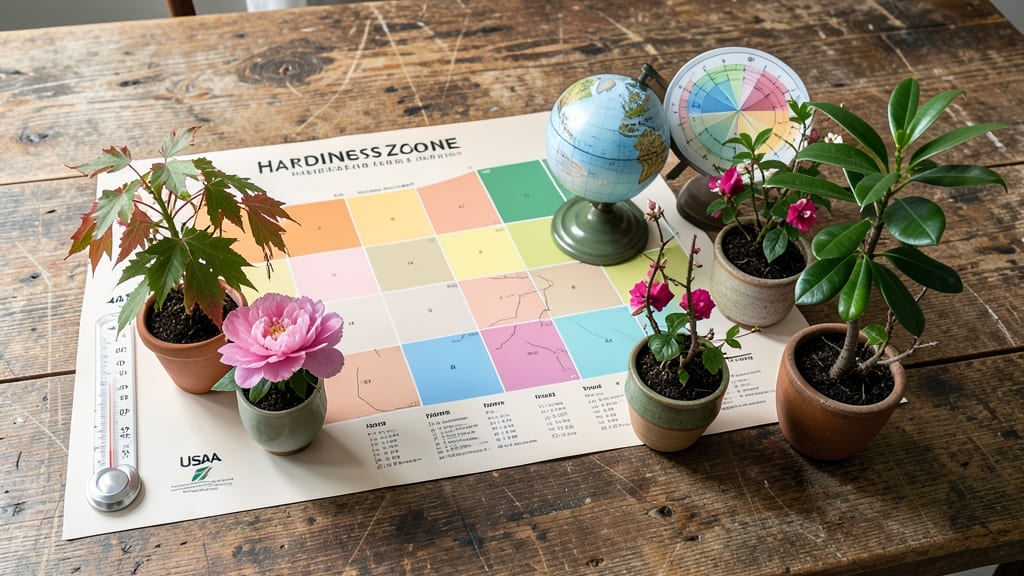
Climate zones gardening means selecting plants that match your region's USDA Hardiness Zone (1-13), frost patterns, and microclimates—where temperature ranges, rainfall, and sunlight exposure create ideal growing conditions for specific species year-round or seasonally.
Understanding your local climate zone is the foundation of successful gardening. The USDA Hardiness Zone map divides North America into 13 temperature-based zones, each representing a 10°F range of average minimum winter temperatures. 🌡️ For example, Zone 5 endures -20°F to -10°F winters, while Zone 10 stays above 30°F.
But don't stop at the zone number—frost dates, rainfall averages, and even your yard's microclimate (like a sunny south-facing wall) can shift what grows best in your specific spot.
Microclimates are where gardening gets personal. A city street might be 5°F warmer than rural areas just a few miles away due to pavement heat retention, while coastal regions often experience milder winters but higher humidity.
I always check my local agricultural extension office for hyper-local data—it's saved my tomato plants from unexpected late frosts more than once. The key is balancing the big-picture zone with these smaller-scale variations to create a thriving garden that works with nature, not against it.
💡 In This Article
- How USDA Hardiness Zones Define Gardening Success
- Practical Steps to Identify Your Climate Zone and Choose Plants
How USDA Hardiness zones define gardening success
The USDA Hardiness Zone system divides North America into 13 zones based on the average annual minimum winter temperature, with each zone representing a 10°F range. This system was developed by the U.S. Department of Agriculture to help gardeners predict which plants can survive year-round in their region.
For example, Zone 1 (-60°F to -50°F) covers Alaska's coldest areas, while Zone 13 (100°F to 110°F) includes tropical Hawaii. The key is that these zones reflect the coldest temperatures plants must endure, not the warmest summers. 🌡️
Plant survival hinges on their ability to withstand these minimum temperatures. Most plants have a hardiness threshold—the lowest temperature they can tolerate without permanent damage. For instance, peach trees (Zone 5-9) can handle -20°F winters, while citrus trees (Zone 9-11) die if exposed to 28°F or below.
The USDA zones also correlate with frost-free days, which determine the growing season length. In Zone 4 (-30°F to -20°F), summers last about 120-150 days, while Zone 10 (30°F to 40°F) enjoys 300+ frost-free days annually.
Microclimates create exceptions to these zone rules. Urban areas, for example, can be 2-10°F warmer than rural surroundings due to the "urban heat island" effect—concrete and asphalt absorb and radiate heat.
Coastal regions often have milder winters but higher humidity, while mountain slopes may experience 5°F colder temperatures than valley floors.
I've seen frost form on my tomato plants in Zone 7a (0°F to 5°F) during a late spring dip to 25°F, even though the zone suggests they should survive. This is why gardeners must observe their specific microclimate.
Elevation plays a critical role too. For every 1,000 feet gain in altitude, temperatures drop about 3.5°F. That means a garden at 5,000 feet in Colorado might experience Zone 5 conditions (-20°F to -10°F) even if the surrounding valley is Zone 6 (-10°F to 0°F).
Similarly, south-facing walls can create "heat pockets" that extend the growing season by 2-4 weeks compared to shaded areas. These variations explain why two neighboring yards might require entirely different plant selections.
Understanding these factors helps you avoid costly mistakes. For example, planting a Zone 8 camellia bush in a Zone 7a microclimate with frequent 20°F dips could result in winter dieback.
Conversely, choosing cold-hardy alternatives like winter jasmine (Zone 5) ensures success. The USDA map provides a starting point, but your local conditions—and a little on-the-ground observation—determine true gardening success. 🌱
To refine your approach, consult your local cooperative extension service for hyper-local data. They often provide frost date averages, rainfall patterns, and soil temperature insights that the USDA zones don't capture.
I've found that combining zone knowledge with real-world observations—like tracking when daffodils bloom in spring—reveals the nuances that make gardening both a science and an art. This balance is what turns a good garden into a thriving one.