
Advice
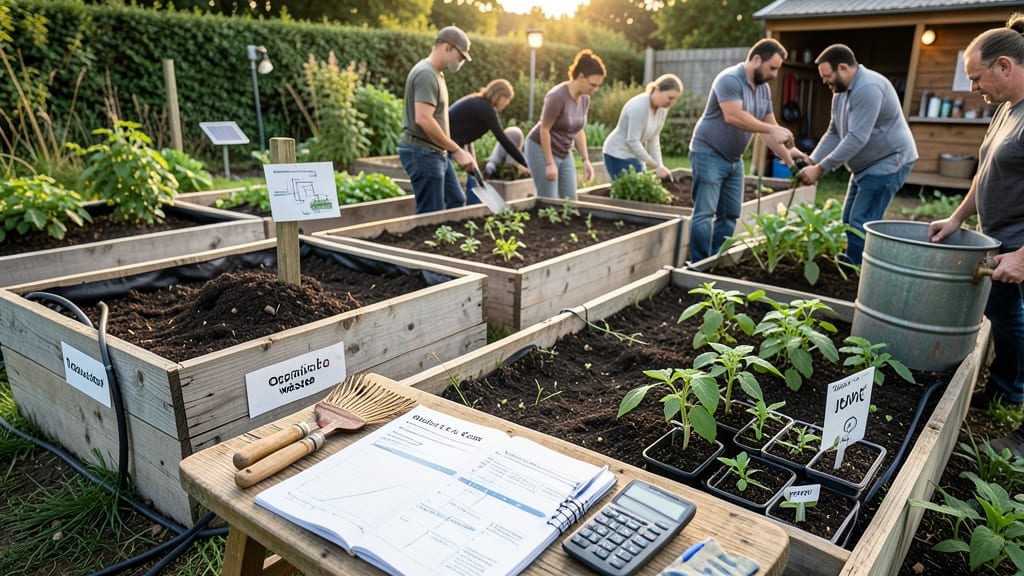
A community garden startup budget and operating costs feasibility study must include land costs (leasing or purchase), soil preparation, planting materials, irrigation systems, fencing, tools, and staffing—all of which fluctuate based on location, garden size, and volunteer availability. Urban gardens typically range from $5,000–$15,000 annually, while rural projects with larger scales can exceed $50,000, including ongoing expenses like maintenance, insurance, and utilities.
A feasibility study for your community garden should start by analyzing location-specific variables that dramatically impact costs.
For example, urban areas often charge premium rates for land leases, while rural plots may require additional investments in water access or soil remediation. 💰 I've seen projects where hidden expenses—like liability insurance or permit fees—can add 20% to the initial estimate, so always factor those in during your planning phase.
The key is balancing upfront costs with long-term sustainability, whether through grants, partnerships, or phased development.
Beyond the numbers, consider how your garden's size and design affect operational efficiency. Smaller plots may require less irrigation infrastructure, while larger gardens benefit from economies of scale in tool purchases.
Many successful gardens start with a core team of volunteers to offset labor costs, but even then, budgeting for occasional paid help during peak seasons is wise. The goal isn't just to launch—it's to create a self-sustaining model that grows with your community.
💡 In This Article
- Key Cost Factors in Community Garden Feasibility Studies
- Budget Optimization Strategies for Sustainable Community Gardens
Key cost factors in community garden feasibility studies
Land acquisition or leasing represents the single largest expense in most community garden feasibility studies, often accounting for 30-50% of total startup costs.
In urban areas, annual lease rates can range from $200–$1,000 per 100 sq ft, while rural land purchases might require $5–$20 per sq ft upfront—though property taxes and maintenance add long-term costs.
For example, a ½-acre urban plot in Portland, OR might cost $25,000/year to lease, whereas the same space in rural Georgia could be purchased for $150,000 but with $3,000/year in property taxes. The decision hinges on whether your community prefers short-term flexibility or long-term ownership. 💰
Soil preparation is another hidden cost driver that varies dramatically by location. Urban soils often contain high levels of contaminants (like lead or heavy metals) requiring $1,500–$5,000 in remediation, while rural soils may need $500–$2,000 in amendments (compost, lime, or fertilizer) to reach optimal pH (6.0–7.0).
Water access adds another layer—urban gardens might pay $0.005–$0.02 per gallon for city water, while rural gardens could invest $10,000–$30,000 in well drilling or irrigation infrastructure.
A feasibility study in Phoenix revealed that drip irrigation systems cost $3–$8 per sq ft to install, but saved 70% on water bills annually. 💧
Labor costs fluctuate wildly based on volunteer availability. Gardens with high volunteer turnover may need to budget $15–$30/hour for part-time staff, while those with dedicated members can reduce expenses to $0–$5/hour for occasional help. Permits and insurance—often overlooked—can add $1,000–$5,000/year.
For instance, a liability insurance policy for a 1-acre garden in California might cost $2,500/year, while a small urban plot in Chicago could require $500–$1,500. The key is identifying these "soft costs" early to avoid budget shocks. 📋
Fencing and security emerge as critical but often underestimated expenses. A 6-foot chain-link fence for a ½-acre plot can cost $8,000–$15,000, while perimeter plantings (like thorny roses or holly) might reduce costs to $2,000–$5,000 but require 2–3 years to mature.
Tool and equipment costs also scale with garden size—a small urban garden might need $1,000–$3,000 in basic tools, while a large rural operation could invest $10,000–$25,000 in tractors, tillers, and storage sheds. The trade-off? Larger tools reduce per-unit costs for maintenance. ✨
Hidden expenses frequently derail budgets, including unexpected repairs (e.g., $2,000 for a broken irrigation pump), seasonal surges in planting costs (e.g., $500 extra for spring tomato seedlings), or compliance fees (e.g., $1,000 for a stormwater permit).
One feasibility study in Denver found that 15% of unplanned costs came from "emergency" soil tests after initial planting failed due to undetected salinity. The lesson? Build a 10–20% contingency buffer into your budget for these variables. 🚨
Regional climate also plays a surprising role. Gardens in arid regions (like Arizona) may spend $5,000–$10,000/year on mulch and shade structures, while humid climates (like Florida) might allocate $3,000–$7,000 for fungal-resistant soil treatments.
Even the choice of crops affects costs—heirloom seeds can cost 5–10x more than hybrid varieties, but may yield 20% higher harvests. A feasibility study in Seattle showed that organic certification added $3,500/year in paperwork and testing, but increased produce sales by 40%. 🌱