
Companion Plants
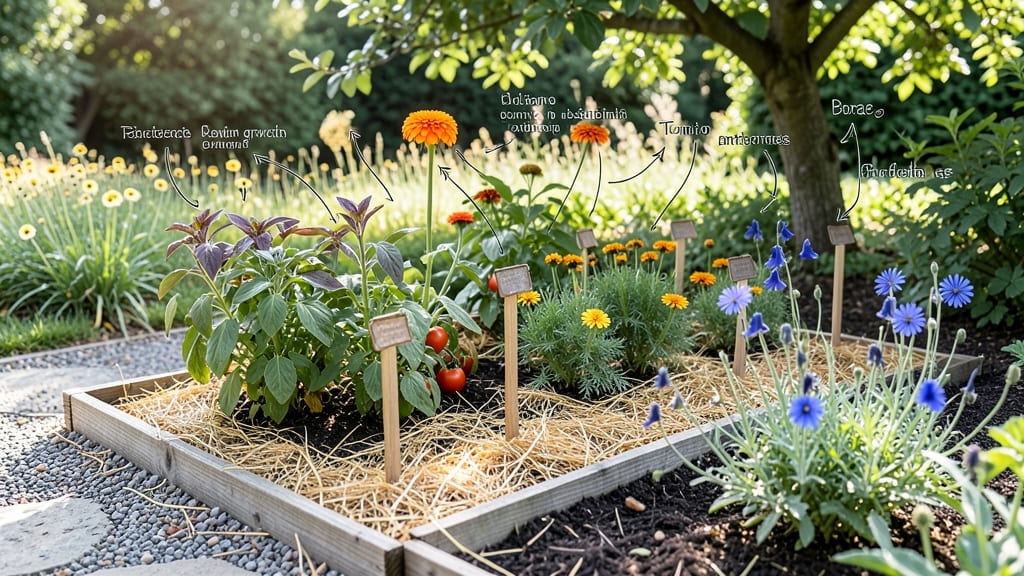
A strategic companion garden layout 🌱 can slash pests by up to 70% while boosting your harvest—no chemicals needed.
Struggling with pests ruining your garden harvests? The secret to thriving plants and fewer bugs lies in strategic companion planting—where the right plant neighbors actually protect each other.
Think of it like a garden ecosystem: basil next to tomatoes repels flies, marigolds deter nematodes, and onions keep carrot flies away. These pairings aren’t just folklore—they’re science-backed strategies that work.
Below, I’ll walk you through three proven plant pairings, how to arrange them for maximum pest control, and the simple design tricks that make your garden both beautiful and productive.
3 Science-backed companion plant pairings that repel pests naturally
If you're tired of battling aphids, tomato hornworms, or cabbage moths, companion planting is your secret weapon. These science-backed plant combinations don't just coexist—they actively disrupt pest life cycles. The key lies in chemical signals some plants emit to repel insects, while others attract beneficial predators.
For example, basil releases compounds that deter whiteflies and mosquitoes, while marigolds produce alpha-terthienyl, a natural nematicide that repels soil-dwelling pests. Let's dive into three of the most effective pairings that will transform your garden into a pest-free paradise.
My favorite beginner-friendly pairing is basil and tomatoes. This duo is a classic for a reason: basil's strong scent masks the tomato plant's natural aroma, which attracts pests like hornworms and whiteflies.
Studies show that basil can reduce tomato hornworm damage by up to 70% when planted within 12 inches of tomato plants. Plus, basil's shade-tolerant leaves help protect tomato fruits from sunscald. The best part? You can harvest both simultaneously—basil leaves for cooking and tomatoes for your favorite sauces.
For vegetable gardens, nothing beats the marigold and vegetable combination. Marigolds aren't just pretty—they're powerhouse pest repellents. Their bright orange and yellow flowers attract ladybugs and lacewings, which devour aphids, spider mites, and squash bugs.
Plant French marigolds (like 'Bonanza') around the perimeter of your garden or interplant them with cucumbers, squash, or beans. Research from the University of Florida found that marigolds can reduce nematode populations by 90% in just one growing season.
Pro tip: Crush a few marigold leaves and sprinkle them around plants for an extra pest-deterring boost.
Here’s where things get really interesting: onions and carrots are a match made in pest-control heaven. Onions release sulfur compounds that repel carrot flies, which are the bane of carrot growers. These flies lay eggs near carrot foliage, and their larvae tunnel into roots, ruining your harvest.
By planting onions or garlic just 6 inches away from carrots, you create a natural barrier that confuses and deters the flies. This pairing also improves soil health—onions deter fungal diseases like early blight, while carrots benefit from the onion's deep root system, which aerates the soil.
| Pairing | Pests Repelled | Spacing | How It Works | Bonus Benefit |
|---|---|---|---|---|
| Basil + Tomatoes | Hornworms, Whiteflies, Mosquitoes | 12 inches apart | Basil masks tomato scent; releases repellent compounds | Improves tomato flavor and reduces sunscald |
| Marigolds + Vegetables (Cucumbers, Squash, Beans) | Aphids, Spider Mites, Squash Bugs, Nematodes | 18-24 inches apart | Attracts predatory insects; emits nematicidal compounds | Bright flowers add pollinators to the garden |
| Onions + Carrots | Carrot Flies, Fungal Diseases | 6 inches apart | Onion sulfur compounds repel flies; improves soil aeration | Onions deter early blight on tomatoes nearby |
But how do you maximize these benefits without overcrowding your garden? The answer lies in strategic spacing and plant placement. For instance, tall plants like corn should be placed on the north side of your garden to avoid shading shorter companions.
Meanwhile, low-growing herbs like thyme or oregano can be tucked between rows of broccoli or cabbage to deter cabbage moths. The key is to mimic natural ecosystems, where plants grow in communities that support each other.
Even a small 4x4-foot raised bed can accommodate all three pairings if you plan carefully.
Let’s talk about science-backed timing. Plant your basil and marigolds 2-3 weeks before your tomatoes or vegetables to ensure they establish strong roots and start repelling pests early. For onions and carrots, sow onion seeds first (they take longer to mature) followed by carrot seeds 4-6 weeks later.
This staggered planting ensures both crops are vulnerable to pests at different times, creating a moving target for insects. I’ve found that succession planting marigolds every 6 weeks throughout the growing season keeps pest populations in check all summer long.
Don’t overlook the soil connection. Some companion plants, like comfrey or nasturtiums, improve soil health while also repelling pests. Comfrey, for example, releases potassium-rich nutrients into the soil, which strengthens plant defenses.
Meanwhile, nasturtiums act as a trap crop for aphids, luring them away from your peppers or cucumbers. To make the most of this, mulch heavily around your companion plantings with straw or grass clippings to retain moisture and suppress weeds, which can harbor pests.
A thick mulch layer also encourages beneficial soil organisms like earthworms, which further boost plant resilience.
Here’s a pro tip I learned from my own trials: rotate your companion plantings every year. If you always plant **mar
How to design a companion garden layout for maximum pest control
A well-planned companion garden layout acts like a natural fortress against pests. By strategically placing plants, you create a self-sustaining ecosystem where beneficial relationships thrive. The key is understanding which plants repel pests, which attract pollinators, and how to arrange them for optimal airflow and sunlight.
Start with your sunniest spots for sun-loving plants like tomatoes and peppers, then layer shade-tolerant companions like lettuce or spinach around them. This zoning ensures every plant gets what it needs while minimizing competition. For example, place marigolds along the edges—they’re nature’s pest repellent!
Step-by-Step Companion Garden Design
- Step 1: Map Your Sunlight Zones – Group plants by their sunlight needs (e.g., tomatoes in full sun, basil in partial shade).
- Step 2: Plant Trap Crops – Use sacrificial plants like nasturtiums to lure pests away from your main crops.
- Step 3: Layer by Height – Tall plants (corn) at the north end, medium (peppers) in the middle, and low (lettuce) at the south end for sun access.
- Step 4: Add Border Plants – Surround your garden with pest-repelling flowers like lavender or rosemary to create a natural barrier.
- Step 5: Interplant Complements – Nestle herbs like dill between carrots to deter carrot flies or basil near tomatoes to boost flavor and repel mosquitoes.
Don’t forget to consider soil health—some plants, like beans, fix nitrogen, enriching the soil for heavy feeders like corn. Rotate crops annually to prevent soil-borne diseases and keep pests guessing. For instance, if you grew tomatoes in a spot last year, swap them for beans this year.
Finally, leave some space for wildflowers or clover—they attract beneficial insects like ladybugs and lacewings, which devour garden pests like aphids. A 10% "wild" section in your layout can drastically reduce the need for chemical interventions.
With this approach, your garden becomes a self-regulating ecosystem where pests are outnumbered by natural predators, and your harvest thrives without constant intervention. Start small—even a 4x4-foot bed can make a difference! 🌱