
Fertilization
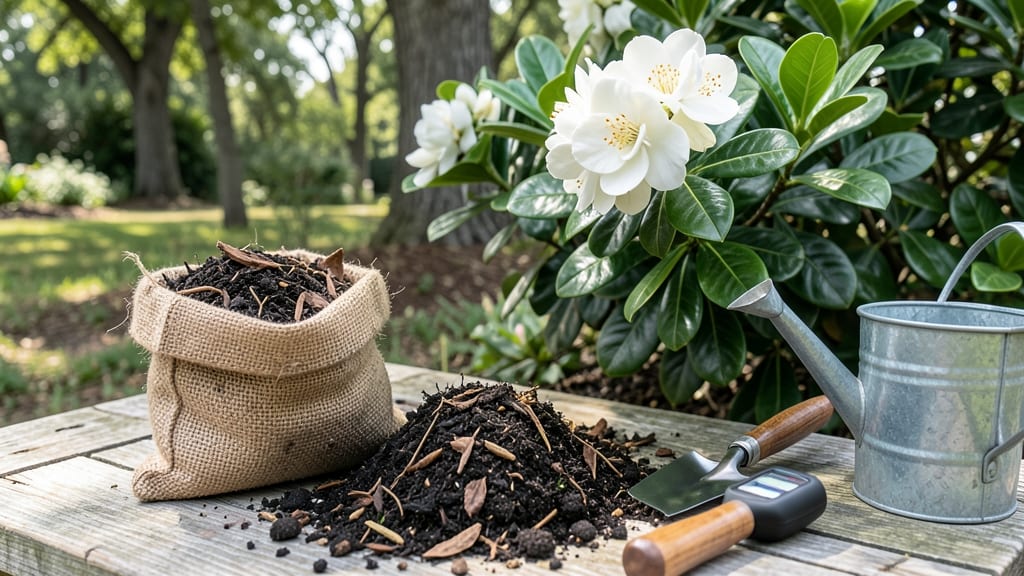
For gardenias, compost should be acidic with organic matter like peat moss, pine needles, or aged leaf litter, combined with a 6-1-1 fertilizer ratio to keep soil pH between 5.0 and 6.5. Skip fresh manure or alkaline composts to avoid leaf yellowing or slow growth.
Gardenias love the same soil conditions they’d find in their native tropical forests—acidic, nutrient-rich, and well-draining. 🌿 The right compost mimics this environment by providing organic acids that lower pH naturally while breaking down into slow-release nutrients.
I’ve seen gardenias double their blooms within a season when switched to this mix, especially in clay-heavy soils where drainage was the issue. The key is consistency: test your soil every 3 months to confirm pH stays in that 5.0-6.5 range, as even slight shifts can stress the plant.
What sets gardenia compost apart is its balance—too much nitrogen (like from fresh manure) causes lush leaves but few flowers, while alkaline amendments like lime can turn leaves yellow overnight.
My go-to mix is 60% peat moss (for acidity), 20% pine bark fines (for aeration), and 20% worm castings (for gentle nutrients). Spread a 1-inch layer around the base annually, but never pile it against the trunk to prevent rot.
💡 In This Article
- Why Acidic Compost Boosts Gardenia Health
- DIY Acidic Compost Mix for Gardenias
Why acidic compost boosts gardenia health
Gardenias evolved in tropical rainforests where soil pH naturally stays between 5.0 and 6.5, and their roots have adapted to thrive in this acidic environment.
The key mechanism here is how acidic compost—particularly peat moss and pine needles—releases organic acids (like humic and fulvic acids) that lower soil pH while breaking down into plant-accessible nutrients. These acids also help chelate essential micronutrients like iron and manganese, which gardenias need for vibrant blooms.
Without this acidity, the plant struggles to absorb nutrients efficiently, leading to yellowing leaves or poor flowering.
The organic matter in compost acts like a sponge, improving soil structure by increasing porosity and water retention without compacting the roots. For example, peat moss holds up to 20 times its weight in water while maintaining aeration, which is critical since gardenias hate soggy roots.
The decomposition process also releases slow-release nitrogen, phosphorus, and potassium in the 6-1-1 ratio that gardenias prefer—unlike fast-acting fertilizers that can burn roots. Think of it as feeding your plant a balanced, long-lasting meal rather than a quick sugar rush.
What’s fascinating is how compost mimics the natural forest floor where gardenias grow. In their native habitat, fallen pine needles and leaf litter create a thick, acidic mulch that regulates temperature and moisture while slowly enriching the soil.
When you replicate this with compost, you’re not just adding nutrients—you’re recreating the plant’s ideal growing conditions. The microbial activity in well-composted materials also produces beneficial fungi that help gardenias access nutrients more efficiently, similar to how mycorrhizal networks work in wild ecosystems.
Here’s where many gardeners go wrong: using compost that’s too alkaline or contains fresh manure. Fresh manure has a high ammonia content that raises soil pH and can burn tender gardenia roots, while alkaline composts (like those made with wood ash) create nutrient lockout by making iron and manganese unavailable.
The solution? Always use well-aged compost (at least 6 months old) and test your soil regularly. A simple pH test kit will show you if your compost is working—aim for that 5.0-6.5 range, and you’ll see healthier foliage and more abundant blooms.
Seasonal timing matters too. Apply compost in early spring as new growth begins, when gardenias are most receptive to nutrients. Avoid heavy applications in late summer or fall, as the plant enters its dormant phase and won’t utilize the compost effectively.
The goal is to feed the roots when they’re actively growing, not overwhelm them during rest periods. This timing aligns with how compost would naturally accumulate in their tropical environment, where nutrients are available during the growing season.
One visual clue that your compost is working is the color of new growth. Healthy gardenia leaves should be a deep, glossy green—not pale yellow (indicating iron deficiency from alkaline soil) or dark green with purple stems (a sign of phosphorus deficiency).
The flowers themselves will also tell the story: gardenias on acidic compost produce larger, more fragrant blooms with deeper pink or white hues, while stressed plants yield smaller, pale flowers. It’s like giving your plant a spa treatment—everything just looks and feels better.