
Fertilization
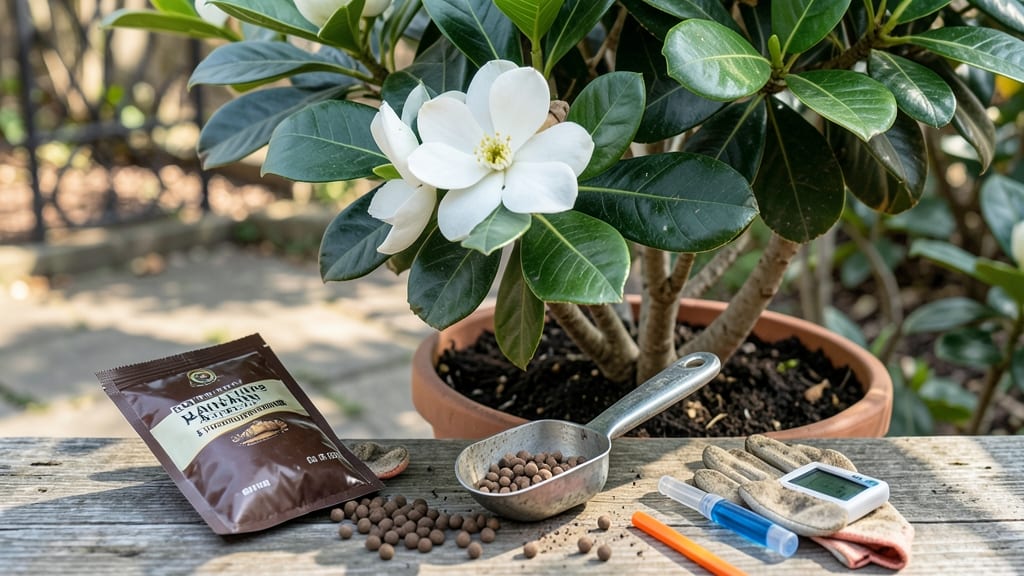
To get your gardenia blooming with fragrant white flowers, you need the right fertilizer ratio—specifically, a balanced mix that prioritizes phosphorus for blooms over nitrogen for leaves.
Struggling to get your gardenia 🌸 to bloom with its signature intoxicating fragrance? The secret lies in mastering the perfect gardenia fertilizer ratio—get it wrong, and you’ll end up with lush leaves but no flowers. Here’s how to unlock those stunning white blossoms with the right N-P-K balance.
Most gardeners overdo nitrogen, thinking it’s the key to growth, but too much of it actually stops blooms in their tracks. Instead, you want a ratio like 6-6-6 or 8-3-9, where phosphorus takes center stage to fuel those show-stopping flowers.
Below, I’ll break down the exact ratios, when to feed, and how to spot over- or under-fertilization—so you can finally enjoy that dreamy gardenia scent without the guesswork.
Optimal gardenia fertilizer ratio: N-P-K breakdown for blooms
If your gardenia is throwing lush green leaves but refuses to bloom, your fertilizer ratio is likely the culprit. Gardenias are heavy bloomers that demand a precise balance of nitrogen (N), phosphorus (P), and potassium (K).
Too much nitrogen? You’ll get foliage overload. Too little phosphorus? Fewer flowers. Let’s break down the perfect N-P-K ratio to coax those fragrant white blossoms.
Most gardeners mistakenly reach for high-nitrogen fertilizers, thinking they’ll boost overall growth. But gardenias are acid-loving shrubs that prioritize phosphorus for blooms and potassium for root strength.
A balanced 6-6-6 or 8-3-9 ratio is ideal—equal parts nitrogen and phosphorus with slightly more potassium to support flower development and stress resistance.
⚠️ CRITICAL NOTE: Gardenias thrive in acidic soil (pH 5.0–6.5). If your soil is alkaline, even the perfect N-P-K ratio won’t work. Always test your soil before fertilizing! A soil pH meter or lab test will save you from wasted effort.
Here’s the seasonal breakdown for your gardenia’s fertilizer needs, tailored to maximize blooms while avoiding nutrient burn:
| Season | N-P-K Ratio | Frequency | Key Focus | Notes |
|---|---|---|---|---|
| Spring (March–May) | 6-6-6 or 8-3-9 | Every 4 weeks | New growth + blooms | Use acidic fertilizer (e.g., cottonseed meal). |
| Summer (June–August) | 3-6-6 or 5-10-10 | Every 6 weeks | Bloom support | Reduce nitrogen to prevent leafy growth. |
| Fall (September–November) | 0-0-0 (none) | Skip | Dormancy prep | Zone 6: Stop feeding. Zone 9-11: Light feed. |
| Winter (December–February) | 0-0-0 (none) | Skip | Rest period | Zone 10+: Light feed with 5-5-5. |
The spring feeding phase is critical because it kickstarts both foliage and flower buds. I recommend a slow-release fertilizer like Osmoote or Jobe’s Azalea/Camellia—these are formulated for acid-loving plants and release nutrients gradually, reducing the risk of nutrient burn.
During summer blooming season, shift to a lower-nitrogen, higher-phosphorus ratio (e.g., 3-6-6) to encourage more flowers instead of leaves. This is where many gardeners go wrong—they keep using high-nitrogen fertilizers, thinking it’ll make the plant "stronger," but it actually suppresses blooming.
In fall and winter, gardenias in Zone 6 need zero fertilizer to prepare for dormancy. For Zone 9-11, a light feeding with a balanced 5-5-5 in late winter can jumpstart spring growth. Always avoid fertilizing when the soil is cold or frozen, as nutrients won’t absorb properly.
One common misconception is that gardenias need constant feeding like vegetables. In reality, they’re slow growers that prefer moderate, consistent nutrition. Over-fertilizing leads to yellow leaves, leaf drop, or even root death.
If you notice crispy brown edges on leaves, you’ve likely overdone it—flush the soil with water immediately.
For organic gardeners, try fish emulsion (5-1-1) or composted manure in spring, followed by bone meal (3-15-0) for phosphorus in summer. These options mimic the natural nutrient cycle and improve soil health over time. Just remember: organic doesn’t mean "no math"—you still need to balance those N-P-K numbers!
Pro tip: Pair your fertilizer with a thin layer of mulch (like pine bark) to maintain soil acidity and retain moisture. This simple step can double your blooms by creating the ideal growing conditions. Happy gardening—your gardenia’s fragrant rewards are worth the effort! 🌸
Step-by-step guide to applying gardenia fertilizer correctly
Gardenia plants thrive when fed with the right fertilizer ratio, but timing and technique matter just as much. Over-fertilizing can burn roots, while under-fertilizing starves your plant of nutrients needed for those fragrant blooms.
The key is consistency and precision—especially during the active growing season from spring to early summer. I’ve perfected my approach over years of growing gardenias, and here’s exactly how I do it.
Start by choosing a balanced acid-loving fertilizer with an N-P-K ratio of 6-6-6 or 8-3-9. Gardenias need phosphorus to encourage blooming, but too much nitrogen will result in lush leaves and no flowers.
Always opt for a slow-release formula to avoid nutrient spikes that can harm your plant. Before applying, water your gardenia thoroughly to help distribute the fertilizer evenly through the soil.
When to fertilize: Apply fertilizer every 4-6 weeks during the growing season (March–August). Reduce to every 8 weeks in fall and skip entirely in winter (Zone 6). For Zone 9-11 gardenias, a light feeding in winter can support year-round growth. Always fertilize in the early morning to prevent fungal issues from evening moisture.
- Step 1: Choose a 6-6-6 or 8-3-9 acid-loving fertilizer (e.g., Miracle-Gro Azalea, Camellia & Rhododendron).
- Step 2: Water your gardenia deeply to moisten soil before applying fertilizer.
- Step 3: Sprinkle 1 tbsp per plant around the root zone (6 inches from stem).
- Step 4: Gently scratch fertilizer into soil to avoid direct root contact.
- Step 5: Water again to activate nutrients and prevent burn.
- Step 6: Repeat every 4-6 weeks in spring/summer; reduce in fall/winter.
Watch for signs of over-fertilization, like yellowing leaves, leaf burn, or excessive leaf growth with no blooms. If this happens, flush the soil with water and reduce future applications by half.
Under-fertilized gardenias show pale leaves, stunted growth, or fewer flowers. In this case, increase frequency slightly and ensure your fertilizer is acidic (pH 5.0–6.5)—gardenia roots thrive in acidic conditions.
For potted gardenias, use half the recommended dose since roots are confined. Mix fertilizer into the top 2 inches of soil and water immediately to prevent salt buildup.
If your gardenia is newly planted, wait 6-8 weeks before fertilizing to avoid shocking the roots. Always avoid fertilizer near the stem to prevent damage.
Pro tip: Pair your fertilizer routine with regular pruning after blooming to encourage new growth. Deadhead spent flowers to redirect energy into future blooms. With the right fertilizer ratio and timing, your gardenia will reward you with abundant, fragrant flowers year after year. 🌸