
Container Gardens
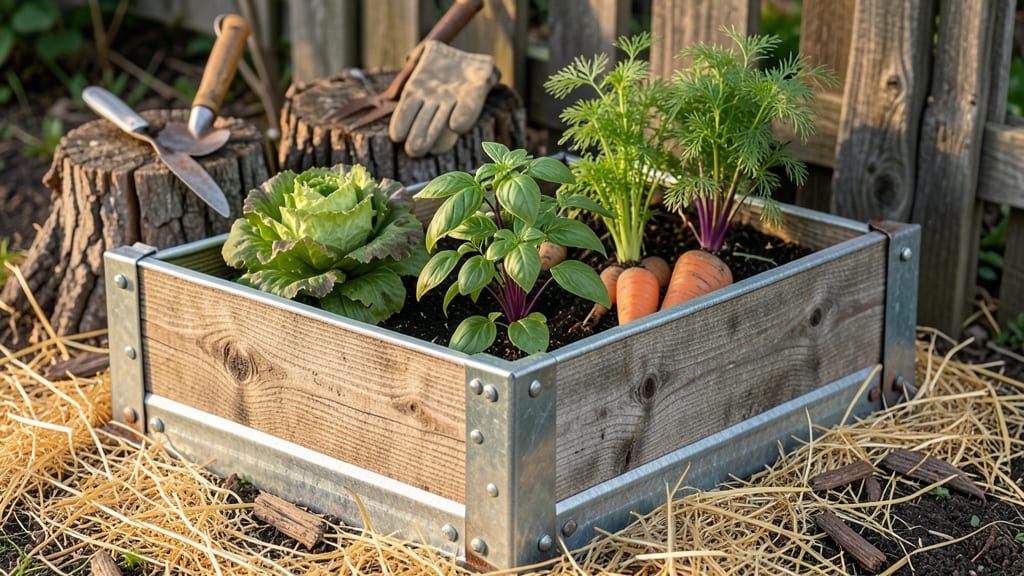
Corrugated metal and wood raised garden beds offer a smart balance of strength and cost-effectiveness, pairing rust-proof metal frames with natural wood sides for superior plant growth conditions. The metal components provide long-term structural integrity but need protective coatings, while wood delivers better insulation and visual appeal though it requires regular upkeep to combat rot and pests. Your climate and garden needs should guide your material choice.
These hybrid garden beds solve common dilemmas gardeners face when choosing materials.
The corrugated metal handles the heavy lifting—literally—supporting more weight than wood while resisting weathering far better, though it can get hot in summer and needs sealing every few years. Wood, particularly cedar or redwood, offers natural insulation that protects roots from temperature swings and adds a classic aesthetic, but it demands annual sealing and vigilance against termites in humid climates. 🔥 I've found that pairing galvanized steel corners with untreated wood sides creates the perfect compromise for most home gardens, giving you both durability and that rustic charm without the full maintenance burden of all-wood designs.
For those considering DIY construction, start with 2x6 boards for wood sides (minimum 8 inches deep) and 16-gauge galvanized steel for the frame. Pre-drill all screws to prevent splitting, and use stainless steel hardware to avoid corrosion.
The key is creating a moisture barrier—line the bottom with landscape fabric before adding soil to prevent wood rot from the ground up. This hybrid approach cuts costs while maximizing growing space, making it ideal for small yards or urban gardens where traditional in-ground planting isn't practical.
💡 In This Article
- Metal vs Wood Durability: Long-Term Performance Factors
- DIY Build Guide: Step-by-Step for Hybrid Metal-Wood Beds
Metal vs wood durability: long-term performance factors
The real battle between corrugated metal and wood in raised beds comes down to how each material reacts to environmental stressors. Corrugated metal—typically galvanized steel or aluminum—resists corrosion through protective zinc or aluminum coatings that create a barrier against moisture.
This makes it ideal for wet climates where wood would rot within 2-3 years without treatment. The corrugated design also increases structural rigidity by distributing weight across multiple points, allowing these beds to support 500-1,000 pounds depending on gauge thickness.
Wood, especially untreated varieties like pine, absorbs moisture like a sponge, swelling up to 20% by volume when saturated. This constant expansion/contraction warps boards over time, creating gaps where weeds grow and pests invade.
Cedar and redwood perform better due to natural oils that repel moisture, but even these need sealing every 1-2 years to maintain protection. The real vulnerability?
Termites—these insects detect cellulose in wood and can reduce a bed to splinters in 6-12 months in warm, humid regions like the Southeast U.S. 🌧️
Temperature plays a hidden role too. Metal beds act like heat sinks, reaching 120-140°F in summer sun, which can stress plant roots unless you use 4-6 inches of mulch as insulation.
Wood, meanwhile, naturally moderates soil temperature by 10-15°F compared to metal, creating a more stable growing environment—critical for heat-sensitive crops like lettuce or strawberries. In freezing climates, wood's insulating properties prevent soil from reaching damaging lows, while metal can conduct cold directly into the root zone.
Climate dictates which material wins the durability game. In coastal areas with salt air, metal's corrosion resistance gives it a 15-20 year lifespan with proper sealing, while wood lasts only 5-7 years without constant maintenance.
Conversely, in dry inland regions, untreated wood can last 10+ years if protected from direct ground contact, while metal may develop surface rust spots from dew condensation. The sweet spot? Hybrid designs where metal handles structural stress and wood provides the growing surface.
Consider these material trade-offs when planning:
- Metal advantages: 20+ year lifespan with sealing, 50% lighter than wood for same strength, resists termites/pests
- Wood advantages: 10-15°F better temperature regulation, natural aesthetic, easier to modify/expand
- Hybrid solution: Metal corners + wood sides (cedar/redwood) balances costs while maximizing growing conditions
For maximum longevity, pair galvanized steel with pressure-treated wood—though avoid chemically treated lumber near edible plants, as leachates can contaminate soil.
The key is understanding your microclimate: if your garden gets 60+ inches of rain annually, metal is the clear winner; if you're in a dry, sunny region, wood may outlast metal with proper care. 💫
Pro tip: Elevate beds 6-12 inches off ground to prevent wood rot from soil contact, and use landscape fabric as a moisture barrier—this simple step can double wood's lifespan in wet climates.