
Advice
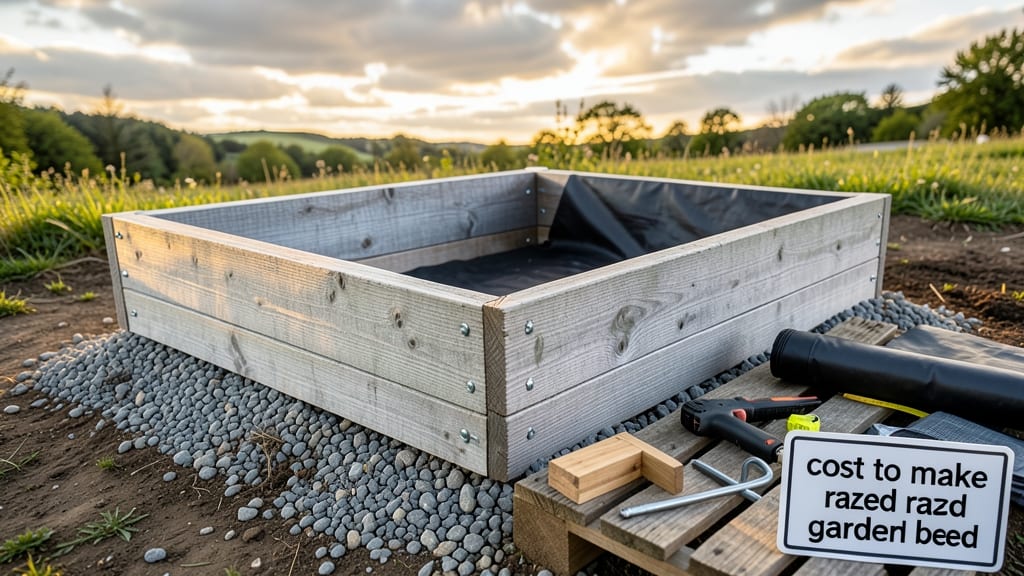
The cost to make a raised garden bed typically ranges from $50 to $500+, depending on lumber choices, bed dimensions, and whether you assemble it yourself or purchase a pre-built kit. Cedar and composite wood are popular for their durability, while soil, drainage materials, and hardware all impact the final price. Smart planning and sourcing can help you build a high-quality bed without overspending.
The total cost varies widely based on what you prioritize.
A 4x8-foot bed using pressure-treated lumber might run $150-$250, while opting for cedar could push costs to $300-$500 due to its natural rot resistance. Hardware like corner brackets and screws adds $20-$50, while quality soil and drainage materials can double your material budget. 💰 The good news?
Repurposing materials like cinder blocks or reclaimed wood can cut costs by 30-50%, making this project accessible even on tighter budgets.
For those watching expenses, consider these cost-saving strategies: buying lumber in bulk, checking for seasonal sales, or even building a smaller bed first to test what works. Pre-made kits often include everything you need but may cost 20-30% more than DIY.
The key is balancing upfront costs with long-term benefits—like better drainage or extended bed life—that make the investment worthwhile.
💡 In This Article
- Material Cost Breakdown for DIY Raised Beds
- Budget-Friendly Raised Garden Bed Alternatives
Material cost breakdown for DIY raised beds
Lumber makes up 60-70% of your total cost, so choosing wisely is critical. Cedar is the premium option at $5-$8 per board foot, thanks to its natural resistance to rot and insects.
A 4x8-foot bed requires about 16 linear feet of 2x6 lumber (for sides) plus 2x12 boards for the bottom, totaling roughly $250-$400 for cedar. Pressure-treated pine is cheaper at $2-$4 per board foot, but it requires sealing to prevent chemical leaching into soil, adding $10-$20 in extra materials.
Hardware costs add up quickly if you skimp on quality. Galvanized screws (2½") run $0.50-$1 each, and you'll need 50-80 screws for a standard bed. Corner brackets ($3-$8 each) provide stability but aren't strictly necessary if you're using notched joints.
For drainage, ½" landscape fabric costs $0.10-$0.20 per square foot, while gravel (¾" size) runs $0.50-$1 per cubic foot. A 4x8-foot bed needs 2-3 cubic feet of gravel for proper drainage.
The soil mix is where costs can spiral if you're not strategic. Topsoil alone costs $20-$50 per cubic yard, but mixing in compost ($10-$25 per cubic yard) improves fertility.
For a 4x8-foot bed filled 12" deep, you'll need 1.5-2 cubic yards of soil mix—expect to pay $50-$100 just for soil. 💰 Pro tip: Skip the expensive pre-mixed bags and source materials locally from farm supply stores or bulk suppliers, which can cut soil costs by 30-40%.
Material thickness also impacts cost and durability. 2x6 boards are standard for sides, but 2x8 or 2x10 boards add $50-$100 to your lumber budget while increasing bed height and capacity. The trade-off? Taller beds require more soil and may need additional support posts if wider than 4 feet.
For long-term savings, consider composite lumber (like Trex), which costs $10-$15 per board foot but lasts 20+ years without maintenance.
Don't overlook the hidden costs of bed design. A 4x4-foot bed uses 30% less lumber than a 4x8-foot version but may limit plant variety. Adding removable panels for modular gardening adds $30-$60 in hinges and latches.
For example, a 4x8-foot bed with 4 removable sections could cost $100-$150 more in materials but offers flexibility for crop rotation. Weigh these extras against your gardening goals—sometimes simplicity saves money and time.
Seasonal pricing can slash your budget by 20-30%. Lumber prices peak in spring and summer due to high demand, while fall and winter often bring discounts of 10-20%. Soil and compost prices also dip after harvest season when suppliers have surplus.
Plan your build for late fall or early spring to lock in lower rates, and check local "ugly wood" sales for discounted, slightly imperfect boards that work perfectly for garden beds. 🌲