
Pests
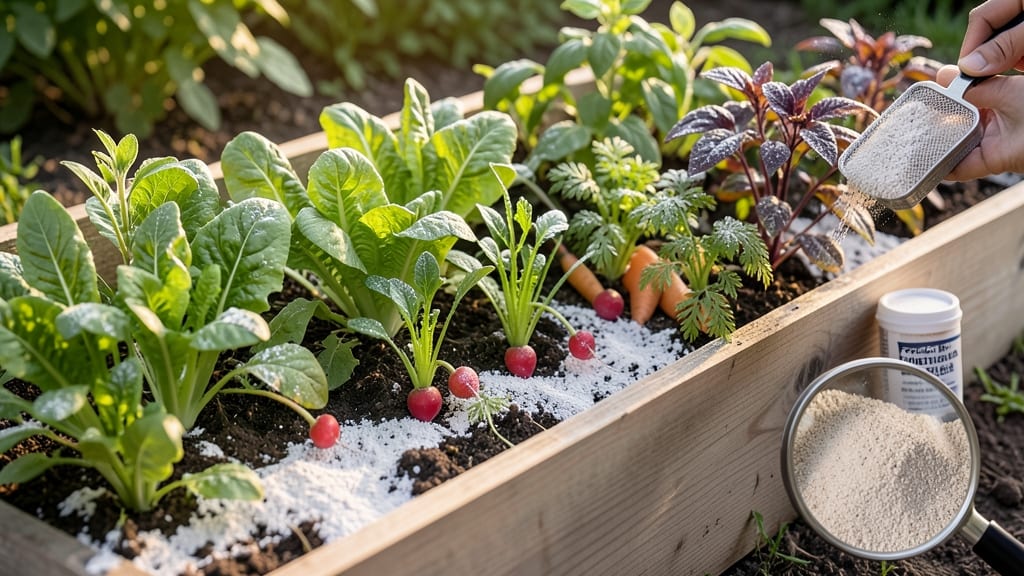
Diatomaceous earth in garden beds works as a natural pest control by dehydrating soft-bodied insects like slugs, aphids, and beetles while being safe for plants and soil microbes when used properly. Spread a thin layer in dry conditions and reapply after rain or watering.
This natural powder contains microscopic fossilized algae that create sharp edges, piercing insect exoskeletons and causing fatal dehydration. 🔥 Unlike chemical pesticides, it breaks down harmlessly in sunlight and doesn't harm beneficial soil organisms when applied correctly.
The key is using food-grade diatomaceous earth—pool-grade versions are too coarse and can damage plants.
For best results, apply a 1–2 pound layer per 100 square feet in early morning or evening to avoid wind dispersal. Watering lightly afterward helps it stick to foliage, but avoid overwatering since moisture reduces its effectiveness.
I've found it works best when combined with mulch or compost, creating a protective barrier that pests avoid.
💡 In This Article
- How Diatomaceous Earth Works Against Garden Pests
- Best Practices for Applying Diatomaceous Earth in Soil
How diatomaceous earth works against garden pests
Diatomaceous earth (DE) functions as a mechanical pest killer at the microscopic level. The powder consists of fossilized remains of diatoms—single-celled algae—ground into ultra-fine particles with jagged, razor-sharp edges.
When soft-bodied insects like aphids, slugs, or beetles crawl across treated areas, these microscopic shards pierce their exoskeletons, creating tiny wounds that rapidly dehydrate them.
The process is similar to how a fine sandpaper would abrade an insect's delicate outer layer, but on a scale too small to see without magnification.
The particle size matters critically—food-grade DE has an average particle size of 10 microns, creating a surface area of about 30,000 square feet per pound. This fine texture allows it to adhere to insect bodies while remaining harmless to plants and soil organisms.
Pool-grade DE, with coarser particles (20 microns or larger), can damage plant tissues and isn't recommended for garden use. The dehydration process typically kills pests within 48 hours, making it faster than many organic alternatives like neem oil.
Humidity is the biggest factor affecting DE's effectiveness. When moisture levels exceed 50%, the sharp edges become less effective as the powder clumps together. This is why applying DE in dry conditions—early morning or evening when dew has evaporated—maximizes its impact.
Rain or overhead watering can reduce its potency by 70% within hours, which is why reapplication is essential after wet weather. The powder's non-toxic nature means it breaks down harmlessly in sunlight, leaving no chemical residue.
What makes DE particularly safe for gardens is its selective action. Hard-bodied insects like ants or earwigs are largely unaffected because their exoskeletons are too thick for the microscopic shards to penetrate. Beneficial insects like ladybugs and bees also avoid treated areas, though they aren't harmed upon contact.
Even earthworms, crucial for soil health, remain unharmed because they don't come into direct contact with the powder when buried in soil. This targeted approach makes DE an eco-friendly alternative to broad-spectrum pesticides.
For visual clarity, imagine sprinkling DE like a fine dusting of flour over your garden bed. Under a microscope, you'd see millions of tiny, glass-like fragments waiting to disrupt any soft-bodied pest that ventures too close.
The powder's white color also makes it easy to spot and reapply where needed, unlike chemical pesticides that leave invisible residues. When used correctly, DE creates a natural barrier that pests instinctively avoid, creating a protective zone around your plants without harming the ecosystem.