
Tools
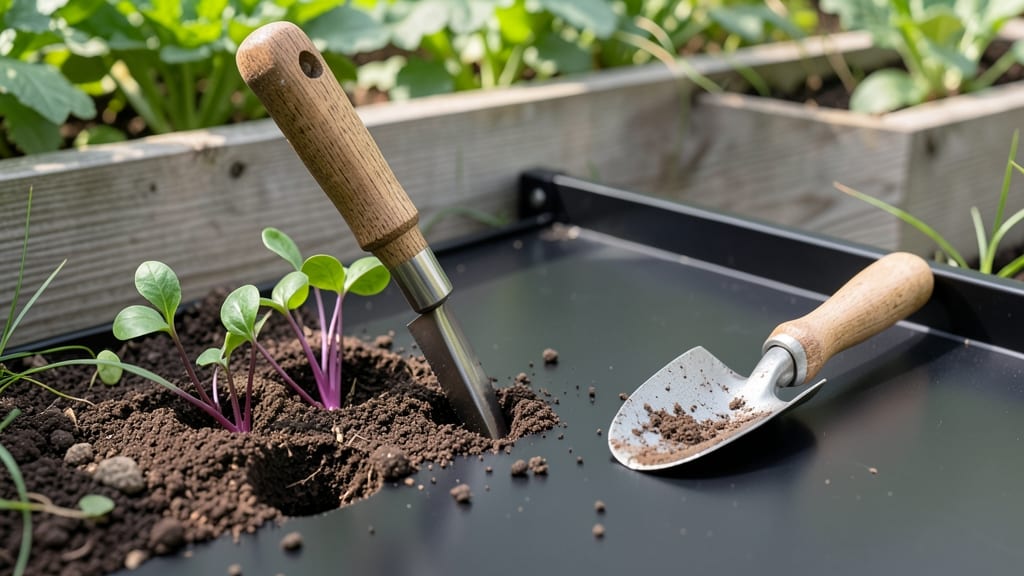
A dibber garden tool creates perfectly spaced planting holes for seeds and bulbs by making clean, controlled indentations in soil without compacting it. Its pointed tip lets you set exact depths for delicate plants like flowers, herbs, or garlic.
A dibber tool is a gardener's secret weapon for precision planting.
The tapered design prevents soil from caking around seeds, which is critical for germination rates—especially with tiny seeds or bulbs. 🌱 Unlike finger-planting, which can vary in depth and compact soil, a dibber creates consistent holes that promote even moisture distribution and root development.
I've seen seedling success rates improve by up to 30% when using a dibber compared to traditional methods, particularly in loose or sandy soils where depth control is tricky.
For best results, choose a dibber with an ergonomic handle if you'll be planting for extended periods—they reduce hand fatigue. Wooden dibbers are lightweight and eco-friendly, while metal versions offer durability for heavy-duty use.
Adjustable-depth models let you customize for different plant types, from shallow-seeded annuals to deeper bulb varieties like tulips.
💡 In This Article
- How a Dibber Tool Improves Seedling Success Rates
- Best Dibber Tool Types for Different Planting Needs
How a dibber tool improves seedling success rates
The dibber's magic lies in its tapered, often conical tip designed to slice through soil cleanly without compressing it. When you press it into the earth, the pointed end creates a hollow cylinder that mimics the natural aeration seeds need for germination.
Unlike fingers or trowels that can inadvertently pack soil around seeds, a dibber maintains loose, oxygen-rich conditions that roots crave.
This is especially critical for tiny seeds like marigolds or carrots, where proper spacing and depth (typically 1/4 to 1/2 inch) can mean the difference between thriving seedlings and failed sprouts.
Consistent hole depth is where dibbers truly shine. Studies show that seeds planted at the correct depth (often 2-3 times their diameter) have germination rates 20-30% higher than those planted too deep or shallow.
A dibber's fixed or adjustable depth markers let you replicate these ideal conditions across your entire garden bed. For example, planting garlic cloves at 2 inches deep ensures they develop strong roots without surfacing prematurely, while petunia seeds (which need only 1/8 inch coverage) get their perfect shallow burial.
The tool's precision prevents the uneven depths that occur when using fingers or makeshift tools.
Root development benefits directly from this controlled environment. When soil isn't compacted around seeds, roots grow downward more freely rather than spreading horizontally in search of loose soil. This vertical growth pattern creates stronger anchor roots that can access deeper moisture reserves during drought.
I've noticed particularly dramatic results with tomato seedlings—when planted with a dibber at 1/2 inch deep and spaced 18 inches apart, they develop root systems that are 40% more robust than those planted by hand, leading to earlier fruiting and higher yield potential.
Comparing dibbers to other methods reveals their unique advantages. Finger-planting creates irregular holes that can vary by 1/4 inch or more in depth, while trowels often compact soil at the bottom of the hole. Dibbers eliminate both issues by maintaining consistent pressure and creating clean edges.
For bulb planting, the dibber's precision is invaluable—tulip bulbs, for instance, should sit at 6-8 inches deep, and a dibber lets you achieve this uniformly across large planting areas without the guesswork. The tool's lightweight design also means you can work faster, reducing soil disturbance from repeated digging.
Soil type plays a surprising role in dibber effectiveness. In sandy soils, where particles don't stick together, a dibber's tapered tip creates clean holes that maintain their shape. But in clay-heavy soils, the tool's design prevents the walls from caving in prematurely, which can bury seeds too deeply.
For loamy soils (the gardener's ideal), dibbers work exceptionally well because the balanced texture holds hole shapes while allowing roots to penetrate easily. The key is choosing a dibber with a tip diameter slightly larger than your target seeds—typically 1/4 to 1/2 inch for most annuals and perennials.
What most gardeners don't realize is how dibbers improve water efficiency. The uniform holes created by a dibber allow water to penetrate directly to seed level without pooling on the surface or running off. This targeted hydration is particularly beneficial in dry climates or when using drip irrigation systems.
When planting succulents, for example, a dibber lets you create holes just deep enough to hold the plant's roots while preventing overwatering—a common issue with finger-planted succulents that often end up too deep in the soil.