
Tools
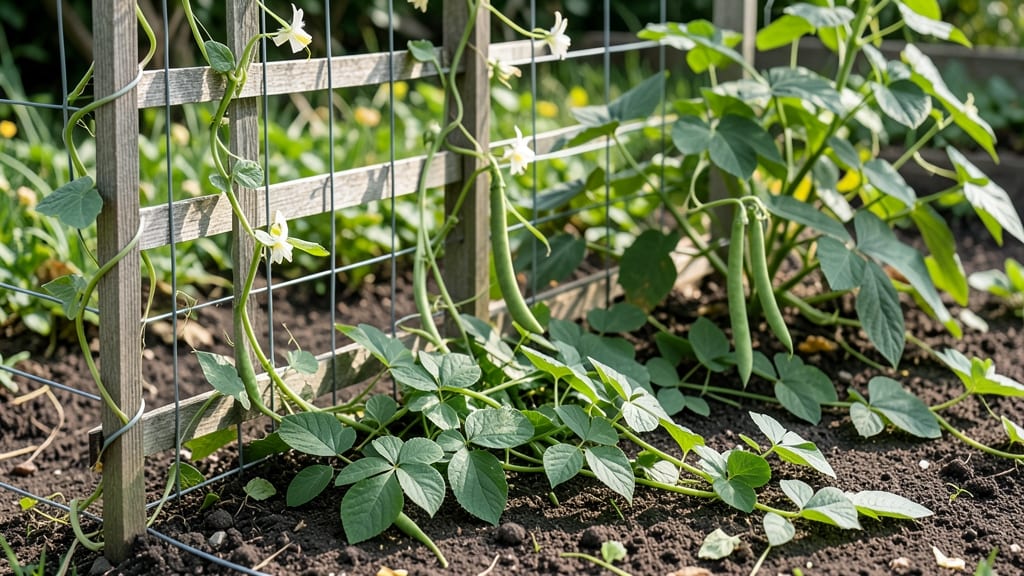
Whether garden beans need a trellis depends on their variety—bush beans thrive without support, while climbing types like pole beans grow taller and produce more with vertical support. Trellising helps vining plants stay upright, boosts airflow, and prevents disease.
Not all beans require trellising, but the difference between bush and pole varieties is key. 🌱 Bush beans grow low to the ground, spreading out horizontally, while pole beans climb naturally and can reach heights of 6-10 feet without support.
The right setup—whether a simple stake, bamboo trellis, or netting—can double your yield by keeping plants off the soil and improving sunlight exposure. For container gardens or small spaces, vertical growing is especially valuable.
Even if you skip a trellis, proper spacing matters. Pole beans left unsupported may sprawl, leading to tangled vines and lower production. I’ve found that adding support early—right after planting—gives vines time to establish before they need help. For bush beans, focus on well-draining soil and consistent moisture instead.
💡 In This Article
- Garden Bean Growth Types: Bush vs. Pole Varieties
- When and How to Trellis Garden Beans for Optimal Growth
Garden bean growth types: bush vs. pole varieties
Bush beans and pole beans represent two fundamentally different growth strategies in the bean world. Bush beans—like the popular 'Blue Lake' or 'Contender' varieties—grow in compact bushes typically reaching 1-3 feet tall.
Their growth habit is determined by a recessive gene that limits vine length, making them self-supporting and ideal for small gardens or containers. These varieties produce pods along the main stem and branches, creating a dense, low-growing plant that spreads 12-18 inches wide. 🌱
The key difference lies in their genetic structure: bush beans complete their life cycle in about 50-60 days and produce all their pods simultaneously, resulting in a single harvest window.
Pole beans, on the other hand, carry a dominant gene that encourages vigorous climbing, with vines capable of reaching 8-12 feet if given proper support. Varieties like 'Kentucky Wonder' or 'Rattlesnake' produce pods continuously over a 2-3 month period, extending your harvest season dramatically.
This climbing habit isn't just about height—it's a survival strategy that lifts the plant above competing weeds and soil-borne diseases.
From a practical standpoint, these growth differences translate directly to garden planning. Bush beans thrive in rows spaced 4-6 inches apart with 18-24 inches between rows, making them perfect for intensive planting.
Pole beans, however, need 3-4 inches between plants and 18-24 inches between rows when trellised, but can be spaced more closely if allowed to sprawl (though this reduces yield).
The vertical growth of pole beans creates a natural canopy that shades the soil, conserving moisture and suppressing weeds—a benefit bush beans can't match without mulching.
What most gardeners don't realize is how these growth habits affect disease resistance. Bush beans' low, dense growth makes them more susceptible to soil-borne pathogens like root rot, while pole beans' elevated position improves air circulation and reduces humidity at ground level.
This is why trellising pole beans isn't just about space—it's about creating a healthier growing environment. The upward growth also means better sunlight penetration to lower leaves, which can increase pod production by up to 30% compared to sprawling plants.
Consider your garden's microclimate when choosing varieties. In hot, dry regions, bush beans' compact form helps retain soil moisture better, while pole beans excel in cooler climates where their vertical growth can capture more sunlight.
For urban gardeners with limited space, pole beans offer a game-changing advantage: they can produce 2-3 times more beans per square foot than bush varieties when properly trellised. This vertical efficiency is why many small-space gardeners swear by climbing varieties despite the extra setup required.
The choice between bush and pole beans ultimately comes down to your priorities: quick harvests with minimal maintenance (bush) versus extended production and space efficiency (pole). Both have their place in a well-planned garden, and understanding their differences lets you optimize your planting strategy for maximum yield and enjoyment. 🌿