
Companion Plants
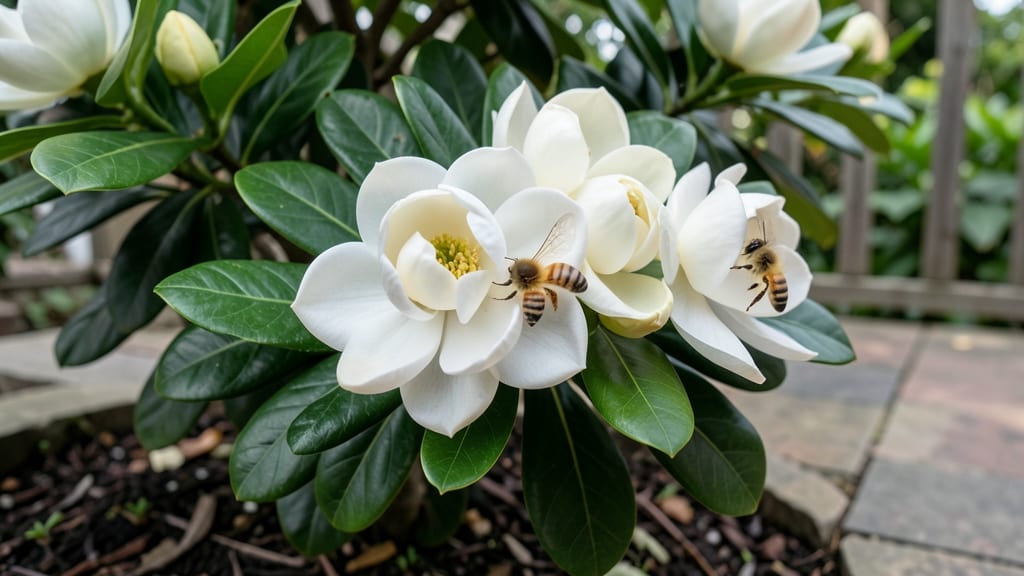
Gardenias do attract bees, particularly honeybees and bumblebees, thanks to their fragrant white flowers and nectar-rich blooms, though they are not as heavily relied upon as other pollinators like butterflies or hummingbirds.
Gardenias are a favorite among bees because their high nectar content and intense floral scent create an irresistible lure. 🌸 The double-layered blooms provide easy access to pollen, making them particularly appealing to honeybees and bumblebees during their peak blooming season in late spring and summer.
While gardenias aren't the primary food source for these pollinators, their abundant nectar still plays a valuable role in supporting local bee populations, especially in urban gardens where native pollinator plants may be scarce.
What sets gardenias apart is their ability to thrive in various climates, from tropical regions to temperate zones, giving them a broader reach for pollinator support.
Unlike some flowers that rely on specific bee species, gardenias create a welcoming environment for multiple pollinators while also attracting beneficial insects like ladybugs and hoverflies. This makes them an excellent choice for gardeners looking to create a pollinator-friendly ecosystem without sacrificing beauty.
💡 In This Article
- Why Gardenias Are a Bee Magnet
- Best Gardenia Varieties for Pollinators
Why gardenias are a bee magnet
Gardenias produce a unique combination of visual and olfactory cues that bees find irresistible. Their double-layered white flowers contain both nectar and pollen, structured in a way that makes them easily accessible to bees with their long proboscises.
The outer petals provide landing platforms, while the inner layers protect the reproductive parts until pollinators arrive.
This flower architecture is particularly effective for honeybees, which can extract nectar at a rate of 1-2 microliters per visit—about 10% of their body weight—making gardenias an efficient energy source for their foraging trips.
The real secret weapon, however, is their scent chemistry. Gardenias emit volatile organic compounds like benzyl acetate and linalool, which create a sweet, jasmine-like aroma detectable by bees up to 30 feet away.
These compounds mimic the scent profiles of other bee-friendly flowers like lavender, but with a more persistent signature. 🌿 Unlike sunflowers that rely on visual cues (bright colors), gardenias use a multi-sensory approach that works even in low-light conditions or when surrounded by competing plants.
The scent intensity peaks during late morning to early afternoon, coinciding with peak bee activity.
Nectar production is another critical factor. A single gardenia flower can yield 0.5-1.5 milligrams of nectar per day, with sugar concentrations typically between 15-25% sucrose—a perfect balance for bees.
For comparison, lavender produces similar nectar volumes but with slightly higher sugar concentrations (25-30% sucrose), while sunflowers offer more nectar (2-3 milligrams per flower) but require more energy to access. This makes gardenias a "Goldilocks" option: not the most abundant source but perfectly optimized for efficiency.
What's fascinating is how gardenias have evolved to attract specific bee behaviors. Their flowers often trigger a phenomenon called "buzz pollination," where bumblebees vibrate their flight muscles at 130-150 Hz to dislodge pollen from the anthers.
This vibration creates a visible "cloud" of pollen that bees can then collect more efficiently. 🐝 While this behavior is more commonly associated with tomatoes and blueberries, gardenias have adapted to benefit from it too, ensuring cross-pollination even when bees aren't actively seeking nectar.
When comparing gardenias to other pollinator favorites, they score particularly well in urban environments. Unlike many native plants that require specific soil conditions, gardenias thrive in well-drained soils with slightly acidic pH (5.0-6.5) and partial shade—ideal conditions for city gardens where space and sunlight are limited.
Their ability to attract bees while also repelling some pests (like aphids) makes them a dual-purpose plant that gardeners can rely on for both beauty and ecological support.
One common misconception is that gardenias are primarily butterfly magnets, but their scent profile actually makes them more appealing to bees. While butterflies are drawn to bright colors and specific floral shapes, bees rely more on scent and nectar rewards.
This is why you'll often see bees actively foraging on gardenias while butterflies might pass them by in favor of nearby milkweed or coneflowers. The key takeaway? Gardenias offer a balanced pollinator buffet that supports both bees and other beneficial insects without overwhelming any single species.