
Tools
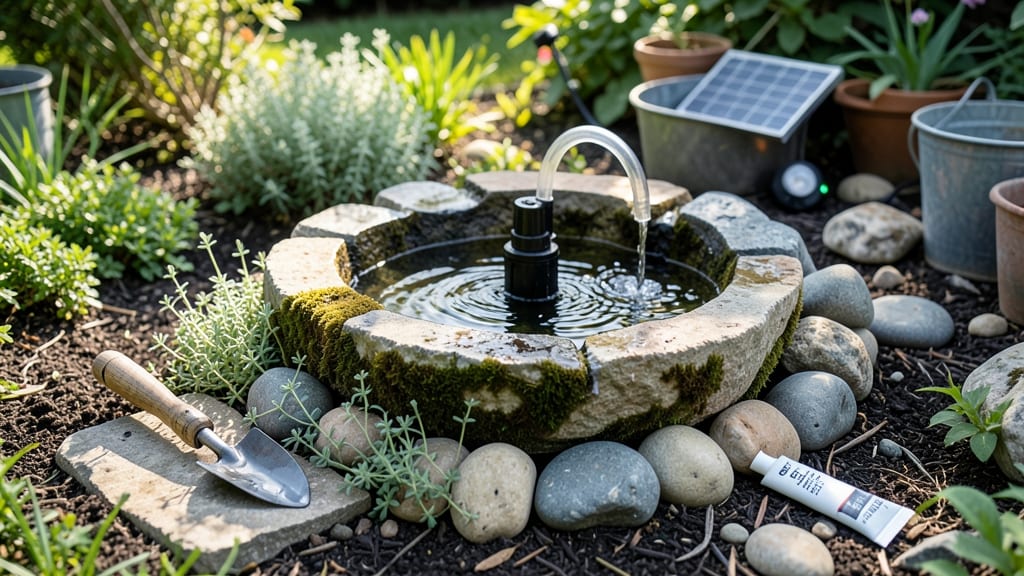
A DIY garden fountain project lets you customize your outdoor space with flowing water, and the process involves assembling a basin, pump, tubing system, and waterproofing components while prioritizing stability and electrical safety from the start.
Creating your own garden fountain transforms any backyard into a tranquil retreat, and the key to success lies in balancing aesthetics with functionality. 💫 You'll need to choose between durable materials like concrete or lightweight plastic basins, each offering different installation challenges and visual impacts.
The pump system—often the heart of your fountain—requires careful placement to ensure proper water circulation without creating noisy vibrations, while waterproofing supplies like sealant and liner prevent leaks that could damage your foundation or surrounding landscape.
Beyond the hardware, electrical safety becomes critical when positioning your pump and wiring. Many beginners overlook the need for a ground-fault circuit interrupter (GFCI) outlet, which protects against potential shocks when water is involved.
I always recommend testing your setup with just a small amount of water first to catch any hidden leaks before filling the basin completely—this simple step has saved me from multiple frustrating cleanups over the years.
💡 In This Article
- Essential Materials and Tools for DIY Garden Fountains
- Step-by-Step Assembly Process for Beginners
Essential materials and tools for DIY garden fountains
The foundation of any DIY garden fountain starts with selecting the right basin, which determines both aesthetics and functionality. Plastic basins offer lightweight portability and cost around $20-$50, making them ideal for beginners or temporary setups.
Concrete basins provide durability and a natural stone appearance for $100-$300, while pre-cast stone basins deliver premium craftsmanship at $250-$600. The basin's weight and material directly impact your base requirements—concrete needs a reinforced foundation, while plastic can sit on a simple gravel base.
At the fountain's core, the pump creates the water flow, and choosing the right type depends on your fountain's height and desired flow rate. Submersible pumps (typically $30-$100) are ideal for smaller basins under 3 feet tall, while external pumps handle larger volumes and multi-tiered designs.
The tubing system connects everything, with ½-inch PVC or flexible vinyl tubing being the most common options—vinyl bends easily for creative designs but requires UV protection, while PVC offers durability for 5+ years of outdoor exposure.
Waterproofing is where many DIY projects fail, so don't skip these critical supplies: a 100% waterproof liner (for basins without built-in waterproofing), marine-grade sealant for all joints, and a GFCI outlet adapter for electrical safety.
The liner must extend at least 6 inches beyond the basin edges to prevent water seepage, while sealant creates a watertight bond between components. Pro tip: Use silicone sealant for concrete-to-metal connections, as it handles temperature fluctuations better than standard caulk.
Your toolkit should include a laser level (for precise base alignment), heavy-duty staples (to secure liners), and a submersible water pump tester (to verify flow before full assembly).
For electrical work, always use waterproof extension cords rated for outdoor use and keep all wiring at least 18 inches above ground level. The right tools prevent common mistakes like uneven water distribution or electrical hazards that could turn your peaceful fountain into a safety risk.
Consider your fountain's style when selecting materials—tiered designs need reinforced basins to support multiple water levels, while wall-mounted fountains require lag bolts or heavy-duty brackets rated for the basin's weight. Freestanding fountains benefit from a gravel base with compacted sand to ensure stability, especially in windy locations.
The material choices you make here will determine not just how your fountain looks, but how long it lasts and how easy it is to maintain.
Budget-conscious builders can start with a $150-$250 setup using a plastic basin and basic pump, while custom concrete designs can exceed $1,000 when factoring in professional finishing and premium materials.
The key is balancing your vision with practical considerations—like how often you're willing to clean the basin or whether you want to handle electrical components yourself.