
Tools
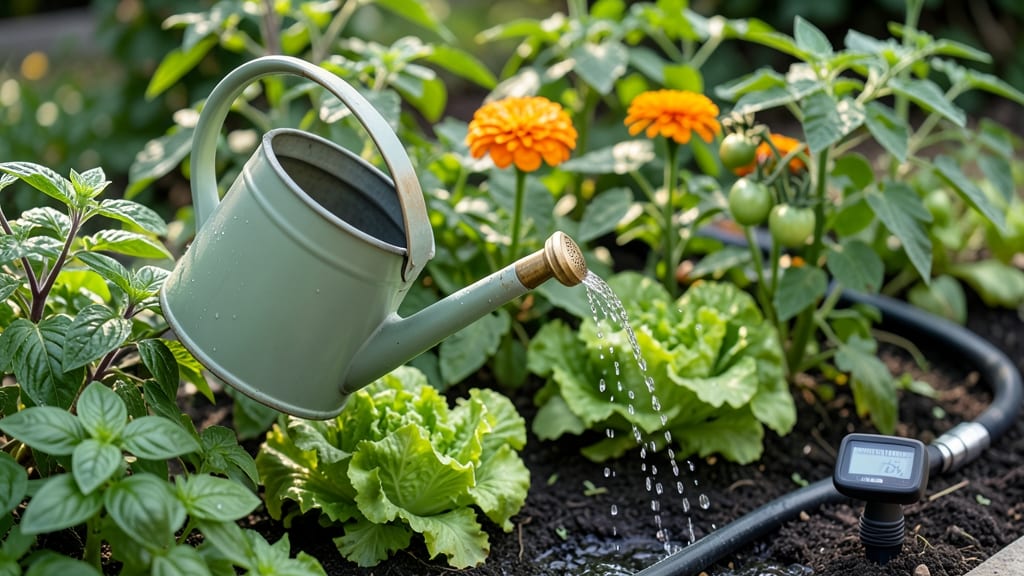
How often a garden should be watered depends on soil type—sandy soil needs frequent, shallow watering (1-2 times daily), while clay soil requires deep watering every 3-4 days. Loamy soil thrives on 1-2 inches of water per week, and mulched beds retain moisture longer, reducing frequency.
Your garden's watering needs aren't one-size-fits-all—they're dictated by your soil's ability to hold and release moisture. 💧 Sandy soils drain quickly, so they need light, frequent watering to keep roots hydrated without drowning them, while clay soils hold water so tightly that deep, infrequent sessions prevent surface evaporation.
Loamy soils strike the perfect balance, making them the easiest to maintain. I've found that adding organic mulch can transform even the trickiest soil into a moisture-retentive paradise, cutting watering sessions by nearly half.
Don't forget that weather plays a huge role too. During summer's peak heat, even well-draining soils may need extra attention, while winter's dormancy period often lets the soil store moisture naturally.
A simple moisture meter can become your best friend—it takes the guesswork out of when to water by telling you exactly what your plants are experiencing at the root level.
💡 In This Article
- Soil Type and Watering Frequency Explained
- Seasonal Adjustments for Garden Watering Schedules
Soil type and watering frequency explained
Soil composition fundamentally changes how water moves through your garden. Sandy soils have large particles that create air pockets, causing water to drain through within 15-30 minutes—like pouring water through a sieve. This rapid drainage means roots stay in the top 6 inches of soil, where moisture evaporates quickly.
That's why sandy gardens often need watering twice daily in hot weather, but only ¼ inch at a time to avoid runoff.
The opposite extreme is clay soil, where tiny particles pack tightly, creating a dense matrix that holds water like a sponge. However, this retention comes at a cost—water moves slowly through capillary action, often leaving the top layer bone-dry while roots below remain saturated.
Deep watering every 3-4 days is key, as it encourages roots to grow downward where moisture persists. A simple test: Press your finger 2 inches deep—if it feels dry, it's time to water.
Loamy soil strikes the perfect balance, combining sand, silt, and clay in proportions that hold 30-50% more moisture than sandy soil while still allowing good drainage. This ideal texture means roots access water consistently, reducing the need for frequent sessions.
The 1-2 inch weekly rule works beautifully here because loam's structure naturally regulates moisture, preventing both drought stress and waterlogging.
What most gardeners overlook is how mulch transforms these dynamics. A 3-4 inch layer of organic mulch (like wood chips or straw) reduces evaporation by 50%, creating a cooler, more stable root environment. In clay soils, this means deeper water penetration; in sandy soils, it extends the time between waterings.
The science is simple: mulch blocks sunlight that would otherwise heat the soil surface, slowing moisture loss.
Consider this real-world example: My neighbor's tomato plants in sandy soil wilted daily until she added 2 inches of straw mulch. Suddenly, she could stretch watering to every other day while maintaining lush growth.
The mulch didn't change the soil type—it changed how the existing soil behaved. This is why professional gardeners often say mulch is the single most effective water-saving tool for any garden.
For those with mixed soil types, the solution lies in targeted watering techniques. Use a soaker hose for clay areas to deliver water directly to roots without surface runoff, while a light misting works better for sandy beds.
The key is matching your watering method to your soil's natural behavior—because trying to force one technique on all soil types is like using a fire hose on a desert plant.