
Tools
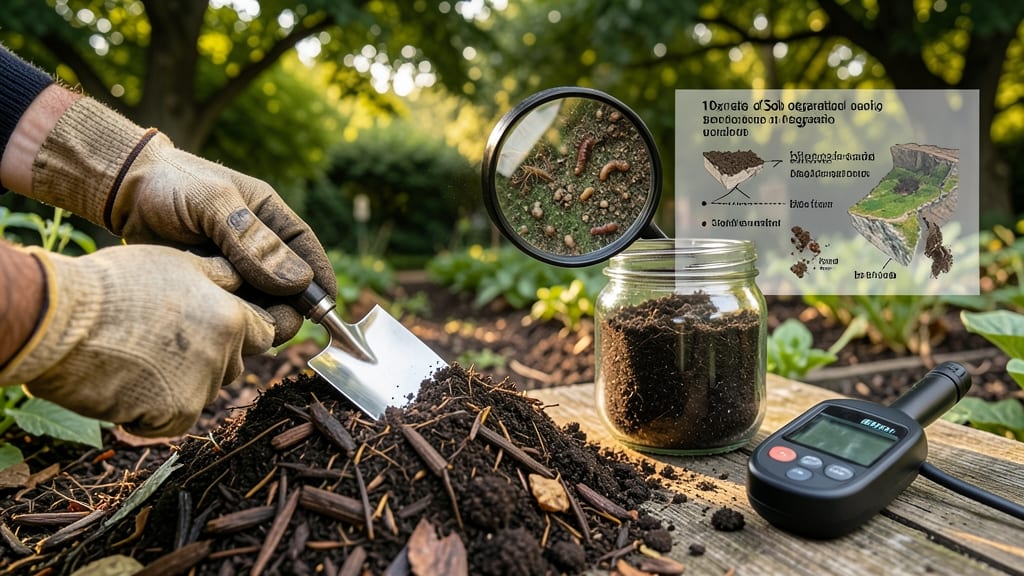
Garden soil does go bad over time, degrading in quality after 6-12 months when stored improperly, particularly if exposed to moisture or extreme heat. This leads to nutrient loss and potential bacterial growth, harming plant roots.
Stored garden soil loses its effectiveness faster than you might think. 🌱 The organic matter breaks down, and beneficial microbes die off when exposed to air or damp conditions. I've seen bags of "fresh" soil from last season turn into a compacted, lifeless mass—completely useless for seedlings.
Even if it doesn't smell bad yet, the lack of crumbly texture is your first warning sign that the soil's structure has deteriorated.
What's worse is that old soil can actually hurt your plants. The buildup of harmful microbes or fungal spores from prolonged storage creates an environment where roots rot instead of thrive. For container gardening, this means wasted time and money on plants that fail to establish properly.
The good news? Proper storage in sealed containers and keeping it in a cool, dry place can preserve its quality for up to a year—but fresh is always better.
💡 In This Article
- Signs Your Garden Soil Has Gone Bad
- How to Extend Garden Soil Freshness
Signs your garden soil has gone bad
First, check for a musty or sour odor—that's your nose detecting volatile organic compounds released as organic matter decomposes.
Fresh garden soil smells earthy and slightly sweet, while spoiled soil often emits a sharp, ammonia-like stench from bacterial overgrowth. 🌱 The texture also gives it away: good soil crumbles easily between fingers, but degraded soil becomes hard and clumpy, almost like concrete when dry or gluey when wet.
Look for discoloration—healthy soil ranges from dark brown to black, but spoiled soil may turn grayish or develop greenish-black patches from mold. These color changes signal microbial imbalances where harmful fungi like Rhizoctonia or Fusarium outcompete beneficial bacteria.
Even worse, you might spot visible mold growth or white fungal threads, which indicate the soil has become a breeding ground for plant pathogens.
The real danger lies in nutrient depletion. Over time, essential minerals like nitrogen, phosphorus, and potassium break down into less accessible forms, while organic matter converts to inert humus.
This means plants grown in old soil often show stunted growth, yellowing leaves (chlorosis), or poor root development. 💥 A simple test: sprinkle a pinch of old soil on a damp paper towel—if it doesn't support seed germination within 7-10 days, it's lost its vitality.
Moisture content also reveals degradation. Fresh soil absorbs water evenly, while old soil either repels water (hydrophobic) or stays soggy indefinitely. This happens when organic matter decomposes into waxy compounds that coat soil particles. The result? Roots struggle to penetrate, and seedlings drown in their own waterlogged beds.
Finally, consider the pH shift. Over time, soil pH often drifts toward acidity (lower numbers) as organic acids accumulate. While some plants tolerate this, most vegetables prefer a neutral 6.0-7.0 pH.
Test your soil with a simple kit—if it reads below 5.5 or above 8.0, the soil's chemical balance has fundamentally changed, making it hostile to most garden crops.
What's most concerning is that these changes happen gradually. You might not notice until you've planted seeds that fail to sprout or seedlings that wilt despite adequate watering. The microbial ecosystem that once supported plant roots has essentially become a toxic environment. 💫